
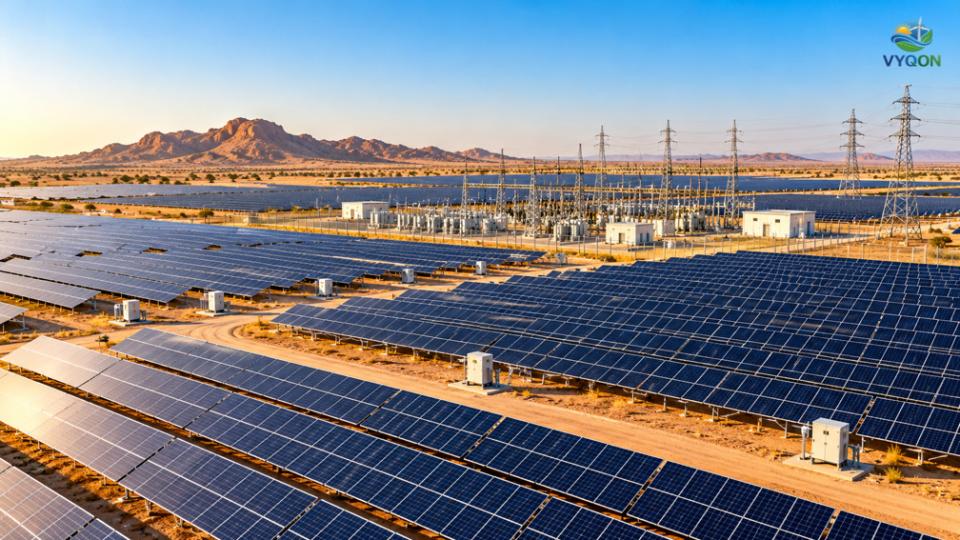
The proposed facility in Karnal aims to strengthen domestic solar cell production, support captive module manufacturing and reduce dependence on external suppliers, with commercial production targeted for April 2028.
Karnal, Haryana, 13 October 2026: Oswal Pumps Limited has announced plans to establish a 1.2 GW solar cell manufacturing facility based on Tunnel Oxide Passivated Contact (TOPCon) technology in Karnal, Haryana, with an estimated investment of approximately ₹456 crore. The proposed project will be developed through the company’s wholly owned subsidiary, Oswal Solar Energy Private Limited (OSEPL), whose Board of Directors approved the investment proposal on 10 October 2026. According to the company’s regulatory disclosure, commercial production is targeted to commence by April 2028, marking a proposed expansion of Oswal’s manufacturing operations from solar module assembly into photovoltaic cell production.
The new facility is intended to manufacture high-efficiency solar cells for captive consumption within OSEPL’s existing and planned solar module manufacturing operations. By establishing its own cell production capability, Oswal Pumps aims to improve supply-chain reliability, reduce exposure to external suppliers and strengthen its competitiveness in India’s growing domestic solar market. The investment forms part of the company’s broader strategy to integrate its solar pumping, module manufacturing and photovoltaic component businesses. However, the announcement represents a board-approved investment proposal rather than a completed manufacturing facility, and commercial production remains subject to successful financing, construction, equipment installation and commissioning.
Oswal Pumps Strengthens Solar Manufacturing Through Backward Integration
The proposed 1.2 GW TOPCon facility represents a strategic move towards backward integration in India’s photovoltaic manufacturing value chain. Solar module manufacturers depend on photovoltaic cells as a critical input, and fluctuations in cell availability, pricing and supply conditions can influence production schedules and overall manufacturing costs. Oswal Pumps currently operates within the solar pumping and module manufacturing segments, where access to competitively priced, reliable photovoltaic cells is particularly important for meeting customer demand and executing government-linked renewable energy projects.
According to the company’s announcement, the proposed facility is expected to meet approximately 75% of OSEPL’s overall solar cell requirements, while the remaining demand would continue to be fulfilled through external procurement in the near term. Oswal has identified approximately 570 MW of existing solar module manufacturing capacity, alongside an additional 1 GW module manufacturing facility under establishment. The company believes that integrating solar cell manufacturing with these operations could provide greater control over production costs, product quality and delivery schedules. The planned 1.2 GW cell capacity should therefore be understood primarily as an internal supply investment rather than confirmation of a separate commercial solar cell sales business.
The company’s decision follows an evaluation of long-term solar cell procurement arrangements with established domestic manufacturers. According to Oswal Pumps, available commercial terms, including pricing arrangements and upfront security deposit requirements, were not fully aligned with its long-term business objectives and working-capital considerations. By developing in-house manufacturing capacity, the company expects to reduce its dependence on external purchasing arrangements and improve visibility over the availability of cells required for its module production lines. Nevertheless, the eventual economic benefits will depend on actual manufacturing performance, financing costs, equipment utilisation and market conditions when commercial operations begin.
From a technology perspective, the proposed facility will employ N-type TOPCon solar cell technology, which has become an important manufacturing platform for high-efficiency crystalline silicon photovoltaic products. TOPCon technology uses a thin tunnel oxide layer and a passivated contact structure to reduce charge-carrier recombination losses while supporting efficient carrier transport. This architecture can improve photovoltaic conversion efficiency compared with less advanced conventional cell structures, depending on the specific manufacturing process and device design. The technology is increasingly relevant to solar module manufacturers seeking improved electricity generation performance and competitive module ratings.
Manufacturing TOPCon cells requires specialised semiconductor processing equipment and careful control of production conditions. A typical production sequence may include silicon wafer inspection, surface texturing, junction formation, passivation, thin-film deposition, metallisation and electrical testing. The final process configuration depends on the selected equipment, cell architecture and production requirements. Maintaining consistent process quality is essential because variations in surface preparation, layer thickness, electrical contacts and thermal processing can affect cell efficiency, production yield and long-term reliability. However, Oswal Pumps has not disclosed specific equipment suppliers, wafer formats, production-line efficiency targets or detailed process specifications for the proposed facility.
₹456 Crore Investment Plan and Proposed Reallocation of IPO Proceeds
Oswal Pumps has outlined a financing structure combining debt with the proposed reallocation of previously unutilised Initial Public Offering (IPO) proceeds. The estimated project investment is approximately ₹456 crore, comprising around ₹296 crore proposed through debt financing and ₹159.85 crore from unutilised IPO proceeds. The company has indicated that the IPO funds were originally allocated to other manufacturing activities, including an aluminium-frame facility, the remaining 300 MW of planned EVA encapsulant manufacturing capacity and the remaining 500 MW of additional solar module manufacturing capacity.
The proposed change reflects a reassessment of the company’s manufacturing priorities. Rather than investing all the previously allocated capital in additional module-related components, Oswal Pumps intends to direct a significant portion towards solar cell production, which it considers a more critical requirement for its integrated business. The company has stated that existing and planned module production facilities are expected to be sufficient for its near-term requirements, while access to domestic solar cells remains an important factor in manufacturing competitiveness. This approach could allow the group to concentrate investment on a component where supply availability and procurement costs have a direct influence on its operations.
Importantly, the proposed reallocation of IPO proceeds requires the necessary statutory, regulatory and shareholder approvals. Following the board announcement, Oswal Pumps issued a postal ballot notice on 12 October 2026, seeking shareholder approval for the proposed variation in the utilisation of IPO proceeds. The remote e-voting period is scheduled from 13 October to 11 November 2026. Consequently, the financing arrangement should not be interpreted as fully approved or entirely deployed at the time of the announcement. The project will need to progress through the relevant approvals and investment milestones before the proposed funding can be implemented according to the revised plan.
The company has targeted April 2028 for the commencement of commercial production. Achieving this timeline will require coordinated progress across engineering design, construction, procurement of manufacturing equipment, utility infrastructure, workforce preparation and process qualification. Solar cell manufacturing facilities require reliable electricity supply, process utilities, environmental controls and suitable quality-testing infrastructure. Even after equipment installation, production lines typically undergo commissioning, process optimisation and yield improvement before reaching stable commercial output. The proposed 1.2 GW annual capacity therefore represents a manufacturing target rather than production already achieved.
Implications for Domestic Solar Cell Manufacturing and Government Solar Programmes
The investment is also linked to India’s efforts to strengthen domestic photovoltaic manufacturing and increase the availability of locally produced solar cells. Oswal Pumps has highlighted the importance of domestic content requirements in government-supported renewable energy programmes, including PM-KUSUM and PM Surya Ghar: Muft Bijli Yojana. These programmes create demand for eligible solar equipment, with applicable procurement rules influencing the sourcing of modules and cells. Greater access to domestic solar cells could support manufacturers supplying projects where local-content conditions apply.
The company has also identified the Approved List of Models and Manufacturers (ALMM) List-II for solar cells as an important consideration in its investment strategy. However, establishing a domestic solar cell manufacturing facility does not automatically provide ALMM eligibility. The proposed plant and its products would need to satisfy applicable testing, certification and formal enlistment requirements before they could be represented as approved under the relevant framework. Oswal’s existing manufacturing registrations or product approvals should not be interpreted as advance approval of cells from a facility that has not yet commenced production.
For the wider Indian solar industry, backward integration into cell manufacturing could help selected companies manage critical supply-chain dependencies and improve coordination between cell production and module assembly. Greater control over cell specifications, quality testing and manufacturing traceability may also support consistent module performance and product reliability. However, building a cell manufacturing facility involves substantial capital expenditure, specialised technical expertise and continuing operating costs. Long-term competitiveness will depend on maintaining high production yields, controlling manufacturing expenses and adapting to changes in photovoltaic technology and market demand.
Oswal Pumps’ proposed investment highlights the growing importance of domestic cell availability as India’s solar manufacturing industry expands. The company’s future progress will be measured through completion of shareholder and regulatory approvals, financial arrangements, construction milestones, equipment commissioning and the eventual commencement of commercial cell production. Until those stages are completed, the proposed 1.2 GW capacity should not be counted as operational solar cell manufacturing capacity.
Conclusion
Oswal Pumps’ proposed ₹456 crore investment in a 1.2 GW TOPCon solar cell manufacturing facility in Karnal, Haryana, represents a strategic move towards deeper integration across the photovoltaic manufacturing value chain. Through its wholly owned subsidiary, Oswal Solar Energy Private Limited, the company aims to establish an internal supply of high-efficiency solar cells, reduce dependence on external manufacturers and strengthen its position in government-linked solar markets.
With commercial production targeted for April 2028, the project could support the company’s expanding solar module and agricultural pumping businesses while contributing to the development of domestic solar cell manufacturing capabilities. However, the investment remains subject to the required approvals, construction activities and successful production commissioning.
If implemented successfully, the facility could strengthen Oswal Pumps’ manufacturing competitiveness and demonstrate the growing role of backward integration in India’s solar industry, supporting the country’s broader efforts to build a more resilient and technologically advanced photovoltaic supply chain.
References:
National Stock Exchange (NSE) – Official Company Announcement (PDF) Download Oswal Pumps Official Press Release – 10 October 2026
Bombay Stock Exchange (BSE) – Official Disclosure Oswal Pumps – BSE Corporate Filing, 10 October 2026
Oswal Pumps – Official Investor Relations Oswal Pumps – Stock Exchange Announcements
Leave a Comment