
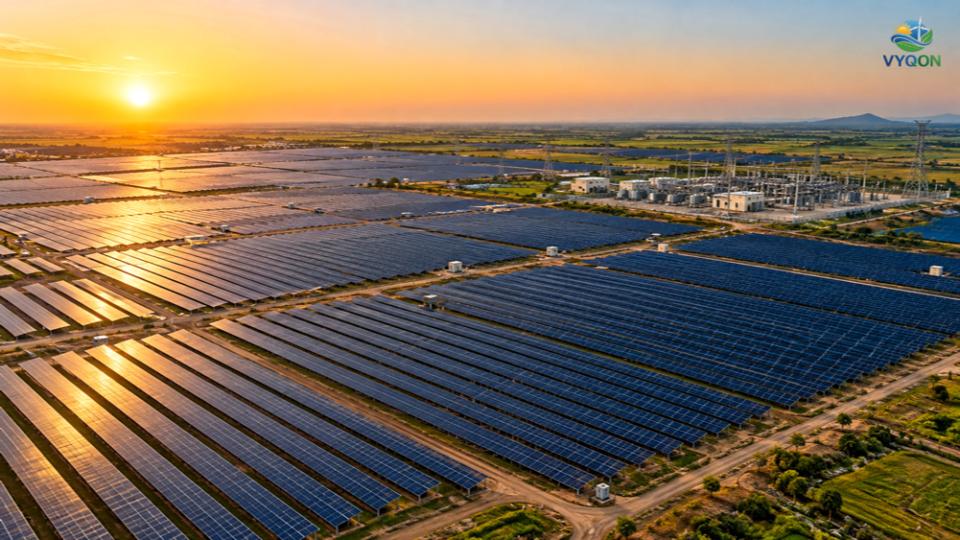
The proposed utility-scale solar development in Andhra Pradesh includes tracker-based mounting systems, a 400 kV grid interface, approximately 60 km of transmission infrastructure and three years of operation and maintenance under a competitive EPC procurement.
NTPC Renewable Energy Limited (NTPC REL), a wholly owned subsidiary of NTPC Green Energy Limited (NGEL), has initiated an Engineering, Procurement and Construction (EPC) tender for a 1,000 MW (1 GW) ground-mounted solar photovoltaic project at Kambadur in Anantapur district, Andhra Pradesh. The development is tentatively planned as two 500 MW blocks and represents a major utility-scale renewable energy procurement involving solar generation equipment, extensive electrical infrastructure, grid integration and long-term operational responsibilities.
According to NTPC’s official Invitation for Bids, issued on 29 September 2026 under reference NRE-CS-5852-004(EPC)-9, the procurement covers the complete design, engineering, manufacturing, supply, installation, testing and commissioning of the solar photovoltaic facility. Beyond conventional solar module installation, the scope includes tracker-based mounting structures, inverter stations, a pooling substation, 400 kV grid-interface equipment and an approximately 60 km transmission line connecting the project to the designated substation. The tender also requires comprehensive monitoring systems and three years of operation and maintenance following successful commissioning.
The project is being procured through domestic competitive bidding, using a single-stage, two-envelope process followed by a reverse auction. Tender documents are scheduled to become available from 15 October 2026, while the bid submission deadline is 16 November 2026 at 3:00 PM. The procurement remains at the bidding stage, and no successful EPC contractor, construction commencement date or commercial operation date has been confirmed through the notice.
Project Design and Tracker-Based Solar Technology
The Kambadur solar development is proposed with an overall generating capacity of 1,000 MW, tentatively divided into two 500 MW EPC blocks. This arrangement could support systematic engineering, construction planning and phased project execution, although the final implementation configuration will depend on the detailed contractual specifications and subsequent project decisions. Developing a project at this scale requires coordination across land preparation, photovoltaic equipment procurement, civil construction, electrical installations and operational infrastructure.
A significant technical feature of the EPC package is the requirement for tracker-based module mounting structures. Unlike fixed-tilt solar installations, tracker systems adjust the orientation of photovoltaic modules during the day to improve their alignment with the sun. Depending on the selected tracker design, site conditions and operating strategy, this can improve energy capture compared with a fixed mounting arrangement. However, actual generation benefits depend on local solar irradiation, tracker operating parameters, shading, equipment reliability and maintenance requirements.
NTPC’s tender specifically includes the design and construction of foundations, installation of tracker-based module mounting structures, fixing of photovoltaic modules and electrical interconnection of the module arrays. These activities will require appropriate structural design, soil assessment and construction-quality control. The scope also covers site grading, vegetation clearing, topographical surveys and geotechnical investigations where necessary. Such assessments are important because ground conditions, drainage and foundation stability directly influence the long-term reliability of solar mounting systems.
The selected EPC contractor will also be responsible for establishing inverter stations with power-conditioning equipment and associated low-voltage and high-voltage switchgear. Solar photovoltaic modules generate direct-current electricity, which must be converted into alternating-current electricity through inverters before integration with the broader electrical network. Proper inverter selection, transformer coordination, electrical protection and system layout are therefore essential to minimising losses and ensuring reliable operation.
The project will additionally require internal roads, pathways, drainage systems, fencing and supporting infrastructure. These elements may not directly generate electricity, but they are important for safe construction, equipment transportation, maintenance access and operational security throughout the facility’s service life.
400 kV Grid Integration and 60 km Transmission Infrastructure
One of the most significant elements of the Kambadur EPC package is its electricity evacuation infrastructure. According to NTPC’s official tender document, the contractor will be responsible for electrical and civil works required to interface the solar project with the 400 kV electricity grid, including transformers, circuit breakers, isolators, protection equipment, cables and metering systems.
The procurement also includes the construction of a pooling substation and associated power transformer, together with the supply and erection of an approximately 60 km transmission line from the solar plant to the designated receiving substation. The tender identifies the receiving-substation arrangement as being provided by APNHAL. This transmission component is essential because the photovoltaic arrays alone cannot deliver electricity commercially without a suitable grid connection and associated protection and control infrastructure.
For a 1 GW solar installation, transmission readiness can be a critical factor in determining when generating capacity becomes available for commercial operation. Even if photovoltaic modules, mounting structures and inverters are installed, grid synchronisation and electricity evacuation depend on the completion of electrical connections, protection coordination, system testing and relevant approvals. The project must therefore progress through solar plant construction and transmission infrastructure development in a coordinated manner.
Another important requirement is the inclusion of dynamic reactive power compensation equipment. Solar power plants must satisfy applicable grid-connectivity requirements relating to voltage regulation, reactive power capability and system response under changing operating conditions. NTPC’s tender refers to the Central Electricity Authority’s July 2022 working-group report concerning compliance verification for renewable energy generators, along with subsequent clarifications and amendments.
The contractor must also undertake a grid-compliance study in accordance with applicable regulations. These requirements highlight the increasing technical complexity of integrating large-scale renewable electricity generation with transmission networks. At high penetration levels, solar plants must demonstrate not only their ability to generate electricity but also their capability to operate within prescribed electrical performance limits.
The project’s transmission requirements make the procurement particularly relevant for electrical equipment manufacturers, transmission-line contractors, transformer suppliers and grid-integration specialists. However, the published tender does not establish final equipment suppliers or confirm the award of any particular transmission construction package.
Monitoring, Maintenance and Execution Requirements
NTPC REL’s EPC scope also places considerable emphasis on monitoring, operational control and long-term plant reliability. The tender requires a central monitoring and control station equipped with a Supervisory Control and Data Acquisition (SCADA) system, supported by suitable hardware, software and communication infrastructure. This system will allow operators to monitor generation performance, equipment conditions and relevant electrical parameters across the solar facility.
The project also includes a weather monitoring station capable of measuring parameters such as cloud cover, which can help operators understand variations in solar generation. Weather information, inverter data and plant operating records are important for performance evaluation, fault identification and maintenance planning. The scope further requires CCTV systems for security surveillance, including coverage of the project perimeter and relevant equipment areas.
Another notable requirement is a dry solar module-cleaning system. Dust accumulation on photovoltaic modules can reduce the amount of sunlight reaching the solar cells, potentially affecting electricity production. Dry-cleaning arrangements may help manage soiling while limiting the use of water, depending on the installed technology and local environmental conditions. For a large solar project in Andhra Pradesh, the cleaning strategy will need to account for actual site conditions, module characteristics and operational requirements.
The contractor will be responsible for three years of operation and maintenance after successful project commissioning, including relevant electrical equipment, consumables and spare parts. This obligation extends the EPC contractor’s responsibilities beyond construction and initial handover, creating an incentive to consider equipment reliability, maintainability and service arrangements during project execution.
Large-scale solar projects also require consistent quality assurance throughout installation. Foundation alignment, tracker installation, cable termination, earthing, equipment testing and protection-system verification must be carried out systematically across the development. Defects repeated across multiple areas can create significant operational and financial consequences, making construction supervision and documentation essential.
The procurement is also expected to generate opportunities for companies involved in photovoltaic modules, trackers, power electronics, transformers, electrical cables, civil engineering, automation and technical services. Actual supplier participation will depend on the final EPC award and subsequent procurement arrangements.
Conclusion
NTPC Renewable Energy Limited’s proposed 1 GW Kambadur solar project represents a substantial utility-scale renewable energy development opportunity in Andhra Pradesh, with an EPC scope extending from photovoltaic installation to high-voltage transmission infrastructure and long-term operational management.
The inclusion of tracker-based mounting systems, a 400 kV grid interface, approximately 60 km of transmission infrastructure, SCADA monitoring and three years of maintenance demonstrates the technical and operational responsibilities associated with developing solar projects of this scale.
Although the project remains at the competitive bidding stage, the tender establishes an important framework for its proposed execution. The next milestones will include bid submission, contractor selection, detailed engineering, construction and eventual commissioning.
References:
1. NTPC Renewable Energy Limited – Official Tender Document (PDF)View Official NTPC REL Invitation for Bids
This is the primary official source confirming the 1 GW solar project, 400 kV grid integration, approximately 60 km transmission line, tracker-based mounting systems and three-year O&M scope.
2. NTPC – Official Tender DetailsView NTPC Kambadur Solar EPC Tender
Tender details:
- Project capacity: 1,000 MW (2 × 500 MW, tentative)
- Location: Kambadur, Anantapur, Andhra Pradesh
- Tender number: NRE-CS-5852-004(EPC)-9
- Issue date: 29 September 2026
- Bid submission deadline: 16 November 2026
Leave a Comment