
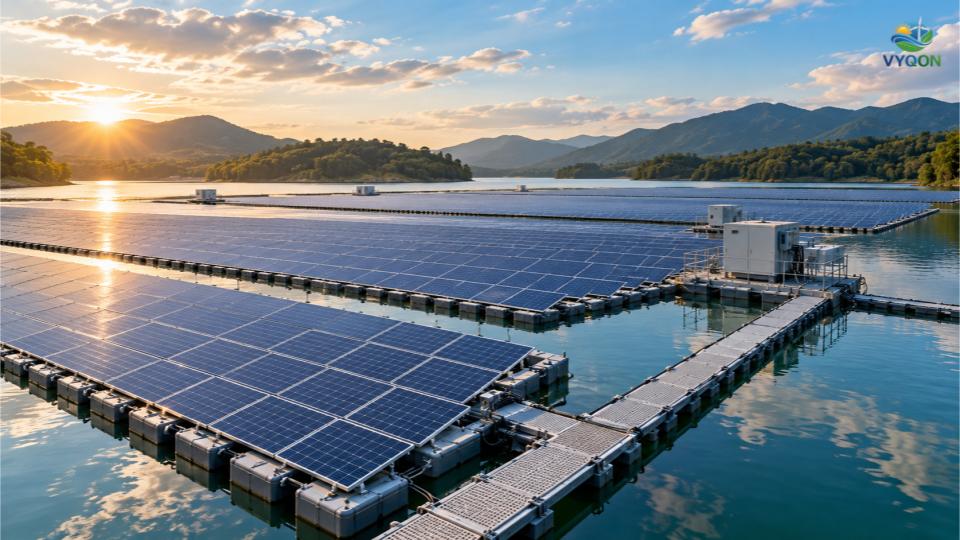
The proposed demonstration at Tata Power’s Mulshi reservoir will evaluate Norway-based Ocean Sun’s hydro-elastic membrane technology, focusing on electricity generation, installation efficiency, reliability and commercial viability under Indian conditions.
Tata Power has announced a strategic collaboration with Ocean Sun, a Norway-based renewable energy technology company, to introduce and evaluate an innovative membrane-based floating solar photovoltaic system in India. The partnership, announced on 7 October 2026, involves the development of an approximately 300 kWp floating solar pilot project at Tata Power’s Mulshi reservoir in Maharashtra. The agreement was signed on the sidelines of the second India–EFTA Prosperity Summit, highlighting growing cooperation between India and Norway in renewable energy technology and sustainable infrastructure.
The proposed pilot aims to assess Ocean Sun’s proprietary floating solar technology under Indian environmental and operating conditions, particularly its electricity generation performance, structural reliability, installation requirements and economic competitiveness. Unlike conventional floating solar systems that use interconnected pontoons to support photovoltaic modules, Ocean Sun’s technology employs a lightweight hydro-elastic membrane floating directly on the water surface. The demonstration will help Tata Power evaluate whether this alternative design can offer practical advantages for future floating solar installations. However, the project remains at the proposed demonstration stage, and neither company has confirmed its commercial commissioning or announced a larger deployment programme.
Membrane-Based Technology Offers an Alternative Floating Solar Design
Floating solar photovoltaic technology allows electricity generation on suitable water bodies, including reservoirs, lakes and industrial water-storage facilities. Conventional floating solar plants generally use modular floating structures that support photovoltaic panels above the water surface. These arrangements require suitable anchoring, structural components, electrical connections and maintenance access to ensure reliable operation under changing environmental conditions.
Ocean Sun has developed a different approach using a thin, hydro-elastic membrane that provides a floating support surface for photovoltaic modules. The membrane-based architecture is designed to accommodate movement at the water surface while reducing dependence on conventional pontoon-based structures. According to Tata Power’s official announcement, the lightweight configuration could simplify transportation, installation and structural requirements compared with some traditional floating solar arrangements.
Another potential advantage is the proximity of photovoltaic modules to the water surface. Solar module efficiency is influenced by operating temperature, with higher cell temperatures generally reducing electrical conversion efficiency. The surrounding water may provide a cooling effect that helps moderate module temperatures under suitable conditions. However, the actual improvement in electricity generation will depend on local weather, module characteristics, installation configuration and operating conditions. Any performance advantage must therefore be established through measured results rather than assumed from the design alone.
The proposed Mulshi installation will provide an opportunity to study these characteristics in a real reservoir environment. The planned 300 kWp capacity represents the peak direct-current rating of the photovoltaic system under standard test conditions, rather than continuous electricity output. Actual generation will vary according to solar irradiation, module temperature, inverter efficiency, shading and equipment availability.
For Tata Power, the demonstration offers a practical opportunity to compare an emerging floating solar configuration with more established technologies before considering potential commercial applications.
Mulshi Reservoir Pilot to Evaluate Performance and Commercial Feasibility
The proposed pilot will be installed at Tata Power’s Mulshi reservoir in Maharashtra, where the companies intend to assess the technical and financial suitability of membrane-based floating solar technology under Indian conditions. According to the official announcement, the evaluation will cover electricity generation, Capacity Utilisation Factor (CUF), installation methodology, installation time, reliability, operation and maintenance requirements, capital costs and overall commercial viability.
These evaluation parameters are important because the long-term performance of a floating solar installation depends on more than photovoltaic module efficiency. Floating structures must operate reliably under changing water levels, wind conditions, rainfall and other environmental influences. Suitable anchoring and mooring arrangements are needed to maintain system stability while accommodating movement at the water surface. Electrical cables, connections and protection systems must also be designed for operation in an environment where moisture exposure and mechanical movement can affect equipment reliability.
The Mulshi demonstration could provide useful information about installation procedures, maintenance accessibility and the durability of the membrane-based support system. A lightweight design may offer advantages during equipment transportation and deployment, but its actual economic value will depend on installation costs, operating reliability, maintenance requirements and electricity generation over time.
Tata Power also intends to compare Ocean Sun’s technology with conventional floating solar solutions. Such comparisons will require appropriate consideration of solar irradiation, module temperature, system availability and differences in engineering configuration. Evaluating performance under comparable operating conditions will help establish whether the membrane-based approach offers measurable benefits.
Environmental and reservoir-management considerations will remain important. Floating photovoltaic installations must be designed to accommodate the primary functions of their host water bodies, including water storage and other authorised uses. Project engineering may also need to evaluate potential effects on aquatic conditions, water circulation and maintenance activities, depending on the final installation design. These are general considerations for floating solar development rather than findings already established for the Mulshi pilot.
The companies have not disclosed a final commissioning date, detailed engineering configuration or specific project investment amount. These details will become clearer as the demonstration progresses towards installation and monitored operation.
India’s Floating Solar Potential and Future Deployment Opportunities
The collaboration comes as India continues exploring alternatives to conventional ground-mounted and rooftop photovoltaic installations. Floating solar technology offers an opportunity to utilise suitable existing water surfaces for renewable electricity generation, potentially reducing the requirement for dedicated project land.
According to an estimate from the National Institute of Solar Energy (NISE) cited in Tata Power’s announcement, India has more than 102 GWp of floating solar potential. This represents an estimate of technical deployment potential rather than installed or approved generating capacity. Actual project development will depend on suitable water bodies, environmental approvals, electricity connectivity, engineering feasibility and commercial conditions.
India’s reservoirs and industrial water bodies provide potential locations for floating photovoltaic systems, although every site presents different technical requirements. Water-level variations, wind exposure, anchoring conditions, equipment accessibility and grid connectivity influence the feasibility of installation. These factors make site-specific engineering assessments essential before a floating solar project can progress towards commercial development.
For conventional solar developers, floating photovoltaic technology can provide an additional project configuration where suitable land availability is limited or where existing water infrastructure creates an opportunity for renewable generation. However, floating systems must demonstrate reliable operation and commercially competitive electricity generation over their expected service life.
Tata Power’s collaboration with Ocean Sun is particularly relevant because it brings an international floating solar technology into an Indian demonstration environment. Ocean Sun contributes its specialised membrane-based photovoltaic design, while Tata Power provides local industry experience and access to a suitable reservoir location for technology evaluation.
The partnership also reflects the broader role of international cooperation in introducing emerging renewable energy technologies to India’s electricity sector. Demonstration projects can help identify practical engineering requirements, evaluate operating costs and establish whether new technologies are suitable for wider deployment.
The next important milestones will include installation of the approximately 300 kWp pilot, commencement of monitored electricity generation and assessment of its operating performance. Published results concerning energy yield, mechanical reliability, installation costs and maintenance requirements would provide a stronger basis for determining whether the technology is commercially suitable for larger projects.
Conclusion
Tata Power’s partnership with Ocean Sun for a 300 kWp membrane-based floating solar pilot at Mulshi reservoir represents a step towards evaluating alternative photovoltaic technologies in India. The demonstration will focus on technical reliability, generation performance and commercial feasibility under local operating conditions.
If the pilot demonstrates competitive performance and reliable operation, the technology could create additional opportunities for floating solar development across suitable Indian water bodies, supporting the country’s renewable energy expansion.
Official sources
1. Tata Power – Official Floating Solar Partnership Announcement
Leave a Comment