
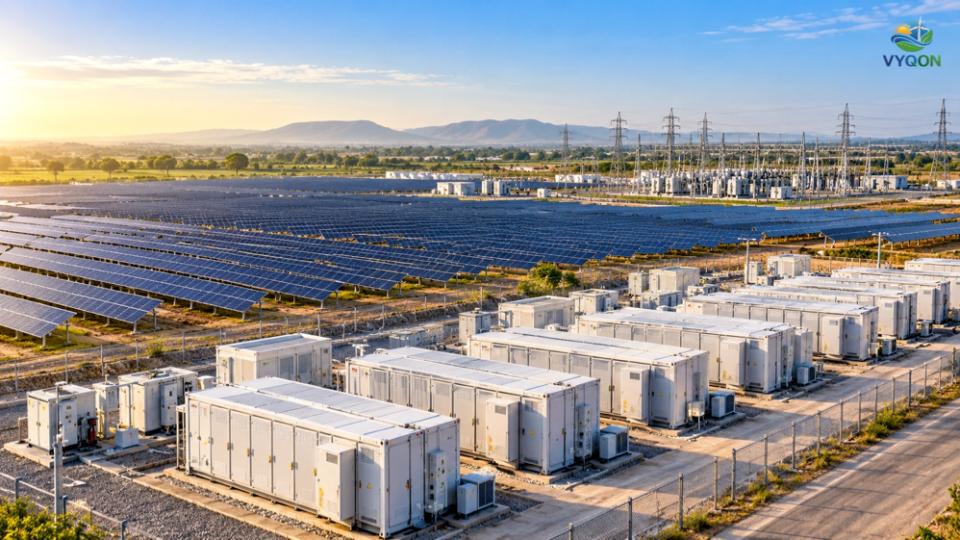
Karnataka Power Corporation Limited has invited bids for 1,000 MW of ground-mounted solar PV integrated with two-hour battery storage, aiming to strengthen renewable energy flexibility and support more reliable electricity delivery.
Bengaluru, 15 October 2026: Karnataka Power Corporation Limited (KPCL) has invited bids for the development, operation and maintenance of 1,000 MW AC of ground-mounted solar photovoltaic projects integrated with 2,000 MWh of Battery Energy Storage Systems (BESS) across Karnataka. The procurement represents a significant renewable energy development opportunity, combining large-scale solar electricity generation with battery storage to improve operational flexibility and support the integration of variable renewable energy into the electricity grid.
The tender, published on 12 October 2026 under reference KPCL/2026-27/SE0391, will follow a tariff-based competitive bidding process with an applicable electronic reverse auction. According to published procurement records, the bid submission deadline is 11 November 2026 at 11:30 AM, with bid opening scheduled for 13 November 2026. The proposed development includes a two-hour battery storage requirement, allowing electricity generated from renewable sources to be stored and discharged according to the project’s eventual operating and contractual conditions.
The initiative highlights Karnataka’s increasing focus on renewable energy projects that combine electricity generation with storage infrastructure. While conventional solar plants depend on available sunlight for generation, integrated battery systems can provide additional flexibility by storing electricity for later use. However, the tender remains at the procurement stage, and no developer selection, final tariff, construction completion or commercial commissioning has been confirmed.
Solar and Battery Storage Configuration
The proposed development combines 1,000 MW AC of solar photovoltaic capacity with 2,000 MWh of battery energy storage, creating an integrated renewable energy system capable of generating and storing electricity. The battery requirement specifies a two-hour storage duration, corresponding to approximately 1,000 MW of nominal discharge power. This means that a battery configuration rated at 1,000 MW/2,000 MWh could theoretically discharge at its full rated output for two hours, before accounting for operating restrictions, conversion losses and auxiliary electricity consumption.
The distinction between power and energy capacity is important when evaluating the project. Megawatts measure the rate at which electricity is generated or delivered, while megawatt-hours measure the total quantity of energy available over a period. The 2,000 MWh storage requirement should therefore not be interpreted as an additional 2,000 MW of solar generation capacity. Instead, the battery system is intended to complement the photovoltaic installation by allowing a portion of generated electricity to be stored and used according to operational requirements.
Solar photovoltaic plants generally produce their highest electricity output during periods of strong sunlight, while electricity demand may remain substantial during evening hours or other periods of reduced solar generation. Integrating storage can help address this difference by allowing electricity to be shifted from one period to another. Battery systems may also support smoother power delivery and improved management of generation fluctuations, depending on the selected control strategy and grid requirements.
However, the available tender summary does not independently establish a specific evening discharge window or guaranteed round-the-clock electricity supply obligation. Such requirements will depend on the detailed tender documentation and subsequent contractual arrangements. A two-hour battery system provides finite-duration energy storage and should not be described as capable of supplying continuous electricity throughout the day.
Engineering Requirements and Grid Integration
Developing a utility-scale solar project with integrated battery storage involves additional engineering and operational considerations compared with a conventional standalone photovoltaic facility. The solar installation requires photovoltaic modules, mounting structures, inverters, transformers, electrical protection equipment and appropriate grid-interconnection infrastructure. The battery system introduces further requirements involving battery modules or racks, power conversion systems, battery management systems, thermal management and energy management controls.
Successful integration depends on coordinating solar generation, battery charging and discharging, and electricity export through a suitable plant-control architecture. An Energy Management System (EMS) can help manage these functions by monitoring solar output, battery state of charge, available storage capacity and operating conditions. Appropriate control strategies are essential to ensuring that the battery operates within its electrical and thermal limits while supporting the project’s intended delivery requirements.
Battery technology selection will also influence project economics and operating performance. Developers must evaluate battery efficiency, expected cycle life, degradation, safety requirements and maintenance expenditure over the operating period. Lithium-ion technologies, including lithium iron phosphate, are commonly considered for stationary energy storage applications, although the reviewed tender summary does not establish a final battery chemistry for this procurement.
Safety is particularly important for large battery installations because high-energy electrical systems require appropriate protection against abnormal operating conditions. A suitable design must consider thermal management, electrical isolation, monitoring, fire detection and applicable emergency-response arrangements. Solar modules and batteries also experience different degradation patterns, making long-term performance forecasting and equipment warranty planning important elements of financial and technical evaluation.
Grid connectivity will be another major consideration. A project of this scale requires coordinated planning for power evacuation, electrical protection, metering, communication systems and compliance with applicable grid regulations. Before commercial operation, generating and storage equipment must complete the necessary installation, testing and commissioning procedures. Actual energy delivery will depend on successful completion of these activities, grid availability and operating requirements.
For developers, the combination of solar and storage also introduces financial considerations. Battery systems increase initial capital expenditure but can provide additional operational value through more flexible electricity delivery. The final economics will depend on equipment costs, financing conditions, electricity tariffs, energy losses, battery cycling requirements and contractual responsibilities.
Tender Schedule and Implications for Karnataka’s Renewable Energy Sector
The procurement provides an opportunity for renewable energy developers, battery technology providers, engineering contractors and equipment manufacturers to participate in Karnataka’s expanding clean energy infrastructure. The published tender schedule identifies a pre-bid meeting on 22 October 2026, followed by the deadline for submitting pre-bid queries on 27 October 2026. The bid submission deadline is scheduled for 11 November, with opening planned for 13 November 2026. Prospective bidders should confirm the latest schedule, eligibility criteria and amendments through the Karnataka Public Procurement Portal.
The tender refers to tariff-based competitive bidding with an applicable electronic reverse auction, meaning the use of reverse bidding will follow the procurement conditions rather than necessarily occurring in every circumstance. Final electricity tariffs, developer responsibilities and performance guarantees will be determined through the tender process and applicable project agreements.
The initiative is significant because it reflects the growing emphasis on renewable electricity systems that provide greater flexibility instead of focusing exclusively on installed generating capacity. As solar penetration increases, electricity networks must accommodate changing generation patterns while maintaining reliable supply. Battery storage can provide additional operational options by shifting energy between different periods, although its contribution remains limited by available stored energy and system performance.
The procurement could also create opportunities for India’s domestic solar and energy storage supply chains. Large-scale projects require photovoltaic modules, battery systems, power conversion equipment, transformers, electrical components, monitoring technologies and installation services. Actual manufacturing and contracting opportunities will depend on the outcome of the bidding process and subsequent project implementation.
The next major milestones will include bid evaluation, identification of successful developers, execution of project agreements, financial arrangements, construction and eventual commissioning. Until these stages are completed, the proposed capacity should be treated as a development pipeline rather than operational electricity generation.
Conclusion
KPCL’s 1,000 MW solar-plus-storage tender with a 2,000 MWh battery requirement represents a step towards integrating renewable electricity generation with flexible energy storage in Karnataka. The proposed development could support more effective utilisation of solar power and create opportunities for renewable energy developers and storage technology providers.
Its long-term contribution will depend on competitive tariff discovery, successful project execution, reliable grid integration and the commercial operation of the proposed solar and battery infrastructure.
Open Official Karnataka Government Tender Portal
Tender details to search:
| Particular | Information |
|---|---|
| Organisation | Karnataka Power Corporation Limited (KPCL) |
| Tender reference | KPCL/2026-27/SE0391 |
| Tender ID | 2026_Karnatak_89986_1 |
| Solar capacity | 1,000 MW AC |
| Battery requirement | 2,000 MWh (2-hour duration) |
| Publication date | 12 October 2026 |
| Bid submission deadline | 11 November 2026 |
Leave a Comment