
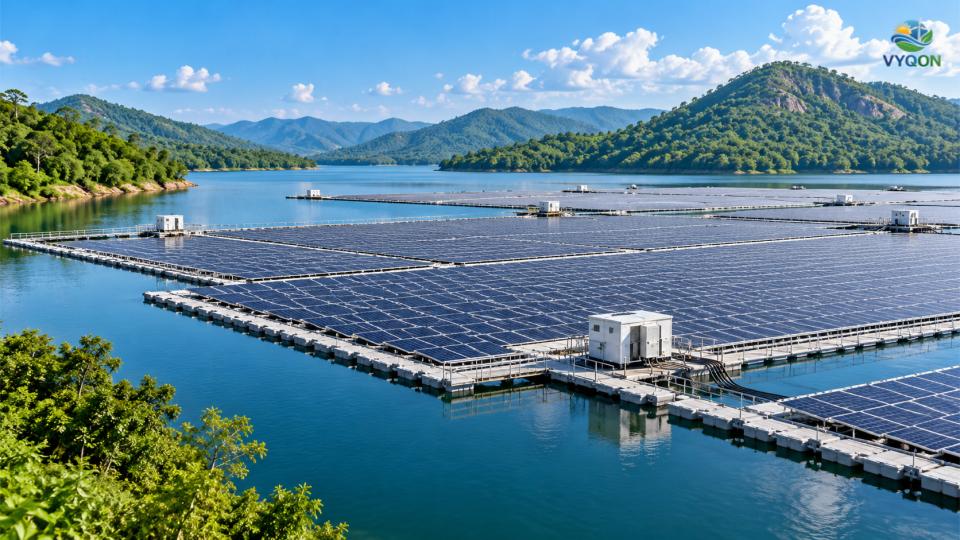
Odisha’s latest consultancy tender covers environmental and social assessments for a proposed 225 MW floating solar development, associated battery energy storage, power evacuation infrastructure and transmission facilities at Upper Indravati Reservoir.
GRIDCO Limited, the Government of Odisha’s electricity procurement and renewable energy nodal agency, has invited proposals from qualified consultancy firms to undertake an Environmental and Social Impact Assessment (ESIA) for the proposed 225 MW Upper Indravati Floating Solar Photovoltaic Project and its associated Battery Energy Storage System (BESS). The tender, issued on 16 October 2026, covers the floating solar installations, energy storage infrastructure, electricity evacuation facilities and associated transmission lines, making environmental and social evaluation an important part of the project’s development process.
The Request for Proposal (RFP), identified as GRIDCO/RENA/E-Tender/04/2026-27, seeks a consultant capable of evaluating potential ecological, environmental, technical and community impacts before the proposed infrastructure advances towards construction. According to the official document, GRIDCO plans to develop the floating solar facility at the Upper Indravati Reservoir through three grid-connected installations of 75 MW each, representing an aggregate planned capacity of 225 MW.
The proposed development will also incorporate battery energy storage, although the final battery power rating, energy capacity, chemistry and operating configuration remain under development. The consultancy assignment is therefore intended to examine both defined project components and potential environmental and safety implications associated with equipment whose final design has not yet been selected.
GRIDCO has scheduled a pre-bid meeting for 30 October 2026 at 11:00 AM, while online proposals must be submitted by 17 November 2026 at 3:00 PM. The techno-commercial bids are scheduled to open on the same day at 5:00 PM. The announcement represents a consultancy procurement milestone rather than an engineering, procurement and construction award or confirmation that the solar project is operational.
Floating Solar Development at Upper Indravati Reservoir
The proposed Upper Indravati project forms part of Odisha’s efforts to develop renewable energy infrastructure using suitable existing water bodies. Floating photovoltaic systems allow solar modules to be installed on engineered structures over reservoir surfaces, potentially reducing the amount of dedicated land needed for conventional ground-mounted solar installations.
According to GRIDCO’s RFP, the floating solar development is being planned across an indicative reservoir installation area of approximately 6.5 square kilometres. This footprint remains subject to project design development and environmental assessment. The proposed infrastructure includes floating photovoltaic arrays, anchoring and mooring systems, inverter barges, an internal 33 kV electricity collection network, pooling infrastructure and associated access and installation facilities.
Unlike ground-mounted photovoltaic plants, floating solar installations must accommodate changing water levels, wind conditions, wave movement and reservoir operating requirements. These factors influence the selection of floating structures, anchoring configurations, electrical cable routes and maintenance access arrangements.
Water-level fluctuations are particularly important because floating platforms must remain sufficiently stable during both high-water and low-water operating conditions. Mooring systems need to accommodate movement while preventing excessive mechanical loading or damage to electrical connections. Extreme weather and changing reservoir conditions can also affect equipment accessibility and long-term operating reliability.
The proposed project will therefore require site-specific hydrological information, environmental monitoring and engineering assessments before final design decisions are made. GRIDCO’s consultancy scope includes evaluation of reservoir operating levels, flooding scenarios, climate-related hazards and their possible effects on floating arrays and associated infrastructure.
The 225 MW capacity refers to the proposed photovoltaic development and should not be interpreted as operating generation already connected to the electricity grid. Future generating capacity will depend on project developer selection, successful construction, testing and commercial commissioning.
Environmental Assessment to Examine Biodiversity and Community Impacts
A central objective of the consultancy is to identify potential environmental and social impacts associated with developing renewable energy infrastructure at the reservoir and surrounding areas.
GRIDCO requires the selected consultant to conduct detailed baseline investigations covering water quality, aquatic ecosystems, terrestrial biodiversity, local livelihoods, existing infrastructure and surrounding communities. The assessment must consider conditions before construction and evaluate potential impacts during installation, operation and eventual decommissioning.
Reservoir-based solar projects may affect existing water-use activities, including fisheries and community access. Floating structures, anchoring equipment and construction arrangements could create localised environmental disturbances if these interfaces are not properly assessed and managed.
The consultant will therefore examine potential effects on aquatic habitats, sediment disturbance, turbidity and underwater noise associated with anchoring and installation work. The RFP also requires appropriate modelling and assessment of relevant water-quality and hydrological conditions.
Another important requirement is the evaluation of community and livelihood impacts. Infrastructure such as access roads, equipment launching facilities, temporary construction areas and transmission corridors can influence local activities beyond the reservoir’s immediate floating solar footprint.
The assessment will examine potential impacts on affected communities, including vulnerable groups and Indigenous Peoples where applicable. It must establish appropriate stakeholder engagement arrangements, grievance mechanisms and livelihood restoration measures based on the findings of field surveys and consultations.
GRIDCO has specified that the ESIA should comply with applicable Indian environmental and social requirements and align with the International Finance Corporation (IFC) Performance Standards and relevant World Bank Group environmental, health and safety guidelines.
The consultancy deliverables include an Environmental and Social Management Plan (ESMP), stakeholder engagement provisions, occupational health and safety planning, and relevant livelihood and biodiversity management measures. These documents are intended to identify risks, define mitigation responsibilities and establish monitoring requirements for subsequent project development.
The assessment is also expected to contribute to more informed decisions on project layout, infrastructure design and environmental safeguards. Rather than being treated solely as a regulatory exercise, it can provide practical information that helps reduce design changes and unforeseen impacts during construction.
Battery Energy Storage and Transmission Infrastructure Form Part of the Study
The proposed project includes a Battery Energy Storage System, which could provide additional operating flexibility alongside floating solar generation. Battery systems can store electricity during suitable charging periods and discharge it when required, subject to their rated capacity and operating conditions.
GRIDCO’s official RFP identifies land earmarked by Odisha Power Transmission Corporation Limited (OPTCL) for the proposed Padapaddar Substation as the intended BESS location. However, the storage system’s final MW/MWh rating, battery chemistry, technology supplier, charging arrangement and detailed layout have not yet been finalised.
This distinction is important because battery infrastructure introduces environmental, safety and operating requirements that differ from photovoltaic generation equipment. Potential considerations include thermal management, fire detection, emergency response, electrical protection, battery transportation and management of equipment at the end of its operating life.
The selected consultant must examine these issues using a suitable range of possible BESS designs while the final technical configuration remains undecided. This will allow environmental and safety requirements to inform later equipment selection rather than waiting until a battery supplier has already been chosen.
Electricity evacuation infrastructure is another important component of the consultancy. The proposed arrangement includes a 33/220 kV pooling substation and a 220 kV transmission connection towards the Mukhiguda Grid Substation.
The environmental assessment must consider the transmission corridor, potential land-use effects, construction activity, access restrictions and ecological sensitivities along the route. Coordination between the solar installation, energy storage system and transmission infrastructure will be essential for developing a technically and environmentally workable project.
GRIDCO has established an initial six-month duration for the consultancy assignment, with provision for extension in accordance with the tender conditions. The RFP also requires separate but coordinated assessment work for the floating solar development and transmission infrastructure.
The October tender follows earlier consultancy procurement activity concerning the Upper Indravati project during 2026. It should therefore be understood as a new solicitation within an existing project-development process, rather than the first announcement of the proposed 225 MW capacity.
Successful completion of the assessment could help GRIDCO refine project documentation, evaluate environmental safeguards and provide important information for subsequent developer selection and construction planning.
Conclusion
GRIDCO’s ESIA consultancy tender for the 225 MW Upper Indravati Floating Solar and BESS Project represents an important preparatory step towards renewable energy development in Odisha.
By assessing reservoir ecology, community livelihoods, battery safety and power evacuation infrastructure, the process could support more responsible project planning. Actual renewable electricity generation will depend on completion of the required studies, project approvals, construction and successful commissioning.
1. Official GRIDCO Tender Document (PDF)
Download Official GRIDCO ESIA Tender PDF
2. Official Tender Announcement
GRIDCO – Official Tender Register
Search for tender reference GRIDCO/RENA/E-Tender/04/2026-27.
Key Tender Details
| Particular | Information |
|---|---|
| Issuing authority | GRIDCO Limited |
| Project | Upper Indravati Floating Solar and BESS |
| Solar capacity | 225 MW |
| Tender issue date | 16 October 2026 |
| Bid submission deadline | 17 November 2026, 3:00 PM |
| Bid opening | 17 November 2026, 5:00 PM |
| Tender type | Environmental and Social Impact Assessment consultancy |
Leave a Comment