
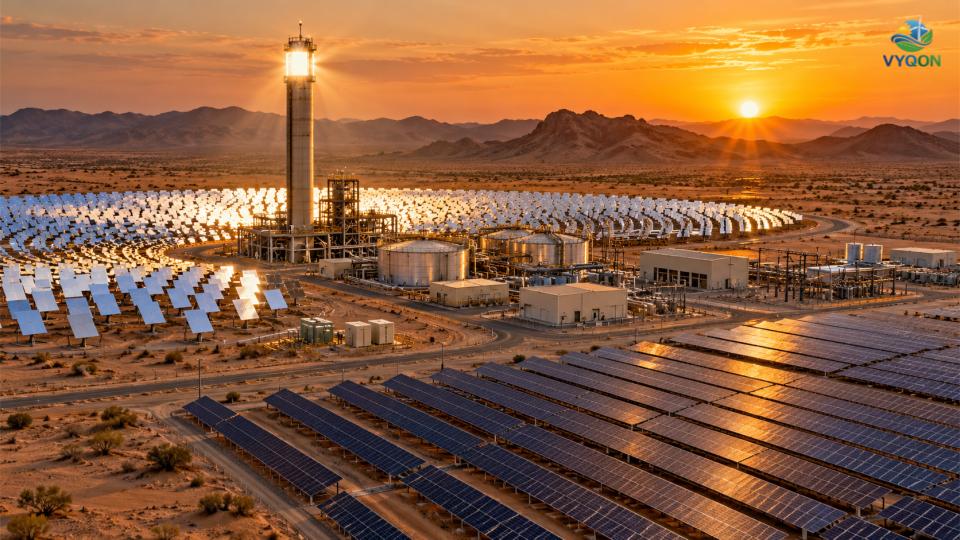
The proposed demonstration will combine a 400 kW modular concentrated solar-thermal plant with photovoltaic generation, evaluating high-temperature thermal storage as a potential solution for extending clean electricity supply beyond daylight hours.
NTPC Limited has signed a 25-year Power Purchase Agreement (PPA) with US-based renewable energy technology company 247Solar for an approximately 1 MW solar-thermal and photovoltaic hybrid project at Bhadla Solar Park in Rajasthan. The agreement, announced by 247Solar on 14 October 2026, marks an important commercial milestone for the company’s modular concentrated solar power technology, which is designed to combine electricity generation with high-temperature thermal energy storage.
According to the company’s official announcement, the proposed hybrid installation will integrate one 400 kW modular 247Solar Plant with several hundred kilowatts of solar photovoltaic capacity. The project is intended to demonstrate how concentrated solar heat and thermal storage can complement conventional photovoltaic generation, potentially extending electricity availability into periods when sunlight is insufficient for direct solar power production.
247Solar describes the Bhadla installation as its first commercial deployment and an opportunity to demonstrate the technology’s suitability for wider renewable energy applications. However, the company has not disclosed the project’s exact photovoltaic capacity, investment value, electricity tariff or commercial commissioning date. The signed PPA represents a contractual development milestone rather than confirmation that the project has begun supplying electricity.
Combining Photovoltaic Generation with Concentrated Solar-Thermal Technology
The proposed development will combine two different methods of converting solar energy into usable electricity. Conventional photovoltaic modules convert sunlight directly into electrical energy through semiconductor materials, while concentrated solar power systems use mirrors to focus solar radiation onto a receiver, producing high-temperature heat that can subsequently be converted into electricity.
247Solar’s modular technology is based on this second approach but differs from many conventional concentrated solar power installations. Traditional concentrating solar-thermal plants frequently use steam turbines and may employ molten-salt systems for thermal storage. In contrast, 247Solar has developed a configuration that uses concentrated sunlight to heat air, with the resulting thermal energy directed towards electricity generation and storage.
The company’s technology uses mirrors to concentrate sunlight onto an elevated receiver, where air can be heated to temperatures approaching 1,000°C, according to its technical description. The heated air transfers thermal energy to a proprietary turbine system, enabling electricity generation without relying on a conventional steam cycle.
A central feature is the use of ceramic pellets for thermal energy storage. Heat collected during periods of high solar radiation can be retained in the storage material and subsequently used to generate electricity when direct sunlight is unavailable. This approach differs fundamentally from electrochemical battery storage because energy is retained as heat rather than being stored through chemical reactions.
247Solar states that its technology can provide up to 20 hours of thermal storage, although this figure describes the company’s broader technological capability and does not establish the final installed storage duration or demonstrated performance of the Bhadla project.
Integrating photovoltaic generation with the solar-thermal system could provide complementary electricity output. The PV installation can contribute electricity during daylight hours, while the thermal component may generate additional electricity from stored heat during periods of lower solar availability. The operating strategy, charging and discharging characteristics, and total deliverable energy will depend on the final plant configuration.
This hybrid arrangement is intended to demonstrate whether combining direct photovoltaic conversion with stored solar heat can provide greater electricity supply flexibility than either technology operating independently.
High-Temperature Storage and the Potential for Extended Electricity Supply
One of the main objectives of the project is to evaluate thermal energy storage as an alternative approach to managing the variability of renewable electricity generation.
Solar photovoltaic output generally declines towards sunset and becomes unavailable at night unless supported by stored energy or another generating resource. Thermal storage can address part of this challenge by preserving previously collected energy for later conversion into electricity.
247Solar’s system uses a proprietary turbine arrangement designed to generate electricity using high-temperature thermal energy. During normal solar-powered operation, the turbine does not require fuel combustion to produce electricity. The company also states that the turbine can operate using supplemental liquid or gaseous fuels, including natural gas, green hydrogen or diesel, if stored heat becomes insufficient.
This optional capability is important when evaluating claims of round-the-clock electricity supply. Electricity generated from stored solar heat differs environmentally from electricity produced using fossil-fuel backup. Actual emissions and renewable electricity contributions would therefore depend on the plant’s operating conditions and any supplemental fuel eventually used.
The official announcement does not confirm that the Bhadla project will install or operate a particular fuel-backup arrangement. Nor does it provide verified figures for annual electricity production, thermal conversion efficiency or continuous operating duration.
Such information will become important once the demonstration enters operation because the economic value of long-duration storage depends on how much electricity can be delivered, when it is available and the cost of maintaining reliable performance.
Thermal storage can offer advantages for applications requiring high-temperature energy, particularly where electricity and industrial process heat are both valuable. However, its performance must be evaluated against alternative technologies such as battery energy storage, pumped hydro storage and other dispatchable renewable energy configurations.
For electricity utilities, the central question is whether a system can provide dependable output during required delivery periods at an economically competitive cost. The Bhadla demonstration could contribute useful evidence towards answering that question.
Bhadla Solar Park Selected for Technology Demonstration
The hybrid project will be located at Bhadla Solar Park in Rajasthan, one of India’s major utility-scale solar development locations. The region’s substantial solar resource and established renewable energy infrastructure make it relevant for testing technologies that depend on concentrated sunlight.
According to 247Solar, NTPC and the company selected Bhadla because of its solar irradiation conditions and the availability of suitable electricity interconnection arrangements.
The company further states that Rajasthan Renewable Energy Corporation Limited is supporting the project and has approved preliminary studies, site surveys and structural testing. These activities represent preparatory development work rather than confirmation of completed construction or commercial commissioning.
The location provides an opportunity to assess the technology under demanding environmental conditions. Rajasthan’s dry climate and high solar radiation can support concentrated solar applications, but dust accumulation, elevated temperatures, wind and equipment maintenance also influence operating performance.
Concentrated solar systems depend on accurate mirror alignment and clean optical surfaces to direct sunlight towards the receiver. Dust and soiling can reduce the amount of thermal energy collected, potentially affecting electricity output and storage availability.
The thermal storage system will also need to demonstrate reliable performance during repeated heating and cooling cycles. Engineers must evaluate temperature management, insulation effectiveness, heat losses and the mechanical durability of high-temperature components over extended operation.
Similarly, the photovoltaic portion of the project will require conventional monitoring of irradiation, module temperature, inverter performance, electricity generation and availability.
An integrated demonstration should allow operators to measure the contributions of the photovoltaic and solar-thermal components separately while also assessing their combined electricity delivery performance.
Although the project is comparatively small, its principal value lies in providing operating evidence for a technology that may be considered for larger applications if its technical and commercial performance meets expectations.
Implications for India’s Dispatchable Renewable Energy Development
India’s continued expansion of solar and wind generation is increasing attention on technologies capable of delivering electricity beyond periods of immediate renewable resource availability.
Battery energy storage has emerged as an important option for short-duration and multi-hour flexibility. However, other technologies, including pumped hydro and thermal energy storage, are also being explored to address different electricity supply requirements.
The NTPC–247Solar agreement is notable because it introduces a modular concentrated solar-thermal configuration into a commercial demonstration framework supported by a long-term electricity purchase agreement.
According to 247Solar, the partnership follows several years of technical and commercial evaluation. A successful demonstration could provide NTPC with additional information for assessing whether modular solar-thermal systems are suitable for broader deployment.
The project’s potential significance extends beyond its approximately 1 MW rating. If the technology demonstrates reliable electricity generation, effective thermal storage and commercially viable operating costs, it could provide another option for renewable energy integration and selected industrial energy applications.
However, the company’s stated expectations of lower costs, improved reliability and continuous clean power remain to be validated through project-specific operating data.
Future reporting should therefore focus on construction progress, grid connection, commencement of commercial operation and measured performance. Important technical indicators will include storage duration, electricity conversion efficiency, operating availability, maintenance requirements and the share of generation attributable to stored solar energy.
The actual electricity tariff and project investment will also be important for evaluating commercial competitiveness against established solar-plus-storage technologies.
Conclusion
NTPC’s 25-year PPA with 247Solar for an approximately 1 MW solar-thermal hybrid project at Bhadla represents an important step towards evaluating high-temperature thermal storage for more flexible renewable electricity generation.
The combination of photovoltaic modules, modular concentrated solar technology and stored solar heat could provide useful operating evidence for future energy projects.
1. Official Press Release – 247Solar
247Solar – Official NTPC 25-Year PPA Announcement
2. Official Technical Source
247Solar – Official Solar-Thermal Technology Details
Verified project details
| Particular | Official information |
|---|---|
| Companies | NTPC Limited and 247Solar |
| Announcement date | 14 October 2026 |
| Project location | Bhadla Solar Park, Rajasthan |
| PPA duration | 25 years |
| Hybrid capacity | Approximately 1 MW |
| Solar-thermal unit | 400 kW |
| PV capacity | Several hundred kilowatts |
| Technology | Concentrated solar thermal with thermal storage |
| Project status | Commercial demonstration announced; commissioning not confirmed |
Leave a Comment