
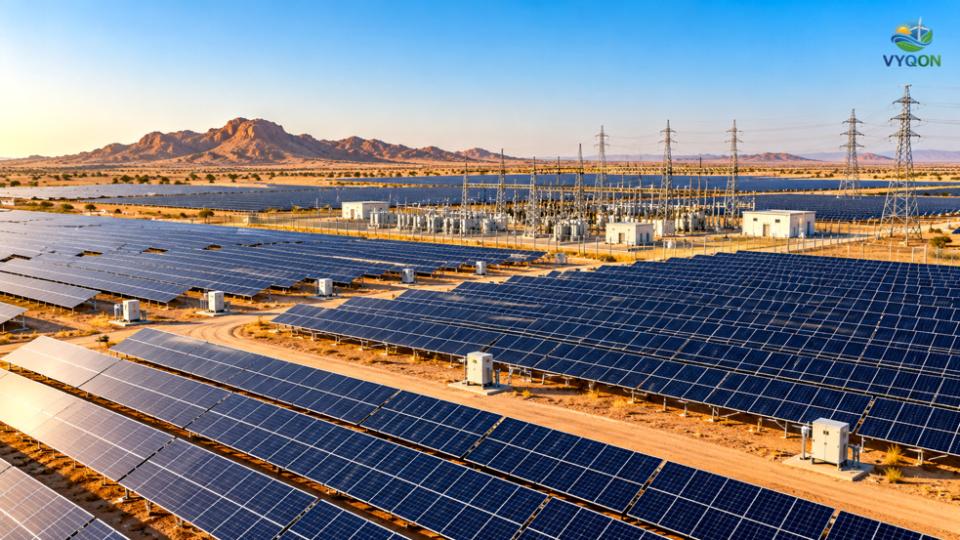
The Department of Fertilisers enterprise has invited bids for the development and 25-year operation of a solar power plant at Bhawad, with an estimated tender value of ₹30.65 crore and a bid submission deadline of 28 October 2026.
FCI Aravali Gypsum and Minerals India Limited (FAGMIL), a Government of India enterprise under the Department of Fertilisers, has issued a fresh tender for the supply, installation, commissioning and long-term operation of a 2.52 MW AC solar photovoltaic power plant at Bhawad in the Osiyan area of Jodhpur district, Rajasthan. The procurement, published on 14 October 2026 through the Central Public Procurement Portal, forms part of FAGMIL’s previously announced solar development plans associated with the PM-KUSUM Component-C feeder-level solarisation programme.
The tender has been issued under reference FAGMIL-3(195)/Solar Power Plant02/2026, with government tender ID 2026_DFERT_930288_1. According to the official procurement notice, the estimated tender value is ₹30,64,76,550, approximately ₹30.65 crore, while the project involves long-term operation over 25 years. Interested bidders must submit their proposals by 28 October 2026 at 4:00 PM, with bid opening scheduled for 29 October 2026 at 4:00 PM.
The latest invitation follows an earlier tender issued for the same 2.52 MW AC development in August 2026. Both notices identify Bhawad as the project location and refer to a similar long-term solar development scope. The October tender should therefore be treated as a new procurement opportunity concerning an existing proposed project, rather than confirmation of an additional 2.52 MW capacity commitment. The project remains at the procurement stage, with construction completion and commercial operation yet to be established.
Solar Development Under PM-KUSUM Component-C
FAGMIL’s Bhawad solar project is associated with Component-C of the Pradhan Mantri Kisan Urja Suraksha evam Utthaan Mahabhiyan (PM-KUSUM), a programme supporting the solarisation of agricultural electricity consumption.
Under its feeder-level solarisation approach, solar power plants can be developed near electricity distribution substations to supply power associated with agricultural feeders. The objective is to increase the utilisation of renewable electricity in agricultural distribution networks while improving the economics of supplying electricity for irrigation and other eligible agricultural requirements.
The location of the proposed project at Bhawad is relevant because feeder-connected solar installations can support electricity demand during daylight hours, when agricultural pumping operations may be scheduled. However, actual benefits will depend on the local agricultural load profile, feeder operating arrangements, network conditions and successful integration of solar generation with the distribution system.
Unlike a standalone solar irrigation pump, feeder-level solarisation involves a grid-connected photovoltaic installation that supplies electricity through the distribution network. The electricity generated may support multiple agricultural consumers connected to the relevant feeder, subject to the electricity distribution company’s operating and accounting arrangements.
The Ministry of New and Renewable Energy’s PM-KUSUM guidelines allow feeder-level solar plants to be developed through capital-expenditure or renewable energy service company arrangements, depending on the applicable project structure. Such installations require coordination between developers, distribution companies and implementing agencies to ensure that generation capacity is consistent with electricity demand and network capabilities.
FAGMIL had identified the proposed 2.52 MW Bhawad project as part of its diversification into the solar sector in its earlier corporate disclosures. The company’s annual report records approval from the Department of Fertilisers on 3 February 2025 for its entry into solar power development. The latest tender indicates continued procurement activity related to that established project.
Long-Term Contract Structure and Financial Considerations
One of the distinguishing features of FAGMIL’s solar procurement is the requirement to combine plant development with long-term operation.
The official October notice describes the procurement as an EPC contract for the supply, installation, commissioning and operation of the 2.52 MW AC facility over 25 years. Earlier project documentation identified a Build–Own–Operate (BOO) arrangement, under which the selected developer would be responsible for developing and operating the solar asset.
Such a structure places considerable importance on lifecycle performance rather than initial construction cost alone. Solar power installations require periodic inspection, cleaning, inverter maintenance, electrical testing, monitoring and replacement of components that may fail during their operating lives.
The proposed facility’s commercial performance will depend on photovoltaic generation, operational availability, financing costs, maintenance expenditure and the terms governing electricity supply. Although solar modules generally have long operating lifetimes, their output declines gradually with age, and other equipment may require servicing or replacement over the contractual period.
The estimated tender value of approximately ₹30.65 crore must be interpreted carefully. It represents the value recorded in the government’s procurement system and should not automatically be described as the upfront capital cost of the solar installation or the total amount already committed by FAGMIL.
For prospective bidders, preparing a credible financial offer will require careful assessment of land availability, equipment procurement, construction costs, transmission connectivity, operating responsibilities and the commercial obligations established in the tender documents.
The procurement specifies an Earnest Money Deposit of ₹10 lakh, with technical and financial bids to be submitted separately. The official schedule also provides for a pre-bid meeting on 21 October 2026 at 3:00 PM at FAGMIL’s office in Jodhpur, followed by the deadline for submitting clarification requests on 23 October.
The proposed 25-year operating arrangement makes it essential for bidders to examine long-term equipment warranties, performance requirements, maintenance access and contractual responsibility for infrastructure failures or electricity delivery interruptions.
Engineering, Grid Integration and Agricultural Supply
The project is specified with an alternating-current capacity of 2.52 MW, representing the power rating associated with its grid-connected output. This should be distinguished from the direct-current capacity of its photovoltaic module array, which may be higher depending on the final system configuration.
A ground-mounted solar plant of this scale requires photovoltaic modules, mounting structures, inverters, transformers, protection equipment, electrical cabling and suitable metering arrangements. Its performance will depend on appropriate component selection, reliable construction and the quality of the electrical interconnection.
In Rajasthan, solar projects benefit from substantial sunlight availability, but environmental factors such as dust accumulation, high temperatures and seasonal weather conditions can influence output and maintenance requirements.
Module temperature is particularly important because photovoltaic conversion efficiency generally decreases as solar cell temperature rises. Appropriate module selection, ventilation and system design can help manage these operating conditions, while regular cleaning may be necessary to reduce losses caused by dust and soiling.
Grid integration is another major consideration. Electricity generated by the plant must be delivered through suitable electrical infrastructure, with voltage control, protection settings, metering and synchronisation arrangements meeting the applicable requirements of the distribution utility.
For feeder-level solarisation, developers must also consider the relationship between photovoltaic generation and agricultural electricity demand. Daytime solar production may support irrigation loads, but demand varies with cropping patterns, seasonal water requirements and the operation of connected pumps.
Consequently, the plant’s electricity generation capability should be evaluated using site-specific solar resource information alongside available feeder load and network data. A reliable interconnection design is necessary to minimise technical problems and support predictable long-term operation.
Engineering quality will influence the plant’s performance throughout the operating period. Proper drainage, suitable equipment foundations, secure cable routes and accessible maintenance arrangements can reduce the likelihood of avoidable failures.
Comprehensive commissioning records and equipment traceability will also be important because the plant is expected to operate over an extended contractual period.
October Procurement and Wider Significance
The October tender represents another step in FAGMIL’s efforts to develop the previously identified Bhawad solar project.
The earlier August 2026 procurement concerned the same headline capacity and location, with a separate tender reference and bidding timetable. The October notice therefore provides an updated opportunity for contractors and developers, although the publicly accessible summary does not explain the reason for the additional procurement.
This distinction is important when reporting renewable energy development. Multiple tenders concerning the same proposed asset should not be counted as multiple projects or additional installed capacity.
The Bhawad project also illustrates how public-sector enterprises outside the conventional electricity industry are participating in renewable energy development. FAGMIL’s primary activities relate to mineral resources, but its proposed solar investment reflects an effort to diversify into clean electricity infrastructure.
From an industry perspective, relatively small solar plants can contribute to the decentralisation of renewable generation when developed at technically suitable distribution-network locations. Their implementation may generate demand for photovoltaic modules, inverters, mounting structures, transformers and local engineering services.
However, these opportunities depend on successful developer selection and project execution. Tender publication alone does not demonstrate that equipment has been ordered, land arrangements completed or electricity generation commenced.
The next important milestones will be completion of bidding, evaluation of proposals, award of the contract, finalisation of site and grid arrangements, construction and commissioning.
Conclusion
FAGMIL’s October tender for the 2.52 MW AC solar project at Bhawad advances procurement for an existing PM-KUSUM-associated development in Rajasthan.
With bids closing on 28 October 2026, the focus will shift towards contractor selection and implementation. Successful commissioning could support agricultural feeder solarisation and FAGMIL’s renewable energy diversification objectives.
1. Official Government Tender – Primary Source
https://eprocure.gov.in/eprocure/app
2. FAGMIL Official Annual Report
Download FAGMIL Annual Report 2024–25 (PDF)
Official tender details
| Particular | Information |
|---|---|
| Organisation | FCI Aravali Gypsum and Minerals India Limited |
| Project capacity | 2.52 MW AC |
| Location | Bhawad, Osiyan, Jodhpur |
| Tender ID | 2026_DFERT_930288_1 |
| Tender reference | FAGMIL-3(195)/Solar Power Plant02/2026 |
| Estimated tender value | ₹30.65 crore |
| Tender published | 14 October 2026 |
| Bid submission deadline | 28 October 2026, 4:00 PM |
| Bid opening | 29 October 2026, 4:00 PM |
| Operating period | 25 years |
Leave a Comment