
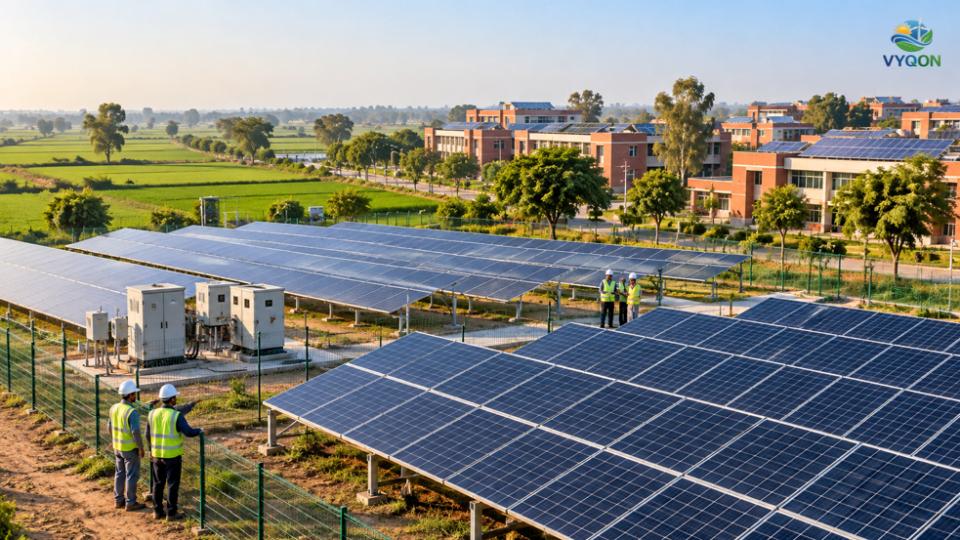
The Uttar Pradesh electricity regulator has approved ten solar power purchase agreements under PM-KUSUM Component C-2, strengthening agricultural feeder solarisation through competitively discovered tariffs.
The Uttar Pradesh Electricity Regulatory Commission (UPERC) has approved ten Power Purchase Agreements (PPAs) covering a combined 19.7 MW of grid-connected solar photovoltaic capacity under the feeder-level solarisation component of the Pradhan Mantri Kisan Urja Suraksha evam Utthaan Mahabhiyan (PM-KUSUM) programme. The regulatory order, dated 13 October 2026, concerns agreements submitted by Uttar Pradesh Power Corporation Limited (UPPCL) and the Uttar Pradesh New and Renewable Energy Development Agency (UPNEDA) for solar projects intended to supply electricity through selected agricultural feeders across the state.
The approval, issued under Petition No. 2412 of 2026, covers solar projects selected through a tariff-based competitive bidding process. According to published reporting on the regulatory decision, the Commission has adopted tariffs ranging from ₹2.91 to ₹2.99 per kilowatt-hour, establishing the contractual electricity purchase rates for the approved projects. The solar installations are being developed under PM-KUSUM Component C-2, which focuses on integrating grid-connected renewable energy generation with agricultural electricity distribution infrastructure.
The decision represents another step in Uttar Pradesh’s efforts to improve renewable electricity procurement and expand solar power availability for agricultural consumers. However, regulatory approval of the PPAs does not establish that the full 19.7 MW of solar capacity has been installed or commissioned. Actual electricity generation will depend on project construction, grid connectivity, technical approvals and successful commercial operation.
Regulatory Approval and Competitive Solar Tariffs
The latest decision forms part of a broader solar procurement programme implemented by UPNEDA and UPPCL under PM-KUSUM Component C-2. The procurement process was designed to select renewable energy developers capable of establishing grid-connected solar power plants near designated agricultural feeders and distribution substations.
The original procurement programme contemplated approximately 3,205 MW of solar capacity, which was subsequently revised to 2,553.5 MW following changes to the capacity requirements associated with selected substations and feeders. The 19.7 MW addressed in the October regulatory decision represents a specific group of approved agreements within this wider procurement process, not the total capacity awarded or commissioned under the programme.
Under the competitive bidding arrangement, developers submit electricity tariffs at which they are prepared to supply power to the designated purchaser. Following bid evaluation and selection, successful developers receive the relevant Letters of Award and execute power purchase agreements, which are subsequently submitted for regulatory consideration where required.
The adopted tariff range of ₹2.91–₹2.99/kWh reflects relatively narrow variation across the ten approved agreements. Among the reported project-level details, Bhaskar Renewable Energy Private Limited secured a tariff of ₹2.91/kWh for a 1.7 MW project in Chitrakoot, while APS Developers was associated with a 2.3 MW project in Mathura at ₹2.93/kWh. Shakti Renews Private Limited was reported to have secured a tariff of ₹2.95/kWh for a 1.3 MW project in Kanpur Nagar.
The approved portfolio includes projects associated with districts such as Hapur, Amroha, Kanpur Nagar, Farrukhabad, Mathura, Saharanpur and Chitrakoot. These distributed installations are intended to support renewable electricity supply through local agricultural feeder networks rather than through a single large solar park.
For developers, tariff approval provides an important foundation for assessing expected electricity revenue and project financing. However, the commercial viability of each installation will depend on actual generation, equipment costs, financing conditions, operating expenditure and the contractual arrangements governing payments and performance.
For electricity purchasers, competitively discovered solar tariffs can support long-term procurement planning. Nevertheless, the approved generation tariff should not be directly compared with the final retail tariff paid by agricultural consumers, because electricity distribution costs, government subsidies and other regulatory considerations may affect the price of electricity delivered to end users.
PM-KUSUM Component C-2 and Agricultural Feeder Solarisation
The approved projects are associated with PM-KUSUM Component C-2, which supports the solarisation of agricultural electricity feeders. Unlike standalone solar pumps installed for individual farmers, feeder-level solarisation uses grid-connected photovoltaic power plants to supply electricity through the existing distribution infrastructure serving agricultural consumers.
The programme aims to improve the availability of renewable electricity during daylight hours, when agricultural irrigation demand can be substantial. By developing solar generation near suitable distribution substations and agricultural feeders, utilities may reduce their dependence on conventional electricity sources for part of the agricultural load.
Under the programme framework described by the Ministry of New and Renewable Energy (MNRE), feeder-level solar projects can be established through capital-expenditure or Renewable Energy Service Company (RESCO) arrangements. The relevant solar installations are generally designed to serve agricultural electricity requirements over a long-term project period.
The Uttar Pradesh procurement follows the RESCO approach, under which selected developers undertake project development and supply electricity under contractual arrangements with the purchasing utility.
An important technical consideration is the relationship between solar electricity production and agricultural power demand. Solar photovoltaic generation is concentrated during daylight hours, while agricultural feeder consumption varies depending on irrigation schedules, cropping patterns, groundwater requirements and seasonal weather conditions.
Appropriately located solar power plants can help match part of this demand with local renewable generation. However, their actual contribution depends on the feeder’s electrical capacity, local consumption pattern, metering arrangements and the ability of the distribution network to accommodate the electricity produced.
The projects must therefore satisfy applicable grid connectivity, protection and electrical safety requirements before commercial operation. Distribution utilities will also need reliable information on generated electricity, feeder demand and system performance to evaluate the effectiveness of the solarisation programme.
Although the latest regulatory order strengthens the contractual position of the selected projects, successful implementation will require coordination among developers, UPNEDA, UPPCL and the relevant distribution utilities.
Project Implementation, Grid Integration and Commercial Responsibilities
Following approval of the PPAs, the next stage involves satisfying the development and operating requirements associated with each project. Depending on the progress already achieved, developers may still need to complete land arrangements, equipment procurement, financing, electrical infrastructure and the necessary approvals before the solar plants can begin supplying electricity commercially.
Ground-mounted solar installations serving agricultural feeders generally require photovoltaic modules, mounting structures, grid-connected inverters, transformers, protection devices, metering equipment and electricity evacuation arrangements. The final design of each installation must be compatible with the designated feeder and the distribution substation to which it will connect.
Plant capacity must also be distinguished from actual electricity generation. A solar project rated at a particular number of megawatts will not deliver that output continuously throughout the day. Production depends on solar irradiation, module temperature, inverter performance, shading, equipment availability and other site-specific conditions.
Over the operating period, developers will be responsible for maintaining suitable equipment performance and addressing the effects of component degradation, weather exposure and electrical faults in accordance with their contractual obligations.
The Commission’s decision also highlights the importance of implementing projects within the agreed contractual framework. Earlier allocations under the wider procurement programme reportedly faced difficulties when certain developers did not fulfil required financial-security obligations, demonstrating that competitive selection alone does not guarantee completion.
For project financiers and electricity utilities, the next important milestones will include verification of contractual compliance, financing progress, connection readiness and the achievement of scheduled commissioning dates.
Individual project commissioning records will be necessary to establish when the approved 19.7 MW portfolio begins contributing electricity to the state grid. Until those records are available, the capacity should remain classified as contractually approved rather than operational.
Significance for Uttar Pradesh’s Distributed Solar Development
The latest approvals demonstrate continued activity under Uttar Pradesh’s agricultural feeder solarisation programme. While 19.7 MW is relatively small compared with large utility-scale solar projects, distributed installations can play an important role in integrating renewable generation with local electricity demand.
Smaller solar projects developed across multiple substations may offer opportunities for local engineering contractors, photovoltaic module suppliers, inverter manufacturers and electrical infrastructure service providers. Their development also requires consistent technical standards and reliable performance monitoring across geographically dispersed installations.
For the state electricity sector, the long-term benefits will depend on whether the projects deliver dependable daytime electricity and contribute to the economic and operational objectives of agricultural feeder solarisation.
The adoption of competitive tariffs establishes the electricity purchase framework, but the actual value of the programme will become clearer through project-level commissioning records, metered generation and operating performance.
Future regulatory disclosures and utility reports will be important for distinguishing projects that have received Letters of Award, executed PPAs, obtained regulatory approval and achieved commercial operation. Maintaining these distinctions will help avoid double-counting capacity within Uttar Pradesh’s expanding solar development pipeline.
Conclusion
UPERC’s approval of ten PM-KUSUM solar PPAs covering 19.7 MW at tariffs of ₹2.91–₹2.99/kWh strengthens the contractual framework for agricultural feeder solarisation in Uttar Pradesh.
The decision supports progress towards decentralised renewable electricity supply, but the approved capacity should not yet be classified as commissioned generation. Timely project execution, reliable feeder connectivity and verified commercial operation will determine the programme’s practical contribution.
1. Official UPERC Regulatory Order (PDF)
Download Official UPERC Order – 13 October 2026
Original regulatory order · Petition No. 2412 of 2026
2. Official UPERC Orders Register
Uttar Pradesh Electricity Regulatory Commission – Official Orders
Order identification
| Particular | Details |
|---|---|
| Regulatory authority | UPERC |
| Petition number | 2412 of 2026 |
| Order date | 13 October 2026 |
| Applicants | UPNEDA and UPPCL |
| Scheme | PM-KUSUM Component C-2 |
| Reported approved capacity | 19.7 MW |
| Reported tariff range | ₹2.91–₹2.99/kWh |
Leave a Comment