
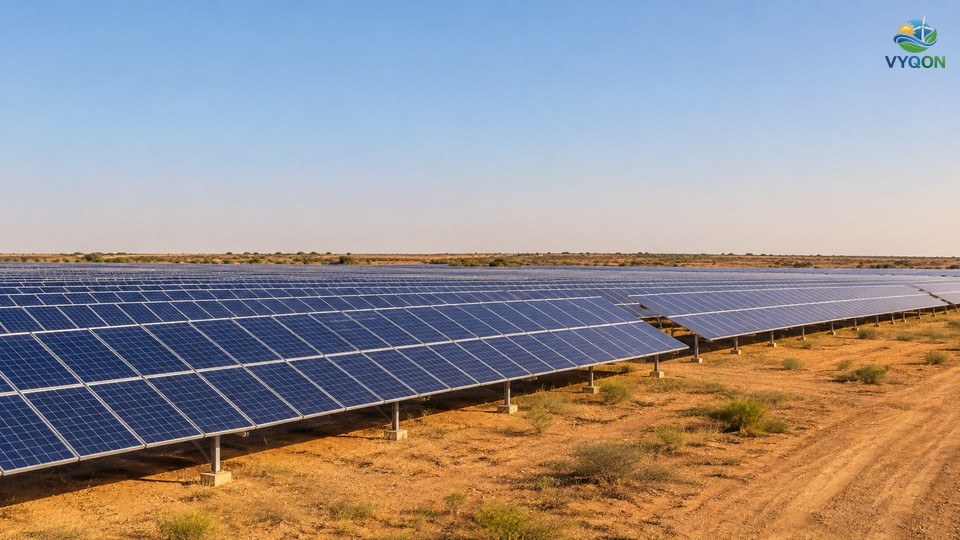
The Gujarat Electricity Regulatory Commission (GERC) has adopted a tariff of Rs 2.34 per kWh for the procurement of 1,250 MW of grid-connected solar power by Gujarat Urja Vikas Nigam Limited (GUVNL) under its Phase XXVIII tender. The GERC Rs 2.34 solar tariff covers 625 MW of base capacity and a further 625 MW under the greenshoe option, and the decision was reported on 9 and 10 November 2026.
What the tender asked for
GUVNL’s Request for Selection (RfS) for Phase XXVIII, numbered GUVNL / 625 MW / Solar (Phase XXVIII) and dated 21 November 2025, invited bids for 625 MW of grid-connected solar photovoltaic projects without energy storage. The tender allowed projects that are to be set up, are under construction or are already commissioned, located anywhere in India, with a greenshoe option for additional capacity of up to 625 MW. Power was to be bought through competitive bidding followed by an e-reverse auction.
GUVNL’s RE Tenders page lists the RfS together with the draft Power Purchase Agreement (PPA), two corrigenda, an amendment, the pre-bid resolution and the notice of financial bid opening and e-reverse auction. GUVNL is the state-owned utility that buys power on behalf of Gujarat’s distribution companies.
How the bidding went
The tender drew 24 bids with a combined capacity of 4,176.7 MW. An e-reverse auction held in March 2026 produced the Rs 2.34 per kWh tariff, and three developers were successful. With the base capacity at 625 MW, the greenshoe option doubles the total to 1,250 MW at the same tariff, which is why some reports quote 625 MW and others 1.25 GW for the same procurement.
Why the adoption took time
The adoption was not immediate. In September 2026, the commission first deferred adopting the tariff and sent GUVNL a 13-point query. The questions covered curtailment, grid management, storage and resource adequacy. GERC also asked for curtailment data for the period 1 September 2025 to 31 August 2026, and GUVNL was to reply by 23 September.
The latest order shows that the commission has now accepted the discovered tariff for the procurement. The Rs 2.34 per kWh figure is about 2.5 US cents.
What it means for India’s clean-energy sector
A tariff of Rs 2.34 per kWh for solar without storage shows how far competitive bidding has brought down the price of daytime solar power. The auction price was lower than the quotes the developers started with, and 24 bids for 4,176.7 MW of capacity show that interest in Gujarat solar remains strong.
The questions GERC raised in September point to the other side of that story. As solar capacity grows in Gujarat, the state needs to manage the hours when generation exceeds demand, which is why curtailment, grid management and storage featured in the commission’s queries. Solar-only contracts such as this one give distribution companies cheap energy but do not by themselves supply power after sunset.
For developers, the adoption removes the regulatory uncertainty that followed the September deferral and allows PPAs to be signed for the awarded capacity. For GUVNL and Gujarat’s distribution companies, the contract adds 1,250 MW of low-cost solar supply to meet their renewable purchase needs. Further details of the order, such as the individual allocations, are not covered here because the order text was not available for review.
Official references
1. Gujarat Urja Vikas Nigam Limited, RE Tenders page (RfS for Phase XXVIII, 625 MW solar with greenshoe option up to 625 MW): https://www.guvnl.com/guvnl_re_tenders.html
Leave a Comment