
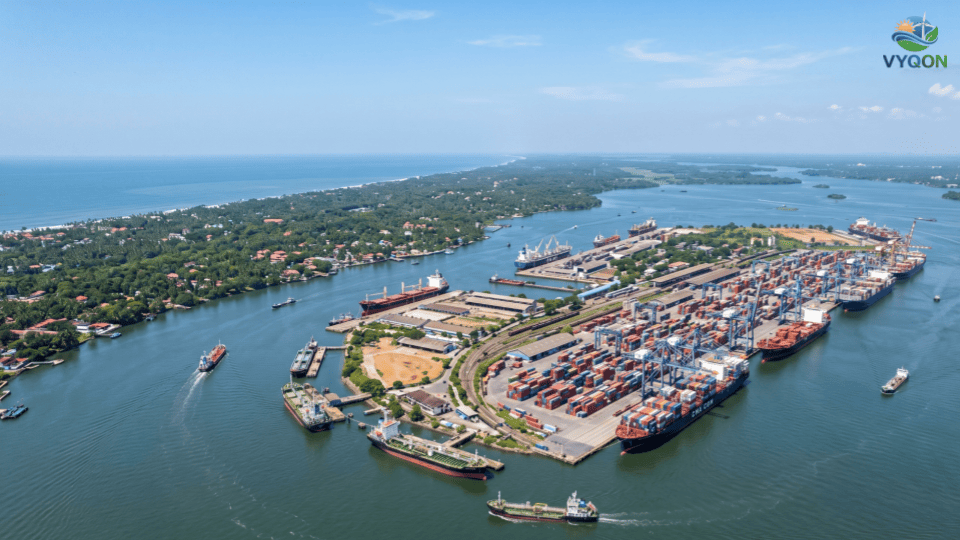
On June 3, 2026, the Kerala State Electricity Regulatory Commission (KSERC) issued an order rejecting a petition filed by the Cochin Port Authority (CoPA) for the adoption of a tariff and approval of a draft Power Purchase Agreement (PPA). The decision follows a regulatory review of CoPA’s proposal to procure solar power under Section 63 of the Electricity Act, 2003, which governs the adoption of tariffs discovered through competitive bidding. The Commission ruled that the proposed rate was not aligned with market benchmarks, thereby declining the adoption of the bid for the long-term procurement of electricity.
Project Scope and Bidding Background
The petition concerned a 1.5 MW floating solar power plant intended for installation at Willingdon Island, Kochi. The project was initiated to fulfill sustainability mandates issued by the Ministry of Ports, Shipping & Waterways, which requires major Indian ports to source 60% of their electricity from renewable energy by 2030.
CoPA conducted the procurement process via the Government e-Marketplace (GeM) portal. After an initial tender failed to attract multiple participants, a second bidding round resulted in six competing bids. M/s Sunshell Power was identified as the lowest bidder (L1) with a proposed tariff of ₹4.75 per unit at a 21% Capacity Utilization Factor (CUF). CoPA subsequently approached the Commission to adopt this rate as the basis for a 25-year PPA.
KSEBL Objections and Market Comparison
The Kerala State Electricity Board Ltd (KSEBL) intervened in the proceedings, raising strenuous objections to the proposed tariff. KSEBL argued that the discovered rate was uncompetitively high compared to recent floating solar projects approved both within the state and by central regulators. Furthermore, KSEBL highlighted significant operational risks, noting that CoPA’s demand frequently fluctuates and can drop below 500 kVA. During such periods, the injection of excess solar power into the state grid could create stability risks, effectively forcing the utility to absorb high-cost power that exceeds local demand.
The Commission’s analysis focused on a price comparison against prevailing market benchmarks, as detailed in the table below:
| Project/Market Source | Tariff Rate (₹/kWh) |
| Proposed CoPA Tariff | 4.75 |
| NTPC Kayamkulam (CERC Approved) | 2.68 |
| West Kallada (KSERC Approved) | 3.04 |
| Green Day Ahead Market (Green DAM) Average | 2.56 |
The Commission determined that the CoPA proposal carried a market premium of approximately 60% over established rates, concluding that adopting such a tariff would be detrimental to the interests of consumers and the financial health of the sector.
Legal Rationale and Supreme Court Precedents
In its legal findings, KSERC emphasized that its mandate under Section 63 of the Electricity Act is not a mechanical rubber-stamping of bid results. Rather, the “adoption” process requires the Commission to ensure that the bidding process was transparent and that the resulting tariff is reasonable in the context of the current market.
The Commission’s rationale was supported by recent Supreme Court jurisprudence, which clarifies the statutory boundaries of tariff determination and the limits of distribution licensees’ powers:
- Statutory Jurisdiction: Per Torrent Power Ltd. v UPERC (2025), Electricity Regulatory Commissions derive their jurisdiction strictly from the Electricity Act and must discharge their functions within the express powers conferred by the statute.
- Statutory Price-Fixing: In Gujarat Urja Vikas Nigam Ltd. v Green Infra Corporate Wind Ltd. (2025), the Court affirmed that the price for power procurement by a distribution licensee is a statutory matter for the Appropriate Commission and cannot be fixed by private agreement or consensus contrary to the Commission’s dictum.
- Cost-Reflective Mandate: The principle established in BSES Rajdhani Power Ltd. v Union of India (2025) mandates that tariffs must be cost-reflective, and regulators have a binding duty to prevent the creation of excessive regulatory assets that shift financial burdens onto future consumers.
- Exclusive Domain: Under State of H.P. v JSW Hydro Energy Ltd. (2025), the Court held that the interpretation of regulations dealing with tariff determination falls within the exclusive domain of the statutory regulator.
KSERC Directives and Alternative Procurement Options
While the Commission rejected the adoption of the ₹4.75 per unit tariff, it provided CoPA with three distinct pathways to achieve its renewable energy targets:
- Internal Funding: CoPA may proceed with the construction and operation of the 1.5 MW floating solar plant using its own internal funds. However, the Commission directed that no costs associated with this project may be passed through to consumers or included in CoPA’s regulated asset base for the purpose of tariff determination.
- Utility-Scale RPO Benefits: As CoPA currently procures its power from KSEBL, it inherently benefits from KSEBL’s existing transition toward a 50% renewable energy mix by 2030, which assists CoPA in meeting its green energy consumption goals.
- Green Tariff Premium: CoPA has the option to procure additional green energy from KSEBL by paying the Commission-approved green energy premium of ₹0.77 per unit on top of the standard retail tariff.
Leave a Comment