
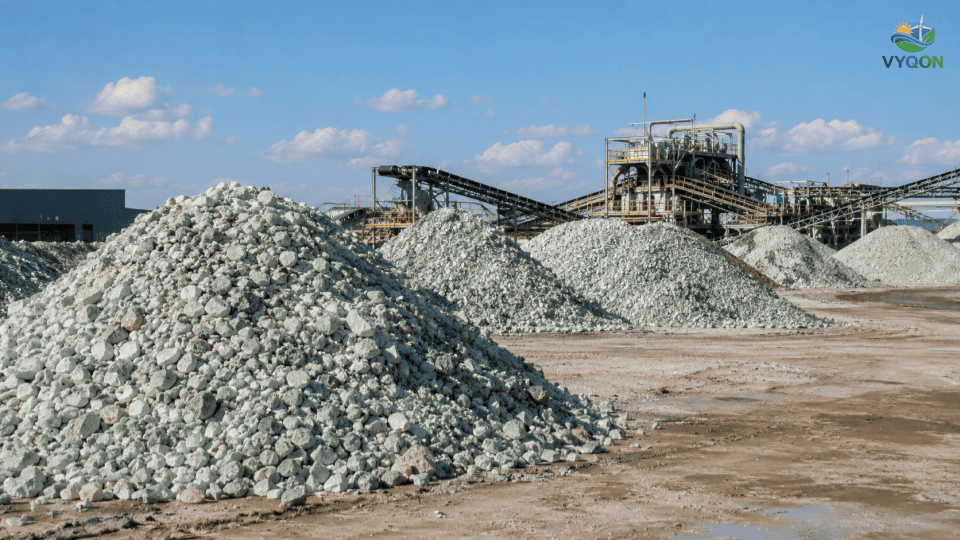
The global lithium market is undergoing a significant pricing correction as major mining operations in China and Australia resume production, ending a protracted period of supply uncertainty. Guangzhou Futures Exchange (GFEX) lithium carbonate futures have retreated nearly 30% from their May 2026 highs, driven by a surge in anticipated volumes from high-capacity projects. This supply influx, led by restarts in Jiangxi and Western Australia, has shifted market sentiment from a feedstock-driven rally to a policy-sensitive correction. For the Indian energy storage sector, this volatility arrives at a critical juncture; having transitioned from a record tendering year in 2025, the industry is now navigating a high-stakes execution phase in 2026 where financial viability and project delivery are under intense scrutiny.
Global Supply Dynamics: Major Mine Restarts and Capacity Expansions
The supply landscape is being reshaped by the return of several high-capacity lithium projects that were previously suspended or under care and maintenance.
China Operations
On June 29, 2026, CATL officially resumed operations at its Jianxiawo lithium mine in Yichun, Jiangxi. As one of the world’s largest single lepidolite mines, the site possesses an annual lithium carbonate capacity of 100,000 tons. Before its suspension, the mine accounted for 8% to 10% of China’s total lithium carbonate output. The restart is expected to add more than 45,000 tons of incremental capacity in the second half of 2026 alone, acting as a significant cap on domestic price appreciation.
Australian Resumption
Australian producers are simultaneously increasing market liquidity through several key project restarts and expansions:
- Mineral Resources’ Bald Hill mine: Restarting after an 18-month suspension.
- Core Lithium’s Finniss project: Resuming activity to offset regional shortfalls.
- Mt Marion: Advancing with a positive expansion decision.
- Pioneer Dome: Resuming operations alongside activity already underway at Ngungaju.
Projected Supply Outlook
Market forecasts suggest a meaningful “supply easing” by 2027. While current supply remains fragile due to logistical frictions, the arrival of significant Australian volumes is expected to provide long-term relief to the battery value chain, provided technical and commissioning milestones are met.
Market Movements: GFEX Futures and Pricing Volatility
Data from the Q2 2026 Lithium Price Review indicates a sharp reversal of the rally witnessed during the first half of the quarter.
Price Correction Analysis and Divergence
EXW China lithium carbonate prices peaked at RMB 182,500/tonne (US$26,825) in early May before falling toward the CNY 145,000 level in July, marking a five-month low. Notably, seaborne Asia lagged behind the domestic Chinese price reversal, while European and North American prices remained even slower to react as buyers approached procurement with caution. Lithium hydroxide prices have shown more resilience, aided by steady demand for high-nickel NCM batteries.
The “Jianxiawo Effect” and GFEX Evolution
Speculation regarding the CATL mine restart acted as a primary catalyst for the downward trend in Guangzhou futures. This sentiment was further amplified by a major structural shift in price discovery: the Guangzhou Futures Exchange (GFEX) opened its lithium carbonate contract to overseas traders on July 3, 2026. This internationalization has accelerated the transmission of Chinese price signals to the global market.
Inventory, Demand, and Cost Floors
Stockpiles in China moved downstream rather than accumulating with traders, but bearish sentiment was reinforced by the removal of domestic battery tax exemptions in China. However, prices found a cost floor due to external factors: Middle East tensions and resultant high sulphuric acid prices added significant input-cost pressure for Chinese chemical producers, preventing a more total price collapse.
Impact on the Indian Energy Storage Sector
The 2026 Execution Phase: Growth Amidst Cancellations
According to the India Energy Storage Alliance (IESA), India had tendered a total of 224 GWh of energy storage capacity by late 2025. Of this, 95 GWh is currently in the execution phase. However, the “breakout year” remains precarious; approximately 47 GWh of tenders have been canceled, highlighting the gap between policy ambition and project bankability.
Financial and Regulatory Landscape
The Indian government is utilizing specific mechanisms to support the remaining pipeline:
- Viability Gap Funding (VGF): This scheme covers up to 40% of a project’s capital cost. A second tranche of INR 5,400 crore currently supports 30 GWh of standalone battery projects.
- Production-Linked Incentive (PLI): An outlay of ₹18,100 crore supports domestic Advanced Chemistry Cell (ACC) production to mitigate import dependence.
Procurement and Volatility Challenges
Aggressive tariff compression witnessed in late 2025 is now meeting macro-financial resistance. Developers must navigate a 20% domestic content requirement to remain eligible for VGF support. While battery costs have softened globally, rising financing costs and the uncertainty of delivering projects at awarded price points remain critical hurdles.
Specific Milestones
A primary market indicator is Adani’s expected March 2026 commissioning of its 3,530 MWh Battery Energy Storage System (BESS) project in Gujarat. This project will serve as a benchmark for large-scale execution and operational performance in the region.
Macro-Financial Constraints on Project Development
Capital Costs and the “Warsh Shift”
On July 29, 2026, the Federal Reserve maintained interest rates at 3.5%-3.75%. However, Chair Kevin Warsh removed forward guidance from the post-meeting statement, signaling a more hawkish outlook. This shift caused the 10-year Treasury yield to rise to 4.657%. For capital-intensive mining, these higher yields increase discount rates, compressing Net Present Value (NPV) and making construction financing more difficult to secure.
Financing Readiness
Project funding in the battery metals sector fell 20% in 2025, with lithium-focused firms cutting spending by approximately 40%. In this environment, “financing readiness”—including completed permitting, engineering, and active engagement with lenders like Standard Chartered or the US Development Finance Corporation—is now a more critical factor for project advancement than resource quality alone.
Key Market Takeaways
- GFEX Futures: Lithium carbonate futures dropped nearly 30% from May 2026 peaks, hitting five-month lows below CNY 145,000 in July.
- Mine Restarts: CATL‘s Jianxiawo mine (100,000-ton capacity) resumed operations on June 29, 2026, while Australia‘s Ngungaju and Bald Hill projects have also returned to line.
- Indian VGF Eligibility: Projects must meet a minimum of 20% domestic content to qualify for capital subsidies under the INR 5,400 crore funding tranche.
- Supply Forecast: A global supply easing is projected for 2027 as Australian volumes reach the seaborne market.
- U.S. Defense Tender: The Defense Logistics Agency implemented a second extension of its $300 million lithium tender to August 5, 2026, due to persistent difficulties in sourcing battery-grade material outside of China‘s processing base.
Official Sources
- Australian Trade and Investment Commission (Austrade): Australian Critical Minerals Prospectus March 2026. This official government publication profiles investment-ready projects and national strategies for critical minerals processing. Hyperlink: international.austrade.gov.au/criticalminerals
- Ministry of Power, Government of India: The central authority responsible for the directives governing Battery Energy Storage Systems (BESS), including domestic content requirements and the Viability Gap Funding (VGF) scheme. Hyperlink: powermin.gov.in
Leave a Comment