
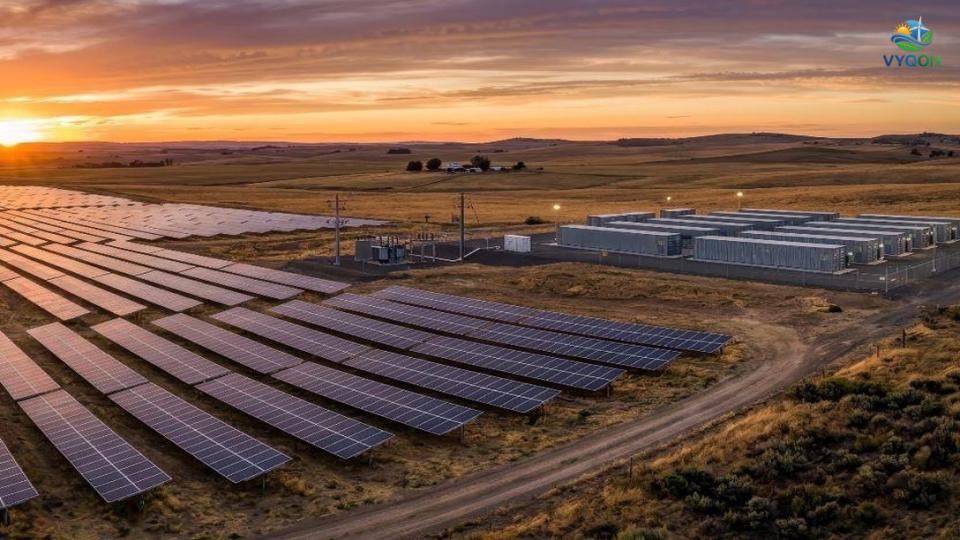
In a strategic effort to enhance the energy resilience and sustainability of public infrastructure, the Uttar Pradesh New and Renewable Energy Development Agency (UPNEDA) has issued a tender for a cumulative 2.5 MW of hybrid rooftop solar power projects. This initiative mandates the integration of hybrid inverters alongside battery energy storage systems (BESS) across multiple government buildings within the state. To be executed under the Capital Expenditure (CAPEX) mode, this project signifies a critical transition from standard grid-tied solar installations to fully resilient, self-sustaining green energy microgrids capable of securing administrative operations against grid outages. The deadline for developers and contractors to submit their bids is fast approaching on September 15, 2026. By pioneering hybrid rooftop deployments, Uttar Pradesh is demonstrating a forward-looking approach to public sector energy independence and carbon emission reduction.
Key Project Highlights
- Total Capacity: The tender specifies a cumulative capacity of 2.5 MW for hybrid rooftop solar photovoltaic (PV) systems, representing a significant infrastructure upgrade.
- Technological Integration: A core requirement of the tender is the explicit use of hybrid inverters paired with battery backup, ensuring both grid interaction and off-grid operational capability.
- Project Locations: Installations will be distributed across various designated government buildings and administrative hubs throughout the state of Uttar Pradesh.
- Financial & Execution Model: The project will be rolled out under the CAPEX mode, meaning the government will finance the upfront capital cost and retain complete ownership of the generating assets.
- Bid Submission Deadline: Interested engineering, procurement, and construction (EPC) contractors and developers must submit their comprehensive technical and financial bids by September 15, 2026.
Context and Breakdown: Shifting to Energy Resilience The decision by UPNEDA to mandate hybrid inverters and battery storage represents a significant technological leap for state infrastructure. Traditional on-grid solar systems are designed to shut down during grid failures—an essential safety feature known as anti-islanding. While this protects utility workers repairing grid lines, it leaves the building without power during blackouts, despite having a functional solar array on the roof. By moving towards hybrid configurations, Uttar Pradesh is prioritizing uninterrupted public services and administrative continuity.
Under the CAPEX model, the state will bear the initial financial burden of these 2.5 MW installations, treating the energy infrastructure as a long-term public asset rather than a leased service. Once operational, these systems will drastically cut electricity procurement costs from the state grid while reducing the carbon footprint of government administrative centers. This approach differs from the OPEX (Operational Expenditure) or RESCO (Renewable Energy Service Company) models often seen in commercial setups, giving the state complete control over the power generated and the long-term savings accrued.
Technical Analysis: The Hybrid System Advantage By integrating a hybrid architecture, the selected government buildings will achieve true energy security. During normal operations, the solar panels will power the building’s daytime loads—such as lighting, air conditioning, and IT infrastructure—and simultaneously charge the battery bank. If the solar panels generate more energy than the building requires and the batteries are full, the surplus energy can potentially be exported to the utility grid, earning credits under state net-metering policies.
In the event of a grid failure, the hybrid inverter will seamlessly isolate the building from the main utility and draw power directly from the solar panels and the battery backup. This ensures zero downtime for critical government and administrative functions, eliminating the reliance on polluting, noisy, and expensive backup diesel generators. The batteries must be sized appropriately to handle the peak loads of these buildings during transitional periods and nighttime operations, effectively creating self-sufficient microgrids right in the heart of urban centers.
Grid Impact and Sustainability Benefits The deployment of decentralized, battery-backed rooftop solar systems provides immense relief to the broader electricity grid. By generating and storing power locally, these government buildings will lower their peak demand, thereby reducing the stress on local distribution transformers managed by the Uttar Pradesh Power Corporation Limited (UPPCL). In regions where the grid is congested or prone to voltage fluctuations, these localized hybrid systems act as stabilizing anchors.
This project aligns perfectly with broader national goals to decrease dependence on fossil fuels and increase the penetration of firm renewable energy. Unlike standalone rooftop solar, which can exacerbate grid instability through sudden drops in output during cloudy weather, the presence of battery storage ensures a smoothed, predictable energy profile. From an environmental standpoint, displacing diesel generator usage at these public buildings will lead to a substantial reduction in local particulate matter pollution and greenhouse gas emissions, contributing to cleaner air in Uttar Pradesh.
Implementation Details and Industry Impact For participating developers, this tender requires specialized expertise in hybrid system design and energy storage integration, moving significantly beyond standard rooftop panel installation. Bidders will be expected to handle the complete end-to-end lifecycle of the project.
This encompasses meticulous site surveying to assess roof integrity and shading, detailed engineering design, the supply of high-efficiency modules and advanced battery technologies, installation, rigorous safety testing, and comprehensive long-term operations and maintenance (O&M) to ensure the longevity of the battery systems. EPC contractors must ensure that the components meet stringent state and national standards, including specific safety protocols for indoor or outdoor battery housing, fire suppression systems, and thermal management. As the September 15, 2026, deadline rapidly approaches, the renewable energy industry is watching closely to see which tier-1 developers step up to execute this critical infrastructure upgrade.
Reference
- Uttar Pradesh New and Renewable Energy Development Agency (UPNEDA) The nodal state agency responsible for implementing renewable energy programs, executing policies, and managing state-level solar tenders across Uttar Pradesh.
- Official Website: https://upneda.org.in/
- Government of Uttar Pradesh e-Procurement System (e-Tender UP) The centralized government portal where prospective bidders can view the detailed Notice Inviting Tender (NIT), download standard bidding documents (SBD), and submit their technical and financial bids.
- Tender Portal: https://etender.up.nic.in/
- Search Keyword: Search under UPNEDA using keywords Hybrid Rooftop Solar or 2.5 MW.
- Ministry of New & Renewable Energy (MNRE) The central authority providing overarching guidelines for rooftop solar integration, battery storage standards, and quality control specifications for government installations.
- Official Website: https://mnre.gov.in/
- Uttar Pradesh Power Corporation Limited (UPPCL) The state utility overseeing grid interconnection policies, net-metering regulations, and electricity distribution frameworks that these hybrid systems will interface with.
- Official Website: https://www.uppcl.org/
Leave a Comment