
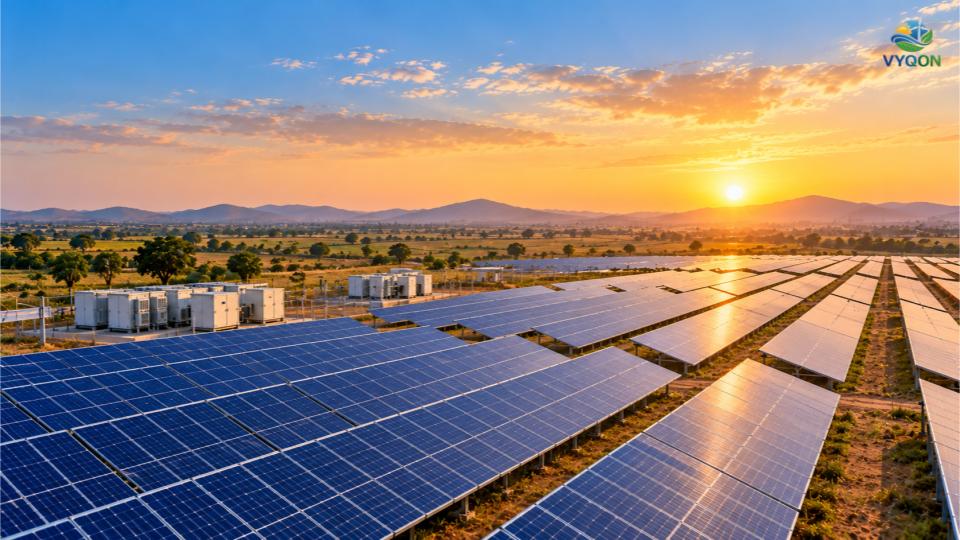
Waaree Renewable Technologies Limited has approved capital expenditure for a proposed 35 MWp DC/25 MWac independent power producer solar plant in Wardha, Maharashtra, marking a new development in the company’s solar generation portfolio.
Mumbai, 21 October 2026: Waaree Renewable Technologies Limited (WRTL), a subsidiary of Waaree Energies Limited, has announced board approval for setting up a 35 MWp DC/25 MWac Independent Power Producer (IPP) solar photovoltaic plant at Wardha in Maharashtra. The decision was approved during the company’s Board of Directors meeting held on 19 October 2026 and subsequently disclosed to the National Stock Exchange of India (NSE) and BSE Limited.
The approval represents a planned investment in solar electricity generation and reflects the company’s involvement in renewable energy project development beyond its established engineering, procurement and construction activities.
According to the official stock-exchange disclosure, the board approved capital expenditure for the proposed solar plant alongside the company’s unaudited standalone and consolidated financial results for the quarter and half-year ended 30 September 2026.
The company has confirmed the proposed capacity and location of the installation. However, the disclosure does not specify the total investment amount, detailed project execution schedule, electricity tariff, power purchase agreement or expected commercial commissioning date.
The announcement therefore represents a corporate investment approval rather than confirmation that construction or commercial electricity generation has commenced.
Waaree Renewable Technologies Expands Its Solar Generation Plans
Waaree Renewable Technologies operates in India’s renewable energy infrastructure sector, with activities covering solar project development, engineering, procurement, construction and related services.
The company’s approval of the proposed Wardha installation is particularly relevant because it identifies the project as an Independent Power Producer development.
Under the IPP business model, a developer typically establishes or controls electricity-generating assets and earns revenue through the commercial sale of electricity. This differs from a conventional EPC arrangement, under which a contractor primarily receives payment for developing or constructing a project on behalf of another organisation.
An IPP structure can create longer-term opportunities associated with electricity generation and asset ownership, although it also involves responsibilities relating to financing, operation, maintenance and sustained plant performance.
For Waaree Renewable Technologies, the proposed 35 MWp development represents an additional opportunity within the solar electricity generation segment.
However, the company’s announcement does not establish the precise commercial structure under which electricity from the Wardha plant will be sold. Details regarding ownership arrangements, project financing and electricity offtake will depend on subsequent disclosures.
The board-approved development should also be distinguished from Waaree’s existing third-party EPC contracts. An EPC award and an investment approval for an IPP asset represent different commercial activities and should not be treated as interchangeable project milestones.
Understanding the 35 MWp DC and 25 MWac Capacity
The proposed Wardha solar plant has been announced with a capacity of 35 MWp on the direct-current side and 25 MW on the alternating-current side.
These two ratings describe different characteristics of the photovoltaic installation.
The 35 MWp rating represents the combined nominal peak output of the photovoltaic module array under standard test conditions. The 25 MWac rating refers to the plant’s announced alternating-current capacity, associated with the conversion and delivery of electricity through the inverter system.
The two ratings should not be added together because they describe different sides of the same generating facility.
The announced configuration corresponds to a DC-to-AC capacity ratio of 1.40.
Solar projects commonly incorporate more photovoltaic module capacity than their alternating-current output rating. This arrangement can improve inverter utilisation across different solar irradiation conditions, depending on the final system design.
However, the relationship between DC and AC capacity can also affect conversion losses and the potential for inverter clipping during periods of high photovoltaic output.
The actual electricity generation of the Wardha plant will depend on multiple technical factors, including solar irradiation, photovoltaic module efficiency, inverter performance, temperature, shading, system availability and other operating conditions.
The company’s October disclosure does not provide an annual electricity generation estimate, equipment supplier details or an expected plant capacity utilisation factor.
Consequently, the project’s annual energy production and operating performance should not be presented as confirmed numerical values at this stage.
Project Development and Implementation Requirements
Following board approval, the proposed solar installation will need to progress through the necessary development and implementation activities before commercial electricity generation can begin.
Utility-scale solar projects generally require appropriate land arrangements, engineering assessments, electrical system design, equipment procurement and grid connectivity.
The development process typically involves evaluating site conditions, preparing photovoltaic plant layouts, selecting suitable electrical equipment and coordinating the required electricity evacuation infrastructure.
Solar photovoltaic modules generate direct-current electricity, which is converted into alternating current through inverters. The resulting electricity must be transferred through appropriately designed transformers, protection equipment, metering systems and grid interconnection infrastructure.
The suitability of these arrangements depends on the technical specifications of the plant and the requirements of the relevant electricity network.
For the proposed Wardha project, the company has identified the district and capacity but has not disclosed the precise site location, grid injection point or final electrical configuration.
The announcement also does not confirm whether land acquisition, detailed engineering, major equipment procurement or construction work has already been completed.
These activities should therefore be treated as potential subsequent development requirements rather than completed milestones.
The transition from corporate approval to operating solar capacity will depend on successful project implementation, electrical testing, grid synchronisation and commercial commissioning.
Commercial Importance of the Independent Power Producer Model
The IPP model can provide renewable energy companies with an opportunity to participate in electricity generation over the operating life of a solar installation.
Unlike EPC projects, where revenue is primarily associated with contracted engineering and construction services, IPP operations generally depend on electricity generation and the commercial terms governing electricity sales.
The financial performance of an IPP asset is influenced by several factors, including project investment, financing costs, electricity tariffs, annual generation, operating expenditure and equipment availability.
Long-term electricity sale arrangements can be important for project financing because they provide a basis for evaluating future revenue.
However, Waaree Renewable Technologies has not disclosed the electricity purchaser, tariff structure or power purchase agreement associated with the proposed Wardha project.
It would therefore be premature to estimate a confirmed revenue stream or financial return from the announced capacity.
The company has also not specified the amount of capital expenditure approved in rupees.
Although the board has authorised expenditure for establishing the solar plant, this should not be interpreted as confirmation that the entire investment has already been spent.
The financial and commercial characteristics of the proposed installation will become clearer through subsequent official company disclosures.
Maharashtra’s Solar Development and Infrastructure Requirements
Maharashtra provides an important market for renewable electricity development because of its industrial electricity requirements, commercial demand and expanding renewable energy infrastructure.
Solar photovoltaic projects can contribute to electricity generation across suitable locations in the state, subject to land availability, grid connectivity and the commercial arrangements under which electricity is supplied.
Wardha’s selection as the location for the proposed IPP development establishes the geographical context of Waaree Renewable Technologies’ latest investment approval.
However, the announcement does not provide site-specific information regarding solar resource assessment, transmission availability, land classification or construction logistics.
These factors will influence the eventual technical design and commercial feasibility of the proposed project.
For large photovoltaic installations, adequate electricity evacuation infrastructure is essential because generating equipment alone does not guarantee that electricity can be delivered to the network.
Project developers must coordinate their electrical designs and grid connection arrangements with the applicable technical and regulatory requirements.
As the project progresses, further disclosures may clarify its implementation structure, procurement arrangements and scheduled commissioning.
Significance for India’s Solar Industry
Waaree Renewable Technologies’ decision highlights the distinction between companies that construct renewable energy infrastructure for customers and those that invest in generating assets under an IPP framework.
Both activities contribute to solar project development, but they involve different commercial responsibilities and long-term operating considerations.
The Wardha proposal could eventually create demand for photovoltaic modules, solar inverters, mounting structures, transformers, electrical protection equipment and associated engineering services.
However, equipment orders and contractor appointments have not been identified in the board approval disclosure.
Accordingly, the announcement should not be described as a confirmed procurement award for particular technology suppliers.
The proposed plant also does not represent an immediate addition to India’s commissioned solar generating capacity.
For renewable energy investors and industry stakeholders, the principal confirmed development is the board’s approval of capital expenditure for a specified solar installation.
Future information on land, electricity sales, construction progress and commissioning will provide a clearer assessment of the project’s eventual contribution to renewable electricity generation.
Conclusion
Waaree Renewable Technologies Limited’s approval of a 35 MWp DC/25 MWac solar IPP project in Wardha, Maharashtra, represents a new corporate investment decision in the company’s renewable electricity generation activities.
The decision, approved on 19 October 2026, establishes the proposed project’s capacity, location and intended IPP classification.
However, the company has not yet disclosed the total investment value, electricity tariff, detailed implementation timeline or commercial commissioning date.
The project’s development will depend on the completion of the necessary technical, commercial and regulatory activities.
For now, the Wardha installation should be classified as a board-approved proposed solar project, with future construction and commissioning milestones subject to additional official announcements.
Official Sources and References
1. Waaree Renewable Technologies Limited — Stock Exchange Disclosure
Outcome of Board Meeting Held on 19 October 2026.
The company disclosed approval of capital expenditure for the proposed 35 MWp/25 MWac IPP solar plant in Wardha, Maharashtra.
National Stock Exchange of India — Official Corporate Announcements Portal
https://www.nseindia.com/companies-listing/corporate-filings-announcements?symbol=WAAREERTL
Search for the board meeting outcome dated 19 October 2026 under symbol WAAREERTL.
2. Waaree Renewable Technologies Limited — Official Investor Relations
Corporate announcements and regulatory disclosures.
Leave a Comment