
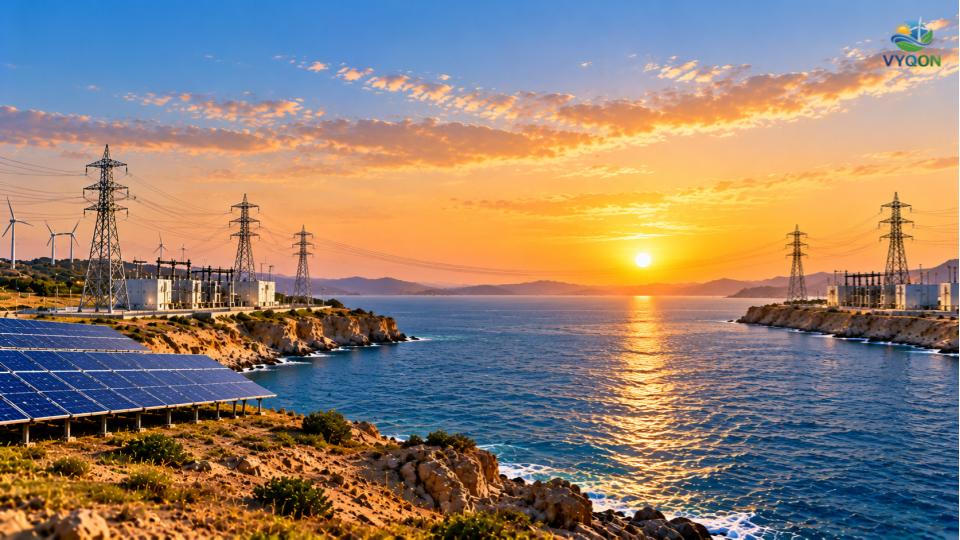
India and Saudi Arabia have reviewed progress on their proposed electrical interconnection initiative while discussing extra-high-voltage transmission, renewable energy integration, grid reliability and growing electricity demand. The latest bilateral meeting strengthens technical cooperation but does not announce a new transmission project or construction schedule.
New Delhi, 21 October 2026: India and Saudi Arabia have reviewed the progress of their proposed electrical interconnection initiative, reaffirming their commitment to strengthening bilateral cooperation in the electricity sector.
According to an official announcement issued by the Ministry of Power through the Press Information Bureau (PIB) on 19 October 2026, India’s Power Secretary, Pankaj Agarwal, held a virtual bilateral meeting with Eng. Nasser Al-Qahtani, Saudi Arabia’s Assistant Minister of Energy for Electricity Affairs.
The discussions focused on the proposed electricity interconnection between the two countries and opportunities for deeper technical cooperation across the power sector.
Both sides exchanged views on the future direction of the initiative, emphasising sustained engagement, technical collaboration, knowledge sharing and the exchange of operational best practices.
The meeting also examined important challenges facing modern electricity networks, including the integration of renewable energy, the operation of extra-high-voltage transmission infrastructure, increasing electricity demand from data centres and the need to update grid codes.
The development is relevant to India’s renewable energy sector because reliable transmission infrastructure and greater power-system flexibility are essential for integrating expanding solar and wind generation.
However, the announcement does not specify a transmission route, planned electricity transfer capacity, project investment, technology configuration or construction timeline. The initiative therefore remains at the stage of bilateral cooperation and technical discussions rather than an officially announced construction project.
India–Saudi Arabia Electricity Cooperation Builds on the 2023 Agreement
The latest discussions follow an important bilateral agreement signed between India and Saudi Arabia on 8 October 2023.
According to the Central Electricity Authority’s National Electricity Plan, Volume II: Transmission, the two governments signed a Memorandum of Understanding covering electrical interconnection, green and clean hydrogen and related supply chains.
The agreement envisaged cooperation on electricity exchange during peak-demand periods and emergencies, alongside the joint development of renewable energy and hydrogen-related projects.
It also identified opportunities for strengthening supply chains associated with clean energy technologies.
The initiative reflects a broader approach to international energy cooperation in which countries explore potential electricity exchanges alongside renewable generation, industrial development and emerging energy technologies.
Further attention was given to the interconnection proposal during Prime Minister Narendra Modi’s visit to Saudi Arabia in April 2025.
In the official India–Saudi Arabia joint statement issued on 23 April 2025, both governments highlighted the importance of completing a detailed joint study for electrical interconnection.
They also identified cooperation in grid automation, electricity network security, renewable energy projects and energy storage technologies as areas of mutual interest.
The October 2026 meeting represents a continuation of this cooperation framework.
However, the latest announcement does not confirm completion of the detailed joint study or provide a final implementation decision.
The proposed interconnection should therefore be distinguished from an operational electricity transmission link.
Extra-High-Voltage Transmission Emerges as a Key Discussion Area
One of the significant technical subjects raised during the meeting was cooperation in Extra High Voltage (EHV) transmission systems.
According to the Ministry of Power, the Saudi Arabian side expressed interest in exchanging technical experience and best practices associated with EHV electricity networks.
Extra-high-voltage infrastructure plays an important role in transporting large quantities of electricity across long distances while supporting network efficiency and power-system reliability.
Such infrastructure is particularly important when major electricity generation centres are located far from industrial, commercial and residential demand.
Modern transmission networks require careful engineering involving conductors, substations, transformers, protection systems, reactive power management and operational coordination.
Where large quantities of electricity must be transferred between different networks, suitable transmission technologies and system-control arrangements become critical.
High-voltage direct-current transmission can offer advantages for certain long-distance connections, while alternating-current networks remain essential across conventional transmission systems.
However, the India–Saudi Arabia meeting did not identify a final technology for the proposed interconnection.
It would therefore be premature to describe the initiative as an approved HVDC corridor, submarine cable project or transmission line of a specified capacity.
The confirmed development is that both countries discussed the relevance of advanced transmission technologies and opportunities for technical cooperation.
These discussions could help establish a foundation for future project assessments, subject to engineering feasibility, regulatory arrangements and commercial decisions.
Renewable Energy Integration Becomes a Central Priority
The Ministry of Power’s announcement also highlighted the technical and operational challenges associated with integrating increasing quantities of renewable electricity into national grids.
As solar and wind generation expands, electricity networks must accommodate changing generation patterns while maintaining reliable power supply.
Solar photovoltaic generation is influenced by daylight conditions, temperature and weather, while wind generation depends on available wind resources.
These characteristics introduce additional requirements for forecasting, electricity scheduling, network planning and system flexibility.
During periods of high renewable generation, electricity networks may need additional transmission capacity or flexible resources to accommodate available output.
Conversely, periods of reduced renewable generation require other resources to support the balance between electricity supply and demand.
Grid strengthening, improved generation forecasting, flexible power plants, demand-side management and energy storage can all contribute to addressing these challenges.
International electricity interconnections may also provide flexibility by allowing power exchanges between connected systems when suitable technical and commercial arrangements exist.
For example, electricity could potentially be transferred from a system with available generation to another system experiencing higher demand, subject to transmission availability and operating conditions.
However, such benefits depend on actual infrastructure, regulatory coordination and electricity market arrangements.
The October discussions do not establish that renewable electricity is currently being exchanged through a dedicated India–Saudi Arabia transmission connection.
Instead, the meeting highlights the importance both countries place on preparing their electricity systems for higher renewable energy penetration.
Role of Battery Storage and Grid Flexibility
Battery Energy Storage Systems (BESS) are increasingly relevant to electricity networks integrating variable renewable generation.
Battery systems can absorb electricity during periods of available supply and release it when required, depending on their design and operating strategy.
They can also provide frequency response, short-duration balancing, ramp management and other grid-support services.
These capabilities are particularly useful for electricity systems experiencing changes in generation and demand throughout the day.
Transmission interconnections and battery storage address different but potentially complementary power-system requirements.
A transmission connection allows electricity to move between connected regions, while battery storage provides flexibility by shifting electricity across time.
The combination of stronger networks and flexible resources can improve a power system’s ability to accommodate solar and wind generation.
However, neither government announced a battery storage project, procurement programme or specific storage capacity as part of the 19 October meeting.
The relevance of BESS is therefore a broader technical consideration rather than a confirmed project outcome of the bilateral discussions.
Data-Centre Electricity Demand and Grid Modernisation
Another important issue raised during the bilateral meeting was the growing electricity demand associated with data centres.
The Saudi Arabian side expressed interest in cooperation concerning strategies for accommodating increasing electricity requirements from emerging data-centre infrastructure.
Data centres can create substantial electricity loads because of their computing equipment, cooling systems and supporting electrical infrastructure.
Their operations also require high levels of power reliability and continuity.
As digital infrastructure expands, electricity planners must consider how large and sometimes concentrated demand centres will affect generation adequacy, network capacity and operational requirements.
Appropriate transmission infrastructure, electricity supply arrangements and system planning are important for serving these loads reliably.
The bilateral discussion also addressed the updating of grid codes to reflect evolving electricity system conditions.
Grid codes establish technical requirements for electricity-generating facilities, transmission infrastructure and other connected resources.
As renewable energy penetration increases, grid operators must consider the behaviour of inverter-based generation and other technologies during changes in voltage, frequency and network conditions.
Updated technical standards can support reliable system operation and clarify the requirements applicable to different categories of connected equipment.
The government announcement confirms that grid-code development formed part of the technical cooperation discussion.
However, it does not announce a new jointly adopted grid code or a completed bilateral technical standard.
Commercial and Regulatory Considerations for Future Interconnection
Any future electricity interconnection between India and Saudi Arabia would require substantial technical, commercial and regulatory assessment before implementation.
Important considerations could include route feasibility, technology selection, investment requirements, electricity transfer arrangements, asset ownership and operational responsibilities.
Power-system studies would also need to examine the effects of the proposed connection on the reliability and stability of the participating networks.
Cross-border electricity exchange requires coordination between electricity system operators, regulatory institutions and commercial participants.
Questions relating to scheduling, metering, settlement, transmission access and the allocation of operating responsibilities would need to be addressed through appropriate arrangements.
India already maintains regulatory procedures and guidelines for cross-border electricity imports and exports through the Central Electricity Authority and other relevant institutions.
These provide general context for the technical and administrative requirements involved in international electricity transactions.
However, the regulatory arrangements applicable to an eventual India–Saudi Arabia connection would depend on its final geographical, technical and legal structure.
The existing framework should not be assumed to establish approval for the proposed initiative.
The October announcement also does not identify any engineering contractor, transmission developer, project financing institution or electricity purchaser.
Future developments will therefore need to be assessed against official announcements identifying specific project or commercial milestones.
Outlook: Continued Cooperation on Power-Sector Development
The 19 October 2026 India–Saudi Arabia bilateral meeting demonstrates continued interest in developing cooperation on electricity interconnection and modern power-system technologies.
The discussions covered the proposed bilateral electricity link, EHV transmission systems, integration of renewable generation, growing data-centre demand and the evolution of grid codes.
The initiative builds on the bilateral cooperation framework established in October 2023 and the subsequent commitments outlined by both governments in April 2025.
For India’s renewable energy sector, the discussions are relevant because stronger transmission infrastructure, improved grid flexibility and international technical cooperation can support the wider integration of solar and wind power.
Nevertheless, the proposed India–Saudi Arabia electricity connection remains subject to future technical, regulatory and commercial decisions.
No new transfer capacity, approved route, capital investment, construction contract or commissioning date was announced during the latest meeting.
The next meaningful milestone would be an official disclosure providing greater clarity on the feasibility assessment, project configuration or implementation framework.
Until then, the development should be understood as continued bilateral engagement on a proposed electricity interconnection, rather than an approved or operational international power transmission project.
Official Sources and References
1. Ministry of Power, Press Information Bureau — 19 October 2026
India and Saudi Arabia Discuss the Bilateral Electrical Interconnection Initiative.
Official government announcement confirming the virtual meeting, participants and technical cooperation priorities.
https://www.pib.gov.in/PressReleseDetailm.aspx?PRID=2325257&lang=1®=3
2. Central Electricity Authority — National Electricity Plan, Volume II: Transmission
Section 9.3.5 documents the India–Saudi Arabia Memorandum of Understanding signed on 8 October 2023.
3. Press Information Bureau — India–Saudi Arabia Joint Statement, 23 April 2025
Official bilateral statement covering cooperation on electrical interconnection studies, renewable energy, grid technologies and energy storage.
https://www.pib.gov.in/Pressreleaseshare.aspx?PRID=2123722&lang=2®=48
4. Central Electricity Authority — Import/Export (Cross Border) of Electricity
Official regulatory background regarding cross-border electricity trade procedures and guidelines.
https://cea.nic.in/import-export-cross-border-of-electricity/?lang=en
Leave a Comment