
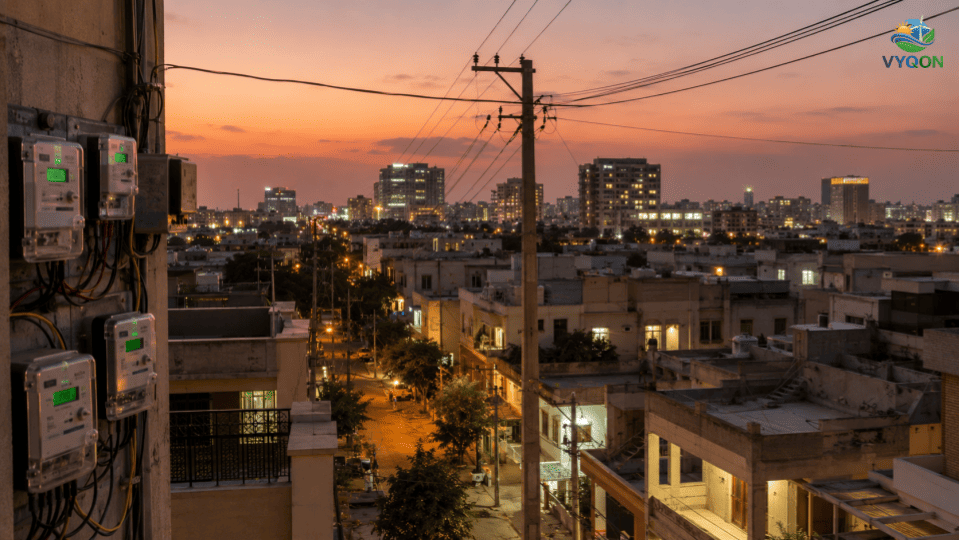
The Gujarat Electricity Regulatory Commission (GERC) has notified the Gujarat Electricity Regulatory Commission (Gujarat Electricity Grid Code) Regulations, 2026, through Notification No. 09 of 2026. The new code lays down the rules for planning, connecting, operating, scheduling and maintaining Gujarat’s intra-state power system, and supersedes the Gujarat Electricity Grid Code, 2013, dated 16 July 2013. The regulations came into force on their publication in the Gujarat Government Gazette (Extraordinary) on 7 October 2026.
The notification comes as Gujarat’s network accommodates growing volumes of solar, wind and energy storage alongside conventional generation.
Alignment with the Indian Electricity Grid Code
Under Section 86(1)(h) of the Electricity Act, 2003, a State Commission is required to specify a State Grid Code consistent with the Grid Code specified by the Central Electricity Regulatory Commission (CERC). After CERC notified the Indian Electricity Grid Code (IEGC) Regulations on 29 May 2023, GERC initiated the process of framing a new state code to replace the 2013 regulations.
In December 2025, the Commission invited consultants to help finalise the regulations, with a scope covering a review of IEGC 2023 and the existing state rules, and alignment of the new code with the IEGC while retaining state-specific provisions. The draft regulations were placed on the GERC website in May 2026 for stakeholder consultation.
Legal Basis and Applicability
The Grid Code has been issued under the Electricity Act, 2003 and the Gujarat Electricity Industry (Reorganisation and Regulation) Act, 2003. It applies only to the Gujarat state power grid and to entities operating within the intra-state network. For the inter-state transmission system, the IEGC notified by CERC, as amended from time to time, will continue to apply.
Institutional Roles
Gujarat Energy Transmission Corporation Limited (GETCO) continues as the State Transmission Utility (STU), responsible for transmission planning, coordination, open access and development of transmission infrastructure. The State Load Despatch Centre (SLDC) remains the apex body for real-time monitoring, scheduling, despatch, system control and energy accounting, with operational authority over connected generating stations and distribution entities. Regional Sub-SLDCs will support its functions.
The regulations also set up two coordination forums. The State Operation Coordination Committee (SOCC), chaired by the Chief Engineer of the SLDC, will carry out operational analysis to improve grid performance, while the State Level Protection Co-ordination Committee (PCC), chaired by the Chief Engineer of the STU, will oversee protection systems.
Resource Planning and Connection Requirements
Under the Resource Planning Code, the STU must prepare a perspective rolling transmission plan for the next 10 years, update it every year and publish it on its website by 30 September. Distribution licensees, in turn, must submit peak load and energy forecasts for each of the next 10 years to the STU by 31 January annually.
The Connection Code sets common technical requirements for all entities seeking to connect to the state grid. These cover network interfaces, telemetry, communication systems, protection equipment and cybersecurity, giving developers and utilities a uniform set of standards to design against.
Provisions for Renewable Energy and Storage
The 2026 code contains separate provisions for solar, wind and wind-solar hybrid projects, as well as standalone Energy Storage Systems (ESS) and Pumped Storage Plants (PSPs). For each category, it specifies trial-run and testing procedures and the requirements for declaring Commercial Operation Date (COD).
The notification closely precedes another key GERC framework. On 16 October 2026, the Commission notified the GERC (Grid Interactive Battery Energy Storage System) Regulations, 2026, which govern the registration, operation and commercial use of battery storage connected to the state network. Together, the two regulations define how storage projects will be connected, commissioned and operated in Gujarat.
Flexible Thermal Operation
To create room for variable renewable generation, the minimum turndown level for intra-state thermal units has been set at 55% of Maximum Continuous Rating (MCR), or a lower level specified under the CEA (Flexible Operation of Coal Based Thermal Generating Units) Regulations, 2023. Stations whose tariffs are determined under Section 62 will be compensated at true-up for higher heat rate, auxiliary consumption and secondary fuel oil consumption during part-load operation, while Section 63 stations will be governed by their contracts.
Scheduling, Frequency and Settlement
Scheduling and despatch will be carried out in 15-minute time blocks, covering long-term, medium-term, short-term and real-time transactions. The reference frequency is 50.000 Hz, and the allowable band follows the IEGC, currently 49.900 Hz to 50.050 Hz, backed by primary, secondary and tertiary reserves.
Deviation charges and reactive energy charges will be settled through state pool accounts operated by the SLDC. Consistent failure to comply with the code may lead to disconnection of a user’s plant or apparatus, and GERC may also take suo-motu action against defaulters.
What It Means for the Sector
For renewable and storage developers, the new code brings clearer commissioning and COD procedures, but also stricter obligations on telemetry, protection and cybersecurity. Thermal generators will need to plan for deeper and more frequent part-load operation, while distribution licensees and the SLDC will work within a more structured planning and scheduling regime.
With the notification, Gujarat’s state grid rules now move in step with the national framework under IEGC 2023, providing a common basis for operating a power system in which renewable energy and storage play an increasingly central role.
Official Sources
- Gujarat Government Gazette (Extraordinary), 07-10-2026: GERC Notification No. 09 of 2026 – Gujarat Electricity Grid Code Regulations, 2026
- GERC – Codes & Technical Regulations: Gujarat Electricity Grid Code Regulations, 2026 (Notification No. 09 of 2026, 07-10-2026)
- GERC – Official Website, Latest News (Grid Code Regulations, 2026 and Grid Interactive BESS Regulations, 2026)
- GERC – Draft Gujarat Electricity Grid Code Regulations, 2026
- GERC – Notice Inviting RFP for Finalisation of GERC (Gujarat Electricity Grid Code) Regulations, 2026
- GERC – Grid Code RFP Specimen Agreement (Scope of Work)
Leave a Comment