
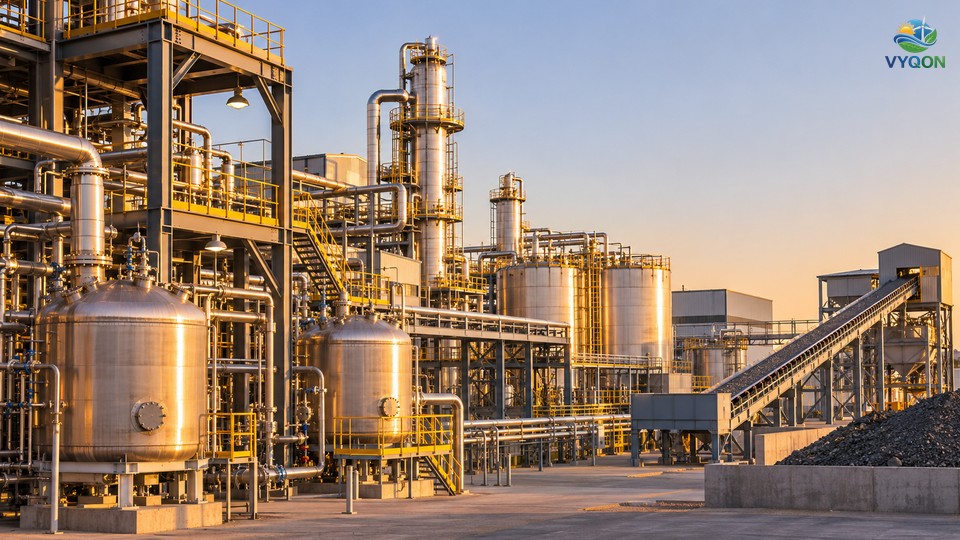
The Union Cabinet, chaired by Prime Minister Narendra Modi, approved the Capex Support Scheme to Promote Critical Mineral Processing on 4 November 2026, with a financial outlay of Rs 2,814 crore over five years. The critical mineral processing scheme offers a 30% capital subsidy for four plants that will turn lithium and nickel ores and intermediate products into high-purity compounds: two lithium plants and two nickel plants. The scheme period runs from FY 2026-27 to FY 2030-31.
Why India wants a critical mineral processing scheme
According to the government’s release, the processing of critical minerals remains geographically concentrated in a few global locations. This exposes supply chains to geopolitical disruptions, price volatility and potential supply restrictions, which the release describes as a threat to supply chain resilience and economic security. It adds that the issue has implications for national security, economic sovereignty and the timely achievement of decarbonisation targets.
India remains substantially dependent on imports for refined intermediates and high-purity materials of lithium, nickel and cobalt. The release attributes this to the nascent stage of domestic beneficiation and processing infrastructure. Domestic processing capacity is limited, and commercial-scale projects face high capital requirements, limited availability of suitable technologies and constrained access to raw materials. The government says domestic processing capacity is needed to add value within the country, substitute imports and build end-to-end value chains.
Capex Support Scheme: what the Cabinet approved
The scheme has been formulated to give targeted capital expenditure support for setting up and operationalising domestic processing facilities. Its stated aims are to develop processing capabilities in India, support value addition at home, reduce import dependence and develop the value chain.
The main features, as stated in the official release, are:
- Outlay: Rs 2,814 crore, over the scheme period of FY 2026-27 to FY 2030-31.
- Minerals covered: lithium and nickel ores and intermediate products, processed into high-purity compounds. Cobalt is also expected to be recovered as a by-product of nickel production.
- Support: a capital subsidy of 30% of eligible investment.
- Plants supported: four in total, made up of two lithium processing plants with a minimum capacity of 30 kt each and two nickel processing plants with a minimum capacity of 50 kt each.
- Cap on support: a maximum of Rs 500 crore per lithium beneficiary and Rs 900 crore per nickel beneficiary.
How beneficiaries will be selected
The release describes a two-stage selection process. In the first stage, applications are assessed for technical qualification, and only technically qualified applicants can take part in the second stage, which is financial bidding. For each mineral, two beneficiaries will be selected on the least-cost criterion, meaning the bidders that seek the lowest capex support under the scheme.
The release does not give bid dates, eligibility conditions beyond the minimum plant capacities, or the names of any companies. Until the scheme guidelines and the bidding process are notified, it is not clear which firms will apply or when the first beneficiaries will be chosen.
Link to batteries, storage and electric mobility
The release says the scheme will support critical sectors such as electric mobility, battery energy storage systems (BESS), electronics, defence and speciality steel. For clean energy, the lithium and nickel link is the most direct: both are used in battery cells and the materials that go into them, and India’s battery plans depend on a reliable supply of refined inputs.
The decision came at the same Cabinet meeting that approved the Rs 14,500 crore Viability Gap Funding scheme for 92 GWh of grid-scale energy storage, which VYQON covered in its report on the Rs 14,500 crore VGF scheme for 92 GWh of grid-scale energy storage. The storage scheme creates demand for batteries, while the processing scheme addresses the supply of refined materials that go into them. The two schemes are separate approvals, and the official release on the processing scheme does not draw a formal link between them.
What it means for India’s clean-energy sector
India’s clean-energy build-out relies on batteries for storage and electric vehicles, and on materials that are largely processed outside the country. By offering capital support for domestic lithium and nickel processing, the government is trying to address the stage of the chain where it says import dependence is greatest.
Several points are worth watching. First, the scale is modest: four plants in all, with two beneficiaries per mineral. Second, the support is capped, so the quality of project proposals and the technology partners that bidders bring will matter. Third, the release itself notes that technology availability and access to raw materials are constraints, and a capital subsidy does not by itself remove either. Fourth, the three-tranche, milestone-linked payments should tie public money to actual plant progress.
Official references
- Prime Minister’s Office, News Updates, 4 November 2026: Cabinet Approves Capex Support Scheme to Promote Critical Mineral Processing with an Outlay of Rs.2,814 Crore for Lithium and Nickel processing
Leave a Comment