
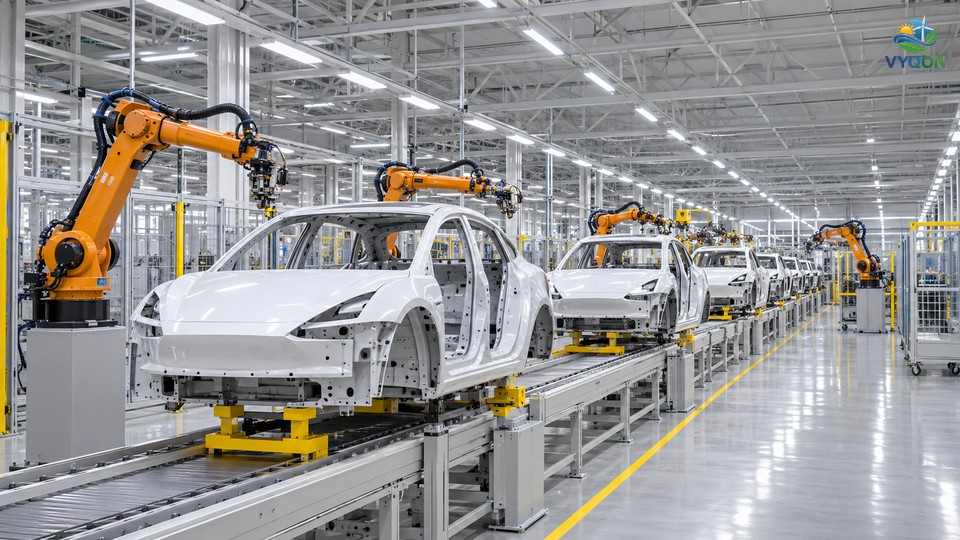
Kia India has announced a combined investment of USD 2 billion by Kia and its supplier partners to set up its second manufacturing plant in Andhra Pradesh. The company made the announcement on 12 November 2026, following the signing of a Memorandum of Understanding (MoU) with the Government of Andhra Pradesh. The Kia India second plant will add 2 lakh units of annual manufacturing capacity and will build new models across ICE and EV powertrains.
Kia India second plant: key numbers
According to the company’s release, the proposed facility will be located in Anantapur, Andhra Pradesh, the same location as Kia India’s current plant. Kia and its suppliers together will occupy 465 acres in an expanded area, and the facility is expected to generate approximately 12,000 more direct and indirect job opportunities.
The new plant will add 2 lakh units a year, which takes Kia India’s combined annual manufacturing capacity across both plants to over 6 lakh units. The current plant has a capacity of 4,30,000 units a year. Start of production (SOP) is planned for early 2030, and the main processes at the second plant will be stamping, welding, painting and assembly, the same as at the current plant.
Cumulative investment across the two plants will reach up to USD 5 billion. The current plant was set up with an initial investment of USD 2.9 billion by Kia and its suppliers, on 945 acres, and supports 24,237 direct and indirect jobs.
What Kia says about EV and ICE models
The release does not name the models for the second plant, and it does not give a battery capacity, an electric vehicle volume or a share of EV output. It says only that the plant will produce “new models across ICE and EV powertrains”. Gwanggu Lee, Managing Director and CEO of Kia India, said the second manufacturing plant “marks a significant new chapter”, strengthening Kia’s ability to respond to customer demand with greater speed and flexibility, while supporting the introduction of new models across ICE and EV powertrains. He added that the plant will further expand the company’s Made-in-India footprint and strengthen its ability to serve both domestic and overseas markets.
The existing plant already makes a mix of powertrains. The company’s release lists the Seltos and Syros in ICE and EV versions, the Sonet, the Carens in ICE and CNG versions, the Carens Clavis in ICE, EV and CNG versions, the Carnival, and the Sorento in ICE and hybrid versions.
Recent sales and portfolio context
Kia India’s own newsroom also shows recent momentum. On 1 November 2026 the company reported its highest-ever monthly sales since market entry, at 33,462 units in October 2026, up 13.22% year on year. In October it also expanded its Assured Buyback Programme across its ICE, hybrid and EV portfolio, with an assured residual value of up to 75% in three years.
What it means for India’s EV and manufacturing sector
For India’s electric vehicle sector, the announcement is a signal of intent more than a volume commitment. A new plant that will build EV models from early 2030 adds to the domestic manufacturing base for passenger electric vehicles and to the supplier ecosystem around Anantapur, since the USD 2 billion figure includes investment by supplier partners. The company has not said which parts or which suppliers will take part.
Several details remain undisclosed. Kia has not stated the split between ICE and EV capacity, the model names, battery sourcing, or the incentives under the MoU. These points should be confirmed from later company or state government announcements. The timeline is also long: production is planned only for early 2030, so the capacity will not affect the market in the near term.
Leave a Comment