
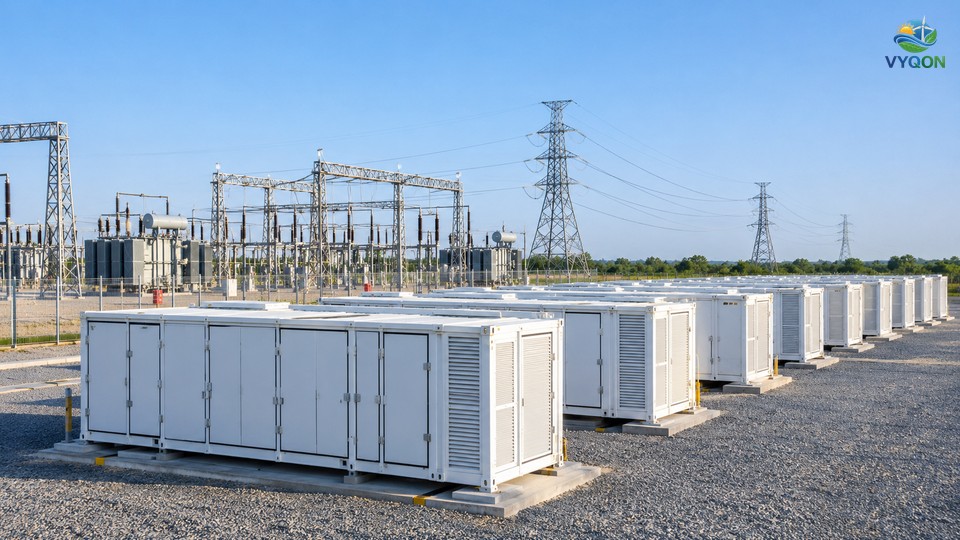
The Ministry of Power has circulated a draft amendment that would require energy storage used in solar, wind-solar hybrid, firm and dispatchable renewable energy and standalone battery energy storage system (BESS) projects to meet domestic content requirements. The draft was sent on 10 November 2026, and the Ministry has asked for comments within 15 days, that is by 25 November 2026. It is a draft for consultation, not a final rule, and the storage domestic content draft does not set a percentage.
What the Ministry has sent out
The draft comes with a covering letter, No. 48-19/1/2025-NRE Section (Vol.II), dated 10 November 2026 and signed by Sunil Sharma, Director (NRE). The subject is the amendment to the Guidelines for Tariff Based Competitive Bidding Process for Procurement of Power from Grid connected Power Projects and for Procurement of Battery Energy Storage Systems.
The draft covers four sets of guidelines:
- Solar power projects.
- Wind-solar hybrid projects.
- Firm and dispatchable power from grid-connected renewable energy projects with energy storage systems.
- Procurement and utilisation of battery energy storage systems as part of generation, transmission and distribution assets, along with ancillary services.
Comments can be emailed to nre.section-mop@gov.in. The letter was addressed to the Ministry of New and Renewable Energy, the Central Electricity Authority, the Central Electricity Regulatory Commission, state governments and regulators, power sector PSUs, SECI, the power exchanges IEX and PXIL, and industry bodies including FICCI, CII, PHDCCI, ASSOCHAM, the Electric Power Transmission Association, the Indian Wind Power Association, the Indian Wind Turbine Manufacturers Association and the National Solar Energy Federation of India. The National Informatics Centre cell has been asked to upload the notice on the Ministry of Power website under “Current Notices”.
Proposed changes, guideline by guideline
The proposals, as reported from the draft, are:
- Solar guidelines (July 2023), clause 1.1.3: a proviso would require compliance with central government orders and CEA regulations that make storage mandatory with solar. Solar power could then be procured with or without storage, depending on those orders.
- Wind-solar hybrid guidelines (August 2023), clause 3.3: storage on the solar part would change from “may” to “shall”, and the sub-clauses that list the purposes of storage would be deleted.
- Firm and dispatchable renewable energy guidelines (June 2023), clause 1.1.8: a domestic content condition would be added for the storage system.
- BESS guidelines (March 2022), Section III: the request for selection documents would have to include domestic content provisions. The minimum term of the battery energy storage purchase agreement would stay at 8 years.
- Payment Security Fund: a contribution would become optional (“may” instead of mandatory), up to Rs 5 lakh per MWh, paid in instalments as set out in the request for selection. It would back at least three months of billing.
The draft does not state the domestic content percentage. It refers to requirements to be set under Central Government orders, so the actual threshold will depend on those orders.
How this differs from other storage rules
The draft is separate from two other storage items. A 20% local content requirement already applies to battery projects supported by the viability gap funding scheme, under an order of December 2025. The Ministry has also separately proposed a late payment surcharge framework for standalone storage, which VYQON has covered in an earlier report. The present draft would put domestic content conditions into the standard tender guidelines that central and state agencies use for procurement, so it would reach auctions run under all four guideline sets.
What it means for India’s clean-energy sector
Storage is now part of many solar and hybrid tenders, and the guidelines decide what bidders must supply. A domestic content condition in the main guidelines would apply to every developer bidding under them, and so it would reach the suppliers of storage systems as well.
The proposal also aligns the guidelines with CEA regulations that require storage with solar. Changing “may” to “shall” for the solar part of hybrid projects would make storage a firm requirement there, while the Payment Security Fund contribution would become a choice for developers. The exact effect will depend on the final text and on the domestic content percentage that the Central Government sets.
Because the document is a draft, the details can still change after the comment period. Developers, manufacturers, utilities and industry bodies have until 25 November 2026 to send their views to the Ministry of Power.
Official references
Ministry of Power, letter No. 48-19/1/2025-NRE Section (Vol.II), “Amendment to the Guidelines for Tariff Based Competitive Bidding Process for Procurement of Power from Grid connected Power Projects and for Procurement of Battery Energy Storage Systems”, New Delhi, 10 November 2026 (copy of the letter): https://www.eqmagpro.com/wp-content/uploads/2026/11/a5ffd1edbe2f2d6a085c44e224f4c562_compressed.pdf
Leave a Comment