
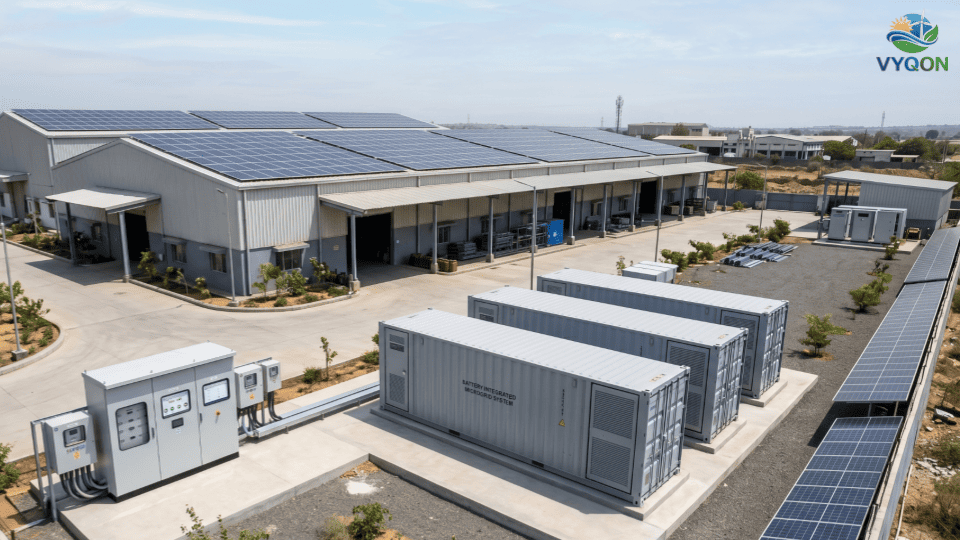
Critical Loop, a Los Angeles-based industrial power solutions provider, closed a $26 million Series A funding round on April 13, 2026. Led by a former SpaceX chief engineer, the company is positioning its modular microgrid platform as a stopgap for what industry analysts characterize as a multi-year, gigawatt-scale market failure. The capital injection is intended to accelerate the deployment of systems designed to bypass the chronic grid connection delays currently stalling industrial electrification and data center expansion across the United States.
Funding and Investor Overview
The Series A round brings Critical Loop’s total committed funding—comprising both debt and equity—to $49 million. Management intends to use the proceeds to bolster domestic supply chains, accelerate hardware deployment, and initiate geographic expansion into the Indian renewable energy market.
The investment round included the following entities:
- Lead Investors: Conifer Infrastructure Partners and Hanover (HNVR Technology Investment Management).
- Strategic Participants: Better Ventures, Climate Capital, Adapt Nation Capital, and Cyrus Ventures.
Technical Specifications: The CLB-5100 and Cygnus Platform
Critical Loop’s “speed-to-power” strategy relies on a software-defined approach to hardware integration. Central to the stack is a proprietary “combiner” that allows the system to remain hardware-agnostic, interfacing with diverse battery chemistries and power sources without custom technical adaptations. To mitigate current supply chain volatility, the company maintains a strategic agreement with LG Energy Solution Vertech for battery modules manufactured within the United States.
Critical Loop Technical Stack
| Hardware (CLB-5100) | Software (Cygnus) |
| <ul><li>Scalable 1-megawatt (MW) battery system</li><li>Modular, relocatable design for rapid site exit once permanent power is established</li><li>Integrated “combiner” equipment for hardware-agnostic power source blending</li><li>Interfaces with existing grid infrastructure or on-site generation (e.g., solar)</li></ul> | <ul><li>UL 3141-certified, proprietary software-defined power controller</li><li>Autonomous real-time management of load-flexing and frequency regulation</li><li>Remote orchestration capability for utility-directed load limits</li><li>Extensible architecture allowing for rapid capacity scaling</li></ul> |
Market Context and Regulatory Drivers
The industrial bottleneck for grid access has reached a critical inflection point. Currently, 2,600 GW of energy and industrial projects are held in U.S. interconnection queues—a backlog representing 1.7 times the nation’s total installed capacity. The median wait time for a connection request to reach commercial operation has increased from two years a decade ago to five years today.
Regulatory frameworks are shifting to accommodate private-sector “bridge” solutions. A February 2026 ruling by the California Public Utilities Commission (CPUC) serves as a potential national blueprint by requiring utilities such as PG&E and SCE to offer “Flexible Service Connection” tariff options. This ruling, aligned with the “first-ready, first-served” principles of FERC Order 2023, validates the business model of using distributed resources to manage capacity-constrained areas.
Operational Footprint and Partnerships
Critical Loop has validated its relocatable microgrid model through several high-load industrial use cases:
- San Diego International Airport: The company manages an 11 MW load using a combination of permanent and movable battery storage. The relocatable units provide critical power reliability during the airport’s ongoing modernization project.
- Terawatt Infrastructure: Critical Loop secured over 4 MW of flexible capacity across two sites for the fleet-charging operator. This deployment enabled the launch of operations despite a projected five-year utility wait for a full 10 MW connection.
- Industrial/C&I Operations: The company successfully deployed 50 MWh of microgrids over the last 12 months. Leadership has established a deployment target of 100 MWh for the current fiscal year.
Geographic Expansion into India
Critical Loop’s planned expansion into India targets a market where industrial output is projected to increase 21-fold by 2050. Despite the Indian government’s requirement for $170 billion in annual climate investment, the sector faces a significant “financing dead zone” for Series A and early growth-stage companies.
By entering the region, Critical Loop addresses a specific capital failure identified by the Green Artha Clean Economy Fund: a lack of support for “First of a Kind” (FOAK) factories and asset-heavy mitigation technologies seeking $1 million to $10 million in financing. The company’s modular, battery-integrated solutions are intended to provide techno-commercial validation for Indian C&I developers, offering grid stability and predictable project timelines in a region currently hindered by a $120 billion annual investment gap.
Leave a Comment