
Indian Union Minister for Power, Housing & Urban Affairs, Manohar Lal, conducted a four-day official visit to Bhutan from April 9 to 12, 2026, to strengthen bilateral energy cooperation and formalize technical and economic protocols. During the visit, Minister Lal held a Royal Audience with His Majesty King Jigme Khesar Namgyel Wangchuck, signifying high-level diplomatic endorsement of the energy partnership. He also held meetings with Prime Minister Tshering Tobgay and the Minister for Energy and Natural Resources, Gem Tshering, to coordinate the expansion of cross-border power trade and infrastructure development.
Key Agreements: Tariff Protocol and Grid Methodology
On April 9, 2026, in Thimphu, representatives from the Government of India and the Royal Government of Bhutan signed deliverables establishing the economic and technical parameters for ongoing and future energy exchanges.
The Punatsangchhu-II (PHPA-II) Export Tariff
The protocol to the agreement finalized the initial export tariff for the 1,020 MW Punatsangchhu-II Hydroelectric Project at INR 5.10 per unit. This rate represents the highest tariff among Bhutan’s current hydropower projects, a technical necessity driven by the project’s scale and its Nu 94.45 billion capital cost. The agreement stipulates a structured revision schedule:
- During Loan Repayment: A 7% increase every five years throughout the 17-year loan repayment period.
- Post-Repayment: A 5% increase every five years once the loan is fully repaid.
Methodology for Reactive Energy Accounting
The two governments also signed a framework for the methodology of reactive energy accounting, effective May 1, 2026. This technical framework is designed to optimize the reactive power exchange between the two nations. The primary objectives of this methodology include:
- Improving interconnection efficiency and power flow transparency.
- Enhancing overall grid stability across the cross-border interface.
- Ensuring a standardized accounting mechanism for bilateral electricity trade.
Enhanced Bilateral Institutional Mechanism
A new strategic framework was established to broaden energy cooperation beyond the scope of traditional hydropower. This enhanced bilateral institutional mechanism provides a formal platform for the review and coordination of multi-sectoral energy initiatives. The core focus areas identified in the protocols include:
- Non-hydro renewable energy (RE): Diversification into solar and wind to mitigate hydropower’s seasonal generation drops during lean months.
- Cross-border transmission infrastructure: Expansion of physical grid links to support increased export volumes.
- Project financing and partnerships: Collaboration on financing structures and institutional capacity building.
- Technical collaboration: Knowledge exchange regarding grid management and equipment standards.
Project Milestones and Status Updates
Punatsangchhu-I (1200 MW)
On April 10, 2026, Minister Lal attended the concrete pour ceremony for the dam construction of the Punatsangchhu-I Hydroelectric Project. This event marks a milestone in the progression of the 1200 MW project, which remains the largest joint hydropower venture between India and Bhutan.
Punatsangchhu-II (1020 MW) Operational Status
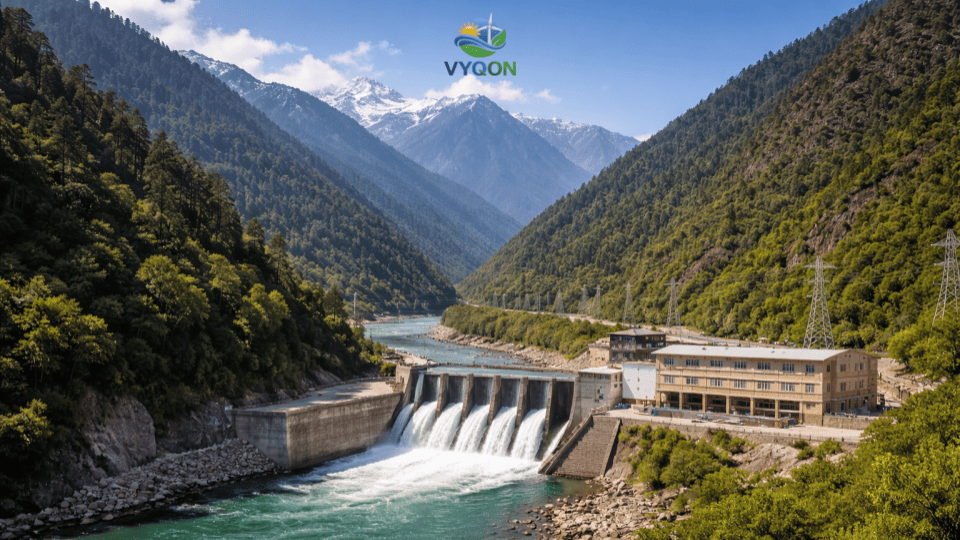
The 1020 MW PHPA-II project, consisting of six 170 MW units, has reached full operational status following its joint inauguration by the Prime Minister of India and the King of Bhutan on November 11, 2025.
- Operational Timeline: Surplus power exports to India officially commenced on September 19, 2025.
- Revenue Generation: Since the commencement of exports in September 2025, the project has already generated over Nu 4 billion in revenue. Once fully stabilized, the project is projected to earn approximately Nu 20 billion in annual revenue for Bhutan.
- Consumption Patterns: During lean months, approximately 20% of the project’s capacity is utilized for Bhutan’s domestic consumption, while surplus summer generation is designated for export to India.
Strategic Energy Outlook
The ministerial visit aligns with Bhutan’s 2024 National Hydrogen Roadmap and its broader objective of remaining carbon-neutral while ensuring energy security. To offset the seasonal variability of hydropower—particularly during the winter lean months—the Royal Government of Bhutan aims to add 15,000 MW of hydropower and 5,000 MW of solar generation capacity by 2040.
The PHPA-II project, representing a total investment of Nu 94.45 billion, is expected to generate 4,575 million units of electricity annually. These deliverables underscore a shift toward a more integrated regional energy market, encompassing diversified renewable sources and enhanced technical accounting standards.
Leave a Comment