
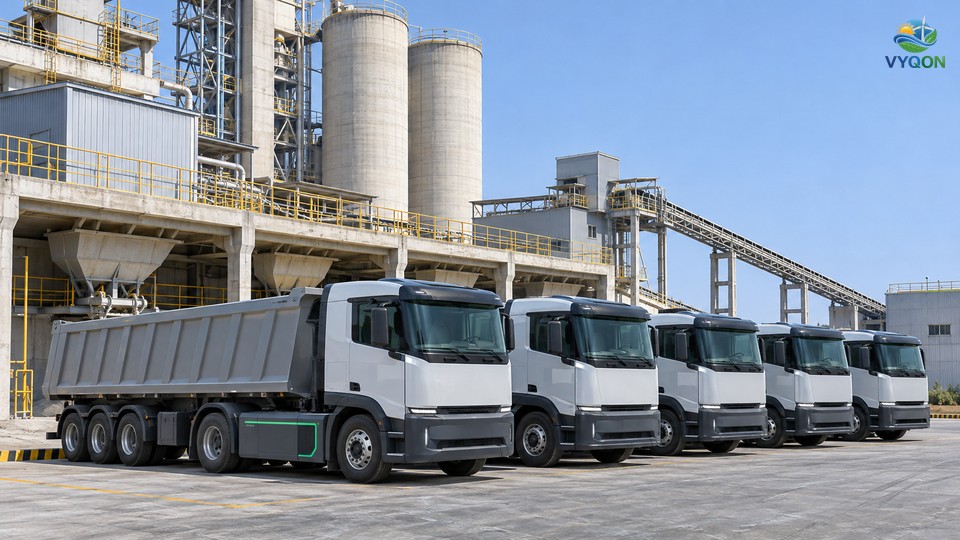
Adani Cement has flagged off heavy-duty electric trucks at its Sanghi Plant in Gujarat, its first-ever deployment of electric vehicles for freight. The company announced the move on 18 November 2026 in a media release filed with the stock exchanges by Ambuja Cements Limited. Under a first phase, Adani Cement plans to put 410 electric trucks on the road by March 2027 to move clinker and cement, and says this fleet is projected to cut more than 25,000 tonnes of carbon dioxide (CO2) a year.
Adani Cement electric trucks: what was announced
Adani Cement, part of the Adani Portfolio, comprises Ambuja Cements Limited and its subsidiaries ACC Limited and Orient Cement Limited. The company said the deployment at Sanghi has begun and described it as a milestone in its sustainability and green logistics journey. The trucks will carry clinker, the intermediate product used to make cement, and finished cement.
The 410-truck fleet is the first phase of a wider plan. The company says the fleet will displace the equivalent of about 11 million litres of diesel every year. It also plans to expand across additional routes and plants after the first phase.
The release does not name the truck manufacturer, the battery size, the number of trucks running today, the charging arrangement, the cost of the fleet or the transport operator. These details were not disclosed.
Targets for 2030
Looking further ahead, Adani Cement is targeting 10% of its logistics road volume to be moved by electric trucks by 2030. That goal involves deploying more than 2,000 electric vehicles.
Vinod Bahety, CEO of the Cement Business at Adani Group, said the Sanghi deployment is “just the beginning”. He said the company has identified multiple routes across India for EV-based transport of clinker and cement. According to him, every truck electrified reduces the company’s carbon footprint and insulates its logistics cost base from diesel price volatility.
The company’s case for electric freight
The release argues that the economics of heavy-duty electric trucks in India’s cement sector have reached a “structural tipping point”. It cites three company figures for the past decade: diesel prices rose 60%, lithium-ion battery pack costs fell by about 70%, and solar tariffs declined 47%. These are the company’s own claims.
On emissions, the company says a diesel truck emits about 0.7375 kg of CO2 per kilometre. When electric trucks are powered by renewable energy, it says, up to 100% of these freight emissions can be eliminated. That makes logistics electrification a lever for Scope 3 decarbonisation, which covers emissions from the transport and supply chain rather than from the company’s own plants.
The release adds that India is the world’s second-largest cement producer. Moving limestone, clinker and finished cement across long supply chains is an essential but carbon-intensive part of the sector’s operations, and the company says its EV fleet addresses both the cost and the climate side of that challenge.
Adani Cement’s wider decarbonisation efforts
Adani Cement has an installed capacity of 113.5 million tonnes per annum (MTPA). It has committed to net zero by 2050, with near-term and net-zero targets validated by the Science Based Targets initiative (SBTi).
Its decarbonisation initiatives, as listed in the release, include investments in 1 GW of renewable energy and 376 MW of waste heat recovery systems by FY28. It also has partnerships with Leilac and Coolbrook to advance low- and zero-carbon cement technologies. The company describes itself as water positive and plastic negative, and says it was the world’s first cement manufacturer to join the Alliance for Industrial Decarbonization.
What it means for India’s clean-energy sector
Road freight is one of the harder areas to decarbonise, and heavy industries such as cement depend on diesel trucks to move bulk materials between plants, terminals and customers. A large, planned electric fleet at one of the country’s major cement groups adds demand for heavy-duty electric trucks and for the charging infrastructure and renewable power that support them.
The link to renewable electricity is central to the company’s argument: the emission cuts it describes depend on the trucks being charged with renewable power. The first phase of 410 trucks and the 2030 target of more than 2,000 vehicles will show how quickly heavy-duty electric freight can scale in India. Details on trucks, charging and cost will matter for judging that, and the company has not yet shared them.
Official references
- Ambuja Cements Limited, filing to BSE, NSE and Luxembourg Stock Exchange with Media Release “Adani Cement Flags Off Heavy-Duty Electric Trucks for Clinker & Cement Transport”, 18 November 2026: BSE filing (PDF)
Leave a Comment