
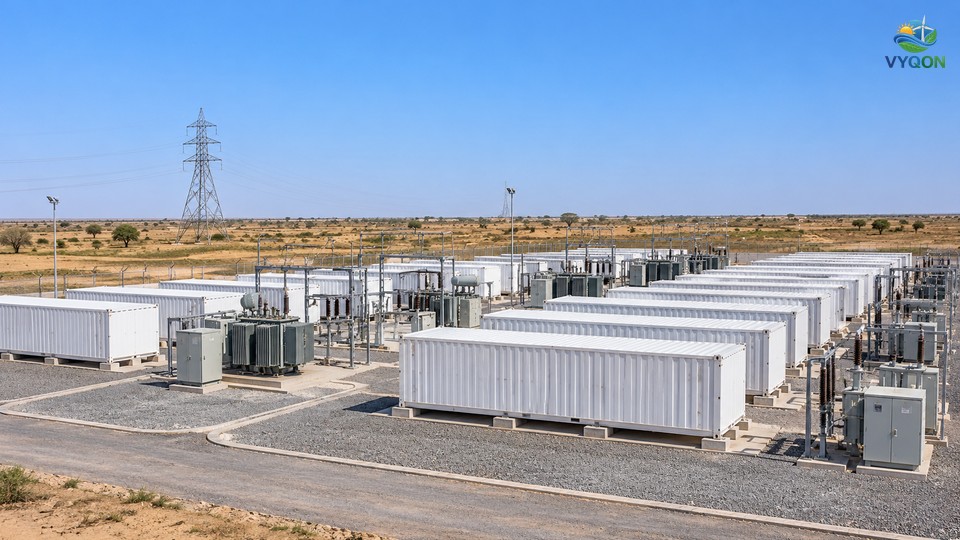
Amara Raja Energy & Mobility Limited (ARE&M) has told the stock exchanges that the board of its wholly owned subsidiary, Amara Raja Advanced Cell Technologies Limited (ARACT), has approved an Amara Raja ARACT capex of Rs 2,320 crore. The money will increase battery pack manufacturing capacity from 4 GWh to 9 GWh and set up a lithium iron phosphate (LFP) cell manufacturing plant at the Amara Raja Giga Corridor in Telangana. The disclosure was made on 2 November 2026 in the company’s “Outcome of Board Meeting” filing to BSE and the National Stock Exchange.
What the filing says about the Amara Raja ARACT capex
According to the filing, the parent company’s board noted the capital expenditure approvals granted by the ARACT board. The two projects are the expansion of pack manufacturing capacity from 4 GWh to 9 GWh and the setting up of an LFP cell manufacturing plant at the Giga Corridor in Telangana.
The company said the plants will be established within the next 30 months. The capex for these facilities will be financed through a mix of equity and debt. The filing does not give the split between the equity and debt portions, and it does not say how the Rs 2,320 crore is divided between the pack expansion and the cell plant.
The company described the investment as reaffirming, and in line with, its “Energy & Mobility” roadmap and its Giga Corridor initiative, which it says is aimed at establishing an integrated ecosystem in India for emerging energy and mobility technologies.
The same board meeting also approved the unaudited standalone and consolidated financial results for the quarter and half year ended 30 September 2026. It declared an interim dividend of Rs 4.30 per equity share for FY 2026-27, with 6 November 2026 as the record date and payment on or before 1 December 2026.
What the earnings presentation adds
The company’s Q2 and H1 FY2027 earnings presentation, filed the same day, gives more detail on the capacity plan. It lists the setting up of a cell giga factory with a capacity of 5 GWh based on LFP chemistry, and the enhancement of pack assembly capacity from 4 GWh to 9 GWh. The presentation places the pack assembly plant and the cell activities at Divitipally in Telangana.
The presentation also shows the wider plan for the Giga Corridor. Giga Factory-1 is expected to be commissioned during the second quarter of FY28 with a capacity of 2 GWh based on nickel manganese cobalt (NMC) chemistry. The company shows a target of 16 GWh of cell capacity by FY2030, and a separate 10 GWh giga facility for energy storage solutions, described as a battery energy storage system (BESS) manufacturing facility.
The presentation says the company has so far infused Rs 2,100 crore into ARACT, and that the Giga Corridor in Telangana was planned with an investment of Rs 95 billion. It also notes that the E+Ve Lab was commissioned in October 2026 to support technological advancements in the business.
Why LFP cells matter for storage
LFP is a lithium-ion chemistry widely used in stationary storage. Unlike NMC, it does not use nickel or cobalt. For Amara Raja, an LFP cell line next to a 10 GWh BESS facility and a larger pack assembly line would line up cell production with the products it intends to sell. The company has said it expects its BESS plant to come online in the month after the Q2 results, and its management has described progress at Giga Factory-1 as on track.
The quarter in which the approval came
The capex approval arrived alongside a quarter of growth for the company’s core business. Standalone revenue from operations for Q2 FY27 was Rs 3,843.25 crore, up 13% from Rs 3,388.18 crore a year earlier. The company attributed performance to double-digit growth in automotive battery sales and to its home energy business. In the New Energy business, sustained supply of telecom battery packs and EV packs led to revenue growth of more than 30%.
In August 2026, ARE&M reported its Q1 FY27 results and said construction of its 10 GWh plant had begun; the earlier report is available on vyqon.in at https://vyqon.in/amara-raja-energy-commences-10-gwh-plant-construction/. The new approval adds LFP cell manufacturing and a larger pack line to that build-out.
What it means for India’s clean-energy sector
A domestic LFP cell plant, together with a larger pack line and a dedicated BESS facility, adds Indian manufacturing capacity for stationary storage. The plants are due within 30 months of the announcement.
Several points remain open. The filing does not give a cell capacity for the LFP plant, a start date for construction, or a commissioning date; the 5 GWh figure comes from the earnings presentation and not from the board outcome letter. Until the company discloses more, the approval should be read as a commitment to build, not as capacity that is ready to supply projects.
Official references
1. Amara Raja Energy & Mobility Limited, “Outcome of Board Meeting – financial results”, filed with BSE and NSE on 2 November 2026: https://www.bseindia.com/xml-data/corpfiling/AttachLive/61edd4ed-2033-4a0d-926c-1957c264881e.pdf
2. Amara Raja Energy & Mobility Limited, Earnings Presentation Q2/H1 FY2027, filed with BSE and NSE on 2 November 2026: https://www.bseindia.com/xml-data/corpfiling/AttachLive/9728b2c9-756b-4228-8683-d6bf052fcd66.pdf
3. Amara Raja Energy & Mobility Limited, media release on Q2 FY27 results, filed with BSE and NSE on 2 November 2026: https://www.bseindia.com/xml-data/corpfiling/AttachLive/08992ff3-a06f-4793-b41d-fd1fdf7eaf8d.pdf
Leave a Comment