
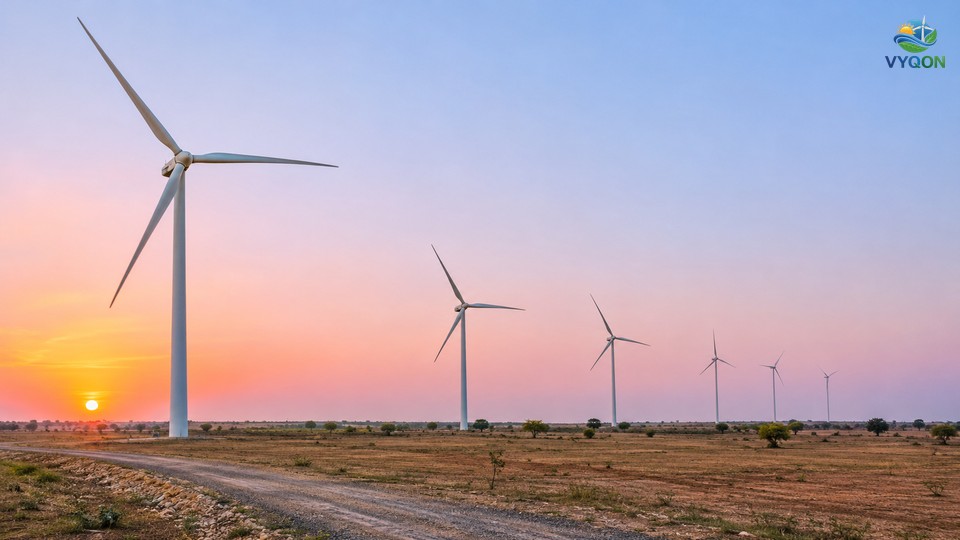
Exide Industries Limited has reduced its shareholding in Ulric Renewables Private Limited from 39.08% to 26.07%. In a Regulation 30 disclosure to the stock exchanges dated 18 November 2026 (reference EIL/SEC/2026-27/52), the Kolkata-based battery maker said a 10.5 MW captive wind project at Jath in Maharashtra could not be commissioned within its scheduled commencement date. The dilution followed mutually agreed terms between Ulric, Exide and Cleantech Solar India OA 2 Pte. Ltd. (CIOA2), including amendment and settlement documentation signed by the parties.
What the filing says about the Exide Ulric Renewables stake
Ulric Renewables is a special purpose vehicle (SPV) promoted and incorporated by CIOA2 to develop captive wind power projects totalling 18.9 MW. The projects were meant to supply renewable power to Exide’s manufacturing facilities in Tamil Nadu and Maharashtra. The 10.5 MW Jath project was intended for the Maharashtra factories.
The second project, with a contracted capacity of 8.4 MW, supplies the Hosur facility in Tamil Nadu. Exide said it continues to operate under the existing arrangement and that Ulric will keep supplying electricity from it to the Hosur plant.
The company stated that the transaction is not a related party transaction and that none of its promoter, promoter group or group companies has any interest in it.
Background: how Exide came to hold 39.08%
Exide’s disclosure refers to its earlier letter of 10 April 2023. That letter followed an announcement of 28 February 2023, when Exide entered into a Share Subscription and Shareholders’ Agreement and Power Purchase Agreements with Ulric for captive wind projects aggregating 18.9 MW for its manufacturing facilities.
On 10 April 2023, Exide reported that it had subscribed to 24,80,625 equity shares of Rs 80 each in Ulric, aggregating Rs 19,84,50,000 (about Rs 19.85 crore). With that investment, its aggregate shareholding came to 39.08% of Ulric’s issued and paid-up capital. The 18 November 2026 filing now records a holding of 26.07%.
What has not been disclosed
The filing does not give the amount involved in the settlement, the scheduled commissioning date that was missed, the reason for the delay, the date on which the dilution took effect, or the tariff at which Ulric supplies power. It also does not say what will happen to the Jath capacity, whether it will be commissioned later or what Exide will use for power at its Maharashtra factories in the meantime. These points are left out of this report because they are not in the official record.
What it means for captive renewable power in India
Captive and group-captive projects let industrial users buy renewable power directly from a dedicated project, often by taking an equity stake in the SPV that builds it. The structure ties the buyer’s power supply to the project’s construction schedule, which is why a missed commissioning date can lead to a change in the shareholding terms, as in this case.
For Exide, the Hosur wind project of 8.4 MW remains in service, so part of the original 18.9 MW plan is delivering power. The Jath project, at 10.5 MW the larger of the two, did not reach commissioning within its scheduled date. The filing is limited to these facts; it does not describe any change to Exide’s wider renewable-power sourcing.
Official references
- Exide Industries Limited, Regulation 30 disclosure “Update on Divestment from captive wind power project”, Ref. EIL/SEC/2026-27/52, 18 November 2026 (BSE)
- Exide Industries Limited, Regulation 30 letter on subscription of shares in Ulric Renewables Private Limited, Ref. EIL/SEC/2023-24/04, 10 April 2023 (NSE)
Leave a Comment