
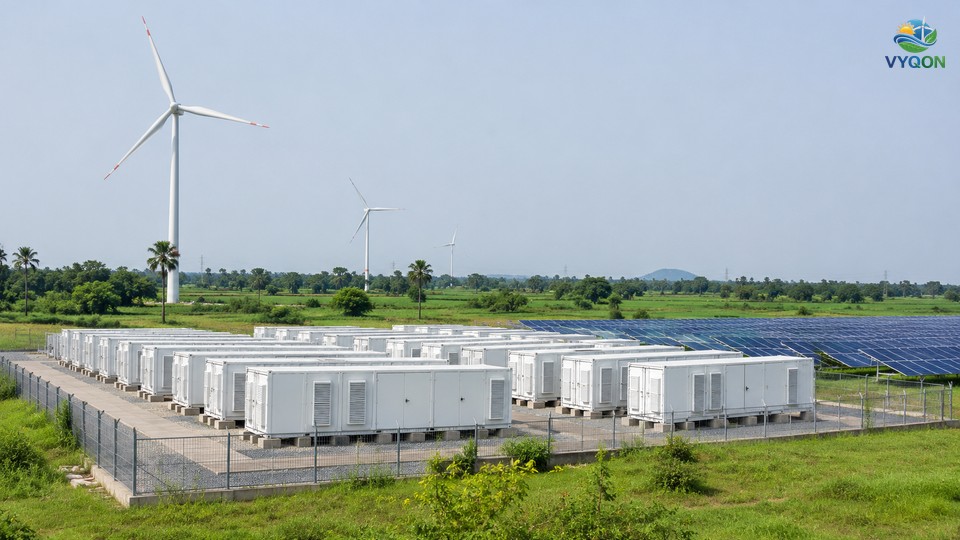
The Odisha Electricity Regulatory Commission (OERC) has pre-published the OERC draft RPO regulations 2026, which would raise the state’s renewable purchase obligation to 35.95% of electricity consumption in 2026-27 and 43.33% in 2029-30, and add an energy storage obligation that climbs from 2.5% to 4.0% over the same period. The public notice, No. OERC/RA/RPO-46/2026/1787, is dated 9 November 2026, and stakeholders can send views and suggestions by 5 December 2026.
The draft is titled the Odisha Electricity Regulatory Commission (Procurement of Energy from Renewable Energy Sources and its Compliance) Regulations, 2026. The Commission pre-published it under Section 181(3) of the Electricity Act, 2003. After considering the comments, it may modify the draft and finalise it for publication in the official Gazette.
OERC draft RPO regulations: renewable targets
The draft sets out year-wise obligations as a share of consumption, split into four components: wind, hydro, distributed renewable energy (DRE) and other renewable energy.
For 2026-27 the total is 35.95%, made up of wind 1.97%, hydro 1.34%, DRE 2.70% and other renewable energy 29.94%. The total rises to 38.81% in 2027-28 and 41.36% in 2028-29, and reaches 43.33% in 2029-30. By then the components are wind 3.48%, hydro 1.33%, DRE 4.50% and other renewable energy 34.02%.
The wind and hydro obligations must be met from projects commissioned after 31 March 2024. The hydro component may also be met from free power given to the state or a distribution licensee from such projects. The DRE component covers renewable projects of up to 10 MW and includes solar under net metering, gross metering, virtual net metering, group net metering and behind-the-meter set-ups. Where an entity cannot provide generation data for DRE installations, the draft converts reported capacity to energy using a multiplier of 4 kWh per kW per day.
The wind, hydro and other renewable components are fungible, so a shortfall in one can be met by a surplus in another. The DRE component is non-fungible for a shortfall, but a DRE surplus can offset the other components. Electricity consumed from nuclear sources is excluded from the obligation. The Commission may amend the targets and notify targets beyond 2029-30 by order.
Energy storage obligation
The draft’s energy storage obligation (ESO) is set on an energy basis, as a share of total electricity consumed: 2.5% in 2026-27, 3.0% in 2027-28, 3.5% in 2028-29 and 4.0% in 2029-30. The obligation counts as fulfilled only when at least 85% of the energy stored in the energy storage system in a year comes from renewable sources.
The draft defines an energy storage system broadly. It covers solid state batteries, flow batteries, pumped storage, compressed air, fuel cells, hydrogen storage and any other technology that stores energy and delivers it as electricity. Energy stored from renewable sources also counts towards the renewable obligation, which links storage directly to RPO compliance.
Who is covered and how to comply
The regulations would apply across Odisha to obligated entities: distribution licensees, consumers with fossil-fuel-based captive generating plants, and open access consumers. Entities that draw power partly from a distribution licensee and partly through open access or captive plants carry the obligation only on the share not supplied by the licensee.
Obligated entities may comply by consuming renewable electricity directly or through storage, by buying or self-generating renewable energy certificates issued under the CERC REC Regulations, 2022, including certificates acquired under virtual power purchase agreements, or by paying the buyout price specified by the Central Electricity Regulatory Commission. Captive and open access users can also ask the distribution licensee for green energy, either for part of their consumption or for all of it. Such a requisition must run for at least one year, with a pre-specified quantum, and accounting is monthly.
The draft carves out some consumption. Obligations exclude 50% of the electricity self-consumed from fossil-fuel-based co-generation plants and 50% of the fossil-fuel-based electricity consumed in aluminium smelters. Where several obligated entities are under common control, compliance is judged on an aggregate basis at the holding company level.
Monitoring and penalties
The Odisha State Load Despatch Centre (SLDC) would be the state agency monitoring compliance. It would collect data in a prescribed format and report quarterly and yearly compliance status to the Commission. If an entity falls short of its obligation, fails to submit information or submits incorrect information, the SLDC would inform the Commission and recommend action under Section 142 of the Electricity Act.
Grid connection and metering
The draft also covers connectivity: anyone generating from renewable sources, whatever the capacity, would have the option of open access, and licensees would have to provide interconnection facilities before a project’s commercial operation date.
What it means for India’s clean-energy sector
If finalised, the draft would repeal the 2021 Odisha regulations and set a clear, rising demand signal for wind, solar, hydro and storage in the state through 2029-30. The storage obligation, with its 85% renewable-energy condition, would matter for battery and pumped storage developers, while the DRE component supports rooftop and small-scale solar. Industrial consumers with captive plants and aluminium smelters would need to plan for the obligation and the stated exclusions. The numbers are proposals only and may change after stakeholder comments close on 5 December 2026.
Leave a Comment