
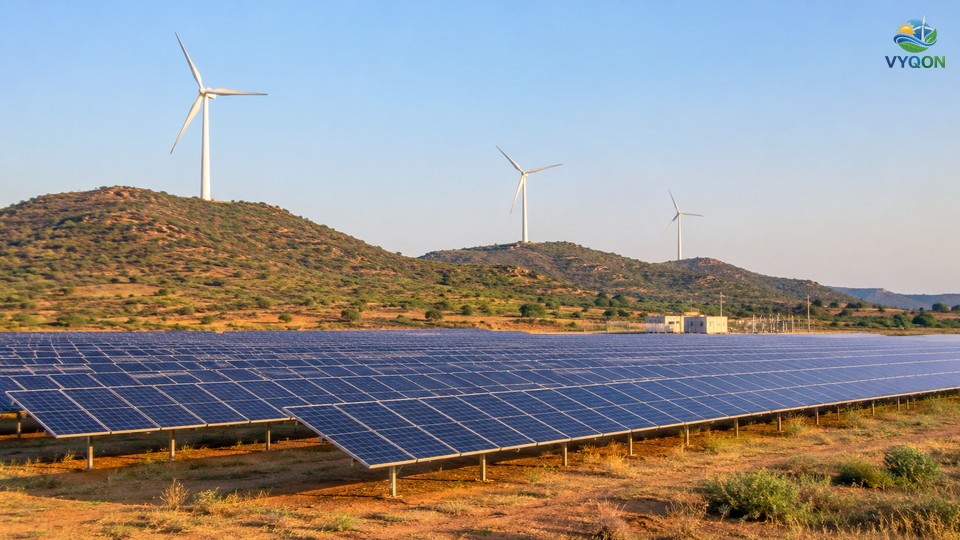
Oyster Renewable Energy is building a 60.9 MW wind-solar hybrid project for Laurus Labs in Kadapa district, Andhra Pradesh, and the solar half is already generating power. The Oyster Renewable Laurus Labs project combines 39.3 MWp of solar capacity, which has been fully commissioned, with 21.6 MW of wind capacity that is expected to be commissioned by December 2026. All the power will go to Laurus Labs under a captive power arrangement.
Project details
The project is being developed in Kadapa district, Andhra Pradesh, for the pharmaceutical manufacturer Laurus Labs. The key figures are:
- Total capacity: 60.9 MW of hybrid capacity
- Solar: 39.3 MWp, fully commissioned and generating
- Wind: 21.6 MW, expected to be commissioned by December 2026
- Arrangement: captive, with all power supplied to Laurus Labs
Only the solar part is operating today. The project as a whole should not be described as fully operational until the wind capacity is commissioned.
Expected generation and emissions savings
The commissioned 39.3 MWp of solar capacity is expected to generate about 51.51 million units (MU) of electricity a year. That would avoid an estimated 35,571 tonnes of carbon dioxide (CO2) emissions every year.
Once the wind capacity is added and the hybrid project is fully operational, annual generation is expected to rise to about 124 million units, and the avoided emissions to about 88,040 tonnes of CO2 a year. The wind capacity of 21.6 MW is therefore expected to add roughly 72 million units a year, which is more than the solar part generates alone. This difference is worked out from the figures above and is not a separate announced number.
Why wind and solar together
Solar plants generate during daylight hours only. Wind generation can fill in at other times of day and in other seasons, so a hybrid plant can supply a steadier flow of power than a solar-only plant of the same size. Siddharth Bhatia, Managing Director and CEO of Oyster Renewable, said that pairing wind with solar gives customers such as Laurus Labs clean power well beyond daylight hours. He added that more commercial and industrial (C&I) consumers in sectors such as pharmaceuticals, cement and steel are moving to hybrid renewable power for this reason.
Laurus Labs’ renewable energy target
Dr Satyanarayana Chava, Founder and CEO of Laurus Labs, said the commissioning of the 39.3 MWp solar project is an important milestone in the company’s journey towards more energy-efficient and sustainable operations. He said Laurus Labs is also working to reduce its energy intensity through process optimisation, better utility performance and energy-efficient technologies at its facilities.
With additional solar and wind power arrangements, the company aims to meet around 50% of its energy requirements from renewable sources by the fourth quarter of FY27.
Laurus Labs’ own sustainability page describes an environmental, social and governance (ESG) framework and lists, among its milestones, the acquisition of a 26% stake in Ethan Energy India Pvt. Ltd to boost captive renewable power. That stake is a separate step from the Kadapa project.
About Oyster Renewable
Oyster Renewable describes its business as integrated hybrid renewable energy and round-the-clock (RTC) solutions for commercial and industrial customers. The Kadapa project is one example of that approach: a developer builds and runs the plant, and an industrial buyer takes all the power through a captive arrangement.
What it means for India’s clean-energy sector
Captive hybrid projects such as this one show how large industrial users are securing renewable power directly instead of relying only on grid supply. For an energy-intensive manufacturer, a supply that combines wind and solar can cover more hours of the day, which matters for plants that run for long hours.
Three points are worth noting. First, the project is being delivered in stages, with solar commissioned first and wind following. Second, the generation and emissions figures are expectations, and actual output will depend on weather and plant performance. Third, the project cost has not been confirmed consistently, so it is not quoted here.
For Andhra Pradesh, the project adds to the state’s wind and solar base in Kadapa district. For the C&I segment, it adds to the case for hybrid supply in sectors such as pharmaceuticals, cement and steel. The next milestone to watch is the commissioning of the 21.6 MW of wind capacity, expected by December 2026, which would complete the project.
Official references
1. Oyster Renewable, company website, hybrid and round-the-clock renewable energy solutions: https://www.oysterrenewable.com/
2. Laurus Labs, Sustainability page (ESG approach and captive renewable power stake): https://www.lauruslabs.com/Sustainability.html
Leave a Comment