By VYQON Research Team
Sembcorp Green Infra’s proposed IPO puts a familiar challenge in renewable energy into focus: building more generating capacity requires capital, but the cost of that capital can limit what shareholders earn. The company plans to use most of its fresh issue to repay borrowings. That could provide breathing room as it develops its next set of projects.
The opportunity is therefore broader than a larger renewable portfolio. It is whether an established electricity producer can turn debt reduction, operating cash generation and new capacity into stronger returns. Its disclosures provide evidence of operating scale, alongside a substantial financing burden.
What the IPO Would Change
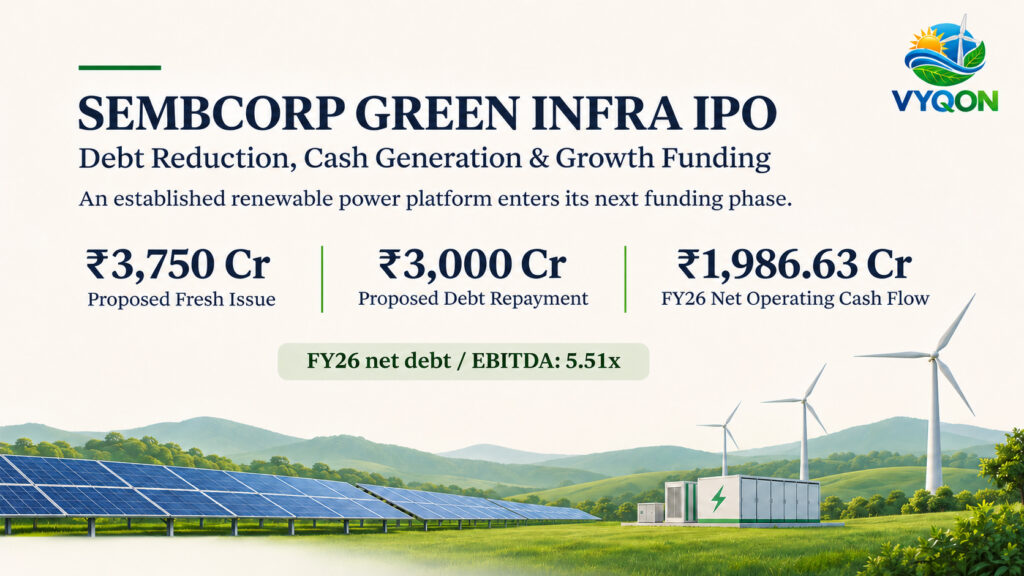
The DRHP proposes a fresh issue of up to ₹3,750 crore, with ₹3,000 crore intended for repayment or prepayment of borrowings at the company and selected subsidiaries. There is no offer-for-sale component in the draft. The proposed repayment accounts for 80% of the maximum fresh issue size.
For the business, the immediate benefit would be a smaller existing debt burden. It would not remove the need to finance construction. A possible pre-IPO placement of up to ₹750 crore would reduce the fresh issue by the amount raised; it is not additional capital on top of ₹3,750 crore.
An Electricity Producer With an Existing Operating Base
Sembcorp Green Infra owns and operates renewable power assets, earning revenue by selling electricity under power purchase agreements. That gives the IPO a different starting point from a business seeking funds primarily to establish its first commercial operations.
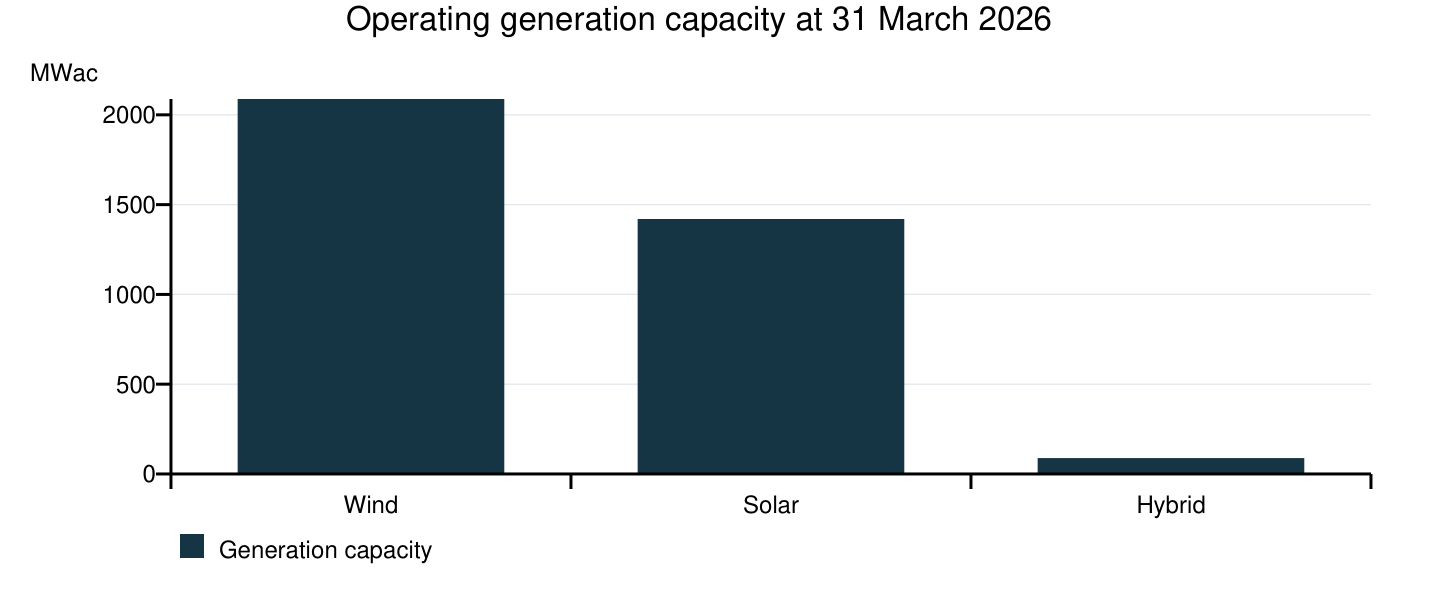
At 31 March 2026, its operating generation portfolio comprised 2,088.55 MWac of wind, 1,419.91 MWac of solar and 88.40 MWac of hybrid capacity. Together, these components totalled 3,596.86 MWac.
The next phase introduces a larger execution task. The disclosed under-construction portfolio total was 4,039.70 MW/MWh, including projects with signed PPAs and awarded projects awaiting PPAs. The combined disclosure label covers different units: generation MW and battery storage MWh should not be read as one uniform capacity measure.
Growth Is Visible but Shareholder Returns Need More Context
Revenue from operations reached ₹2,652.50 crore in FY26, compared with ₹2,249.18 crore in FY24. Consolidated profit after tax recovered to ₹371.08 crore in FY26 after falling in FY25. The financial record shows a growing revenue base, with a less consistent progression in profit.
| Metric in ₹ crore | FY24 | FY25 | FY26 |
|---|---|---|---|
| Revenue from operations | 2,249.18 | 2,318.29 | 2,652.50 |
| EBITDA | 1,822.75 | 1,837.12 | 2,098.73 |
| Consolidated PAT | 359.36 | 298.83 | 371.08 |
| Net operating cash flow | 1,959.91 | 1,891.41 | 1,986.63 |
| Gross borrowings at year end | 9,318.76 | 11,237.06 | 12,623.38 |
Figures are in ₹ crore. FY24, FY25 and FY26 refer to financial years ended 31 March 2024, 2025 and 2026. Consolidated PAT includes non-controlling interests; FY26 profit attributable to parent shareholders was ₹346.35 crore.
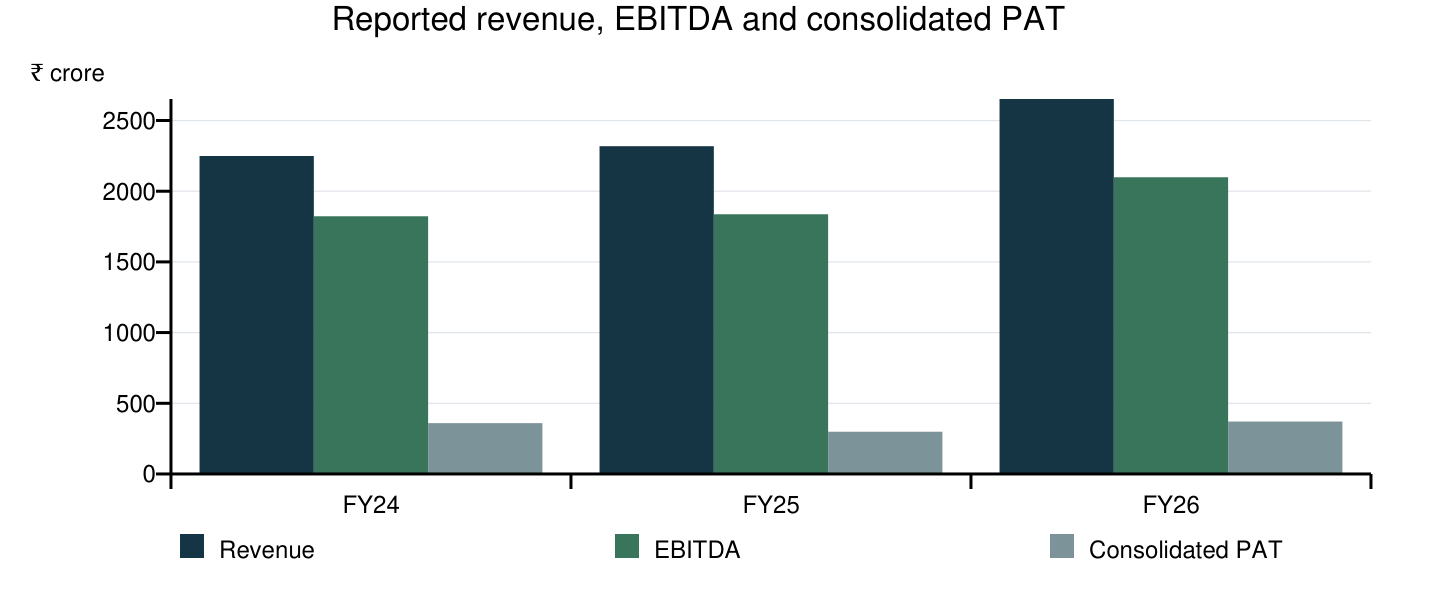
The gap between operating earnings and the bottom line is significant. FY26 finance costs were ₹812.79 crore, while depreciation and amortisation were ₹814.95 crore. Together, these costs explain why a large EBITDA figure does not translate directly into equally strong shareholder earnings. The disclosed FY26 return on net worth was 3.71%.
Cash Generation Helps but Does Not Fund Everything
Unlike a business consuming cash in its day-to-day operations, Sembcorp Green Infra reported positive net operating cash flow in all three reviewed years. FY26 net operating cash flow was ₹1,986.63 crore.
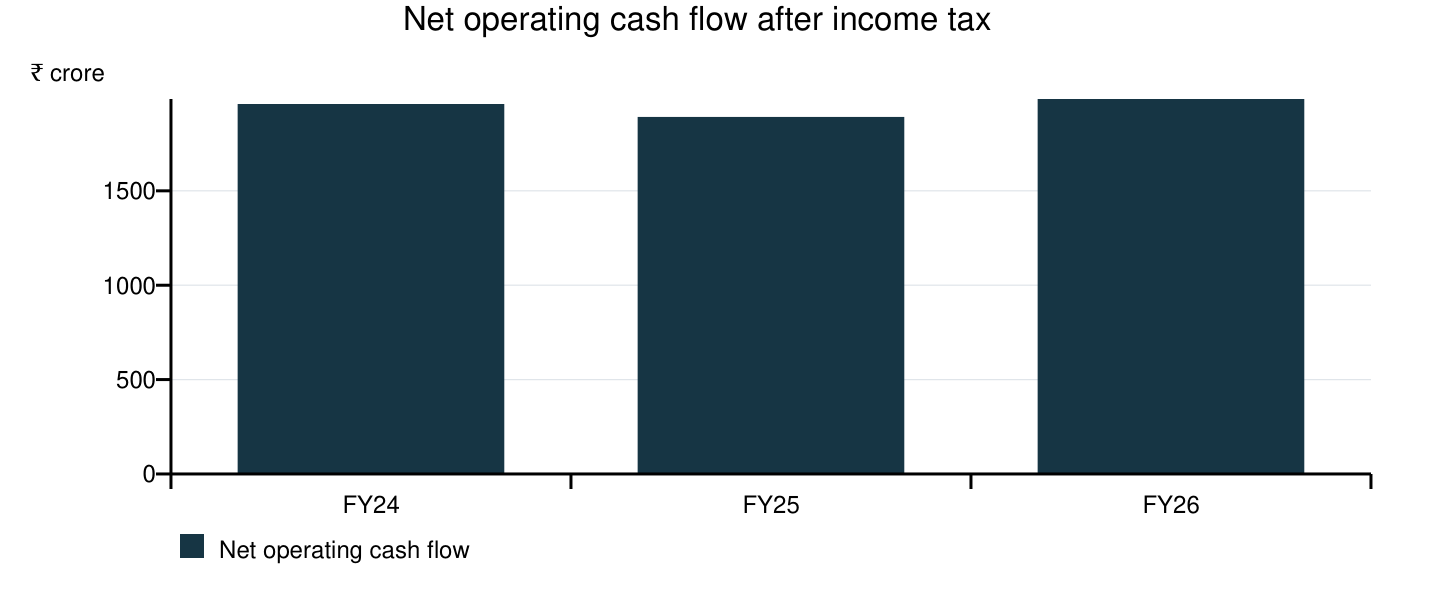
That cash-flow figure needs to be read alongside the financing statement. FY26 finance costs paid of ₹966.61 crore were classified under financing activities. Operating cash flow therefore does not represent the cash left after interest, debt repayment and investment in new projects.
This distinction is central to the IPO. Debt repayment could reduce an existing claim on cash, while construction creates new cash requirements. The balance between those two movements will influence whether the company’s financial flexibility improves sustainably.
What Will Matter After the Fundraising
Three developments deserve particular attention: which borrowings are repaid and when, how quickly projects enter commercial operation, and how much additional funding is required to complete the pipeline. A successful fundraising addresses the starting balance sheet; subsequent execution determines how that advantage develops.
Customer relationships also matter. The top ten offtakers accounted for 75.10% of FY26 gross billed power-generation revenue, with SECI contributing 24.43%. Long-term contracts support revenue visibility, but payment security, collections and counterparty concentration remain relevant.
Hybrid and storage-linked projects bring additional delivery requirements. Their economics depend on generation patterns, battery performance, replacement needs and the cost of meeting contracted supply obligations. Capacity awards alone do not establish the returns these assets will ultimately produce.
The Question Is What Growth Delivers
Sembcorp Green Infra combines an operating renewable portfolio, positive operating cash generation and a sizeable proposed debt repayment. The next test is whether these strengths can support expansion without recreating the same financing pressure.
For readers assessing the offer, commissioning progress, cash retained after debt service and the final issue valuation will be more informative than capacity growth alone. The reviewed DRHP does not provide a final price band, so these disclosures do not support a conclusion on whether the IPO is attractively priced.
This article draws on the DRHP dated 26 August 2026 and primary sources reviewed as of 19 November 2026. SEBI’s processing-status report as of 13 November records observations issued on that date. This is a procedural milestone, not an endorsement of the investment.
Download the Detailed Research Report
Sembcorp Green Infra IPO Analysis — Detailed Report
Disclaimer
This article is for information and educational purposes only. It is not investment advice or a recommendation to subscribe to or avoid the IPO. Read the final offer documents and subsequent disclosures before making an investment decision.
Official and Primary References
- Full DRHP dated 26 August 2026 – SEBI PDF
- SEBI official filing page
- SEBI processing status as of 13 November 2026 – observations issued
- Sembcorp Green Infra investor relations
- Company annual reports and financial statements
- Sembcorp Industries Annual Report 2024 – renewables and project tariff examples
- CRISIL rating rationale dated 30 December 2025
- CRISIL company factsheet – rating update dated 7 September 2026
Leave a Comment