
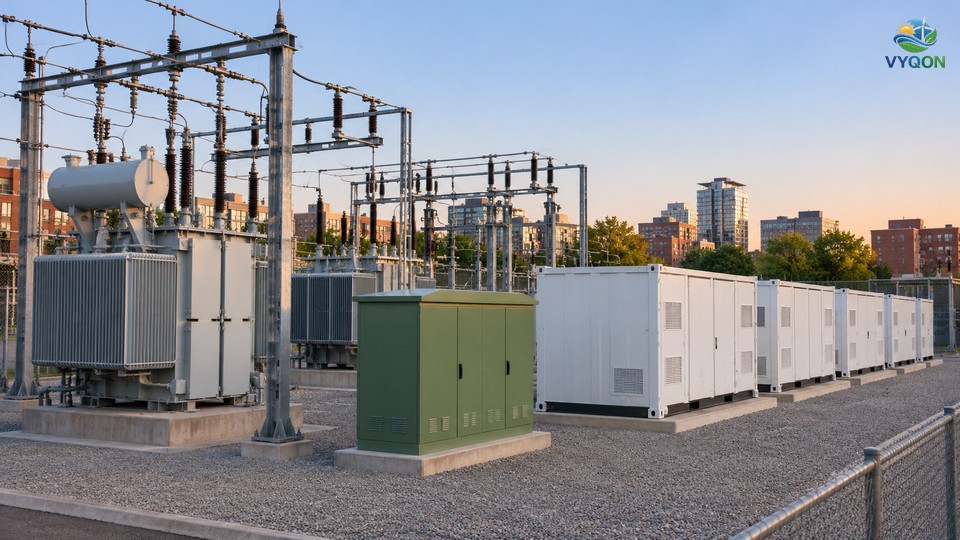
Tata Power has put 60 MWh of battery energy storage systems (BESS) into operation across Mahalaxmi, Saki and Mankhurd to support Mumbai’s electricity distribution network, the company said in a media release dated 6 November 2026. The Tata Power Mumbai BESS installations serve a network that supplies over 8 lakh consumers and mark progress towards a larger 200 MWh battery storage plan for the city.
What Tata Power has deployed
According to the company release, the 60 MWh of operational battery storage is spread across three locations in Mumbai: Mahalaxmi, Saki and Mankhurd. The release does not give a site-wise split of the 60 MWh, so this article does not break the capacity down by location.
The systems are connected to Mumbai’s distribution grid. Tata Power describes the deployment as decentralised, which means storage sits at several points in the network rather than at a single large site. The company says this enhances localised energy storage and dispatch.
The release also states that the installations have fast-response and high ramp-rate capabilities, which let the distribution network respond quickly to swings in demand. They operate at approximately 1 to 1.5 cycles per day, which the company links to effective peak load management and power procurement optimisation.
How the batteries are used: energy arbitrage in the evening peak
The main use described in the release is energy arbitrage. The batteries store electricity during lower-cost solar hours and discharge it during evening peak demand. Tata Power says this allows efficient use of energy, optimises power purchase costs and reduces dependence on expensive peak-hour electricity.
In simple terms, a distribution company buys power at different costs through the day. Power is cheaper when solar generation is high, and it is more expensive when demand peaks in the evening. By charging in the first period and discharging in the second, the utility can lower the amount of costly peak-hour power it has to buy. The release frames this as a way to manage peak demand and procurement cost together.
Black-start capability for grid restoration
The release also mentions black-start functionality. Black start is the ability to help bring a power system back after a disturbance without relying on the main grid. Tata Power says this functionality supports grid restoration during power system disturbances, adding a resilience benefit on top of the cost and peak management uses.
The larger 200 MWh plan approved by MERC
The 60 MWh now operating is part of a bigger programme. Tata Power states that in April 2025 it received approval from the Maharashtra Electricity Regulatory Commission (MERC) to deploy a 200 MWh BESS across 10 strategic locations in Mumbai.
According to the company, the larger initiative is designed to strengthen grid stability, optimise peak demand, improve reactive power management and support faster restoration of power supply to critical infrastructure. The release names hospitals, Metro services, airports and data centres as examples of that infrastructure.
The release does not say how much of the remaining capacity is under construction, when it will be commissioned, who supplied the batteries or what the project costs. Those details were not disclosed, and this article does not estimate them.
What it means for India’s clean-energy sector
Battery storage in distribution networks is one way for utilities to make better use of solar power. The Mumbai deployment shows a distribution utility using storage to shift energy from low-cost solar hours to the evening peak, a pattern that the release describes in direct terms. It also shows storage being used inside a dense urban network, close to consumers, rather than only at generation or transmission level.
For the sector, the practical points from this announcement are limited but clear. A regulator-approved plan exists for 200 MWh across 10 locations in one of India’s largest cities. A first 60 MWh is already operating across three of those areas, according to the company. How the systems perform against the stated cycling of about 1 to 1.5 cycles per day, and what savings they deliver on power purchase cost, have not been quantified in the release.
The release also places the deployment within Tata Power’s wider effort to modernise Mumbai’s electricity infrastructure and support the city’s growing infrastructure and clean energy transition. Other cities and distribution utilities will be able to watch how this model develops as the remaining capacity is added.
Key facts at a glance
- Company: Tata Power (Mumbai distribution network)
- Operational capacity: 60 MWh of BESS
- Locations: Mahalaxmi, Saki and Mankhurd, Mumbai
- Consumers served by the network: over 8 lakh
- Operating pattern: approximately 1 to 1.5 cycles per day
- Regulatory approval: MERC, April 2025, for a 200 MWh BESS across 10 locations
- Release date: 6 November 2026
Official references
- Tata Power media release, “Tata Power deploys 60 MWh of Battery Energy Storage Systems (BESS) to strengthen Mumbai’s power reliability”, 6 November 2026: https://www.tatapower.com/news-and-media/media-releases/tata-power-deploys-60-mwh-of-battery-energy-storage-systems–bess-to-strengthen-mumbai-s-power-reliability
Leave a Comment