
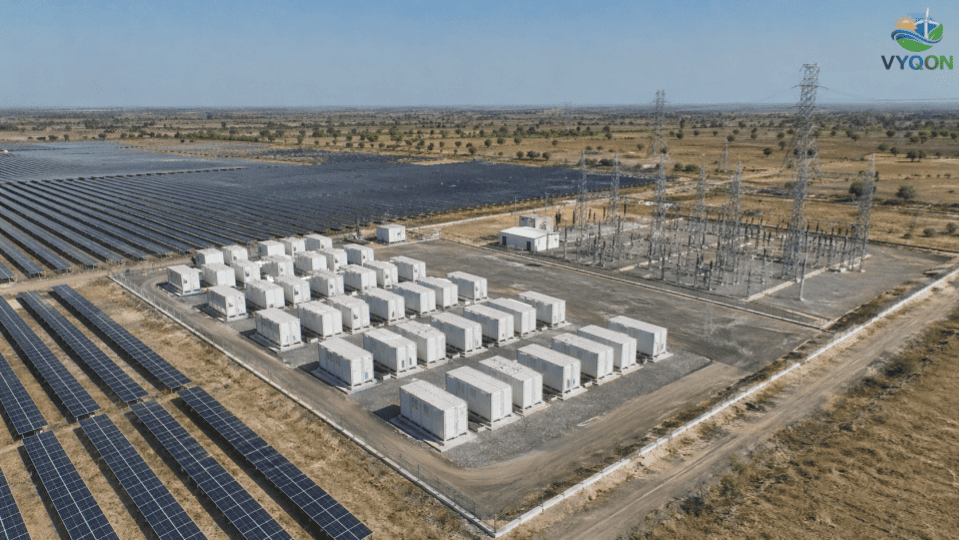
Extension of 100% Waiver for Specific Projects
The Ministry of Power (MoP) has issued a notification extending the 100% waiver of Interstate Transmission System (ISTS) charges for designated energy storage projects. The revised deadline for this waiver is June 30, 2028.
Eligibility for the 100% waiver is determined by specific project milestones:
- Pumped Storage Projects (PSP): The extension applies to projects for which construction work is awarded on or before June 30, 2028.
- Co-located Battery Energy Storage Systems (BESS): The extension applies to systems commissioned on or before June 30, 2028.
A BESS project is defined as “co-located” only if the storage system and the renewable energy generation project are situated at the same ISTS substation. For these co-located BESS projects, the waiver is contingent upon the power being consumed outside the state where the system is commissioned. This requirement ensures the waiver applies specifically to interstate energy transmission and not intra-state wheeling.
Standalone BESS and Transitional Timelines
Battery Energy Storage Systems that do not meet the definition of co-location at the same ISTS substation are categorized as standalone. These projects do not qualify for the June 2028 100% waiver extension and are instead governed by extant orders from the Ministry of Power and Central Electricity Regulatory Commission (CERC) regulations.
The directive establishes a transition from the previous regulatory regime, which had set June 30, 2025, as the expiration date for the 100% waiver. While ISTS charges are the focus of this extension, the applicability of transmission losses remains subject to current CERC frameworks and existing MoP orders.
Technical Requirements and Eligibility Criteria
To maintain eligibility for the 100% ISTS charge waiver, projects must adhere to the following technical and administrative triggers:
- PSP Qualification: Eligibility is based strictly on the date the construction work is awarded. Contracts must be finalized on or before June 30, 2028.
- BESS Qualification: Eligibility is based strictly on the commissioning date. Systems must be operational on or before June 30, 2028.
- Exclusion Criteria: ISTS charges will be levied in full for any PSP where construction is awarded after June 30, 2028, and for any co-located BESS commissioned after that date.
- Cross-Border Requirement: For BESS, the waiver only applies if the stored energy is exported and consumed outside the state of origin.
Graded Waiver Trajectory
For renewable energy projects (including solar, wind, and storage) that do not meet the 100% waiver deadlines, the Ministry of Power has implemented a phased reduction of the waiver. This graded trajectory increases the applicable ISTS levy in annual increments.
| Period | ISTS Charge Waiver % | Applicable ISTS Levy % |
| July 1, 2025 – June 30, 2026 | 75% | 25% |
| July 1, 2026 – June 30, 2027 | 50% | 50% |
| July 1, 2027 – June 30, 2028 | 25% | 75% |
| After June 30, 2028 | 0% | 100% |
This trajectory applies to general solar, wind, and pumped hydro projects commissioned within these windows, unless they fall under the specific June 30, 2028, extension for construction-awarded PSPs.
Regulatory Context and Institutional Oversight
The waiver extension is a component of India’s broader framework for renewable energy integration and industrial decarbonization.
Institutional Framework:
- Ministry of Power (MoP): Sets the policy directives for transmission waivers and storage obligations.
- Central Electricity Regulatory Commission (CERC): Administers the technical regulations for ISTS charges and recently expanded waiver eligibility in 2024 to include offshore wind generation.
- Bureau of Energy Efficiency (BEE): Oversees the implementation of the Indian Carbon Market (ICM) and decarbonization efforts.
Foundational Legislation: The Energy Conservation (Amendment) Act, 2022, provides the legal basis for the Renewable Purchase Obligation (RPO) trajectory. This trajectory mandates a specific percentage of energy consumption from renewable sources for designated consumers.
Table 1: National % RPO Trajectory (FY 2024-25 to FY 2029-30)
| Financial Year | Wind RE (%) | Hydro RE (%) | Distributed RE (%) | Other RE (%) | Total RPO (%) |
| 2024-25 | 0.67 | 0.38 | 1.50 | 27.35 | 29.91 |
| 2025-26 | 1.45 | 1.22 | 2.10 | 28.24 | 33.01 |
| 2026-27 | 1.97 | 1.34 | 2.70 | 29.94 | 35.95 |
| 2027-28 | 2.45 | 1.42 | 3.30 | 31.64 | 38.81 |
| 2028-29 | 2.95 | 1.42 | 3.90 | 33.10 | 41.36 |
| 2029-30 | 3.48 | 1.33 | 4.50 | 34.02 | 43.33 |
The ISTS waiver extensions for PSP and BESS are intended to support the infrastructure required to meet these rising RPO targets by reducing the transmission cost burden on long-duration energy storage.
Leave a Comment