
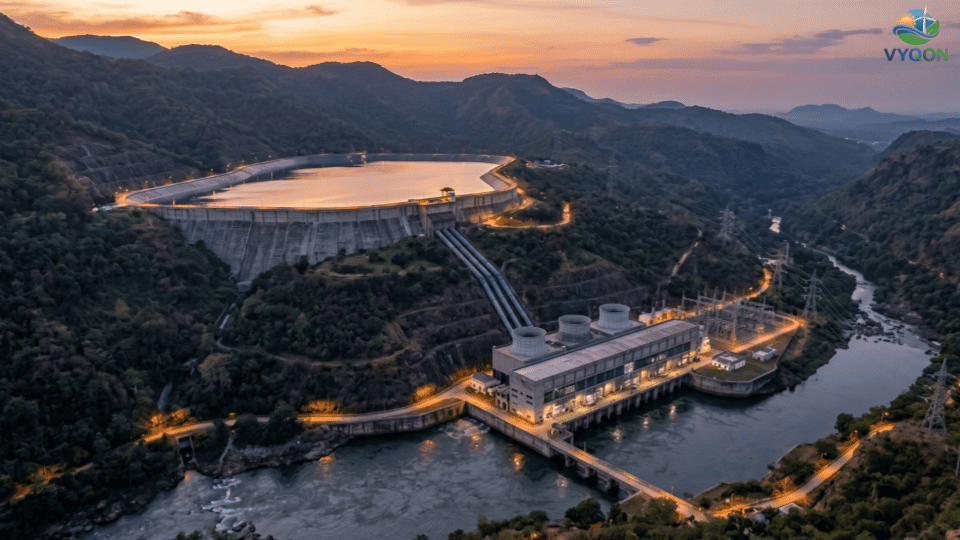
Lead Announcement
The Tamil Nadu Electricity Regulatory Commission (TNERC) has officially adopted the tariff discovered for the procurement of 500 MW of pumped storage capacity, marking a pioneer regulatory milestone under the state’s brand-new 2024 policy framework. The regulatory approval facilitates the procurement process for the Tamil Nadu Power Distribution Corporation (TNPDCL), the designated distribution entity, and represents a critical step in securing the long-term viability of high-capacity storage infrastructure in the regional grid.
Project Specifications and Operational Timeline
The procurement is centered on the Kundah Pumped Storage Project, a large-scale energy storage asset designed to provide essential grid services. Technical and administrative details include:
- Capacity: 500 MW, comprised of four units of 125 MW each (Phase I, II, and III).
- Location: The Nilgiris, Western districts of Tamil Nadu.
- Executing/Nodal Agencies: The project is being executed by the Tamil Nadu Generation and Distribution Corporation (TANGEDCO), while the Tamil Nadu Green Energy Corporation (TNGEC) serves as the state nodal agency for policy implementation.
- Timeline: According to Central Electricity Authority (CEA) status reports, the anticipated commissioning for the Kundah PSP is scheduled for December 2024.
Financial Framework and Tariff Adoption
TNERC’s adoption of the competitively discovered tariff for TNPDCL is underpinned by a robust financial framework intended to optimize project bankability and consumer costs:
- Tariff Rationalization: To improve project viability, the framework allows for the “back-loading” of tariffs over a 40-year project life, featuring an escalating tariff of 2% and an extended debt repayment period of 18 years.
- ISTS Waiver: Under Ministry of Power (MoP) mandates, the project is eligible for a waiver of Inter-state Transmission System (ISTS) charges, provided it is commissioned by June 30, 2025, and at least 70% of the energy used for pumping is sourced from solar or wind power.
- Infrastructure Support: In-principle approval has been accorded for budgetary support for enabling infrastructure (roads and bridges). This mechanism ensures that consumers are only charged for the “power component” of the project. Support limits are set at INR 1.5 crore/MW for projects up to 200 MW and INR 1.0 crore/MW for larger projects.
- Fee Structure and Incentives: Developers are required to pay an annual fee of ₹20,000 per MW of installed capacity. Projects commissioned under the current policy are eligible for benefits for 40 years, with a potential 10-year extension.
Regulatory Context and Strategic Objectives
The approval aligns with the “Tamil Nadu Pumped Storage Projects Policy 2024” and supports India’s “Panchamrit” climate commitments. The regulator emphasizes several strategic objectives:
- Grid Stability and “Giga-Battery” Functionality: PSPs function as a “giga-battery” for grid balancing, managing the inherent intermittency of variable renewable energy (VRE) like wind and solar.
- Peak Demand Management: The technology provides load-leveling capabilities, storing excess energy during low-demand periods and discharging it during peak hours.
- Policy Alignment: The project is vital for meeting the Union Government’s Hydro Power Purchase Obligation (HPO), which is now notified as a separate component within the non-solar Renewable Purchase Obligation (RPO) framework.
Status of Pumped Storage in Tamil Nadu
The following table summarizes the current landscape of pumped storage development in the state:
Tamil Nadu PSP Landscape
| Project Name | Capacity | Status |
| Kadamparai | 400 MW | Operational |
| Kundah (Phase I, II & III) | 500 MW | Under Construction |
| State-wide Potential | 15,000 MW | Identified / DPR Stage |
Official Disclaimer/Attribution
This project is a cornerstone of Tamil Nadu’s strategic initiative to support the national goal of achieving 500 GW of non-fossil fuel-based energy capacity by 2030. All developments are executed in strict accordance with the “Tamil Nadu Pumped Storage Projects Policy 2024” and the overarching regulatory guidelines established by the Ministry of Power and the Central Electricity Authority.
Leave a Comment