
Cumulative Capacity and Share Summary
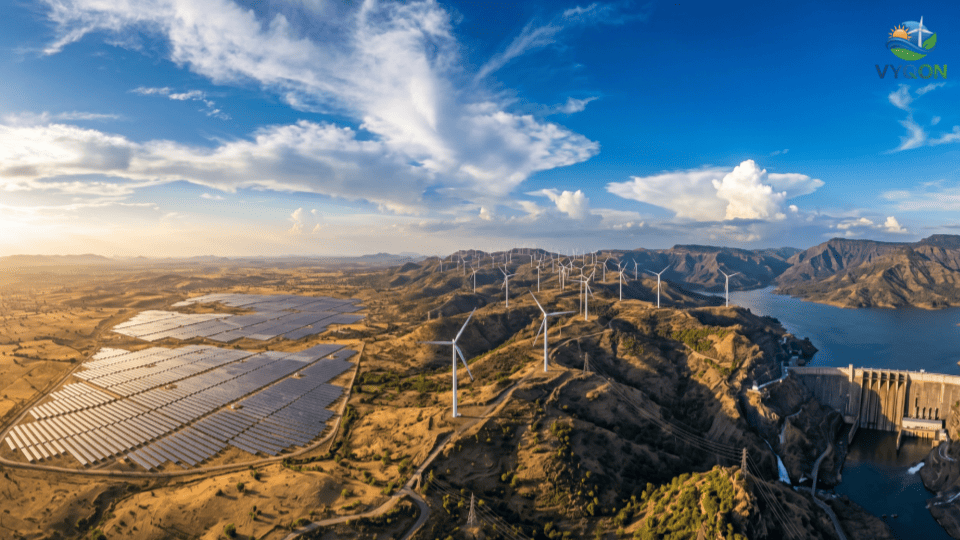
As of April 2026, India’s non-fossil fuel installed capacity reached the 300 GW threshold. Official data as of the conclusion of the 2025–26 fiscal year indicates that the non-fossil share of total installed capacity now stands at 50.4%. This metric includes cumulative capacity from renewable energy sources and nuclear power installations. The current trajectory reflects the integration of diverse non-fossil sources into the national grid to meet growing domestic electricity demand.
Installed Capacity by Source (as of March 31, 2026)
The following table details verified installed capacity figures by source at the close of the 2025–26 fiscal year, totaling 283.46 GW.
| Capacity Type | Value (GW) |
| Solar Power | 150.26 |
| Wind Power | 56.09 |
| Large Hydro | 51.41 |
| Bioenergy | 11.75 |
| Nuclear Power | 8.78 |
| Small Hydro | 5.17 |
Contextual Growth: Crossing the 50% Threshold
India reached the threshold of 50% cumulative electric power installed capacity from non-fossil sources in June 2025. This percentage was recorded five years in advance of the 2030 target established under the Nationally Determined Contribution (NDC) to the Paris Agreement. The current policy framework remains aligned with the announced target of 500 GW of installed non-fossil fuel electricity capacity by 2030, as stated during COP26.
Fiscal Year 2025–26 Expansion Metrics
The fiscal year concluding March 31, 2026, was characterized by the following capacity and generation data:
- Non-Fossil Capacity Addition: India added 55.3 GW of non-fossil capacity in FY 2025–26, representing an 87% increase over the 29.5 GW added during FY 2024–25.
- Solar Additions: Solar energy capacity additions reached 44.61 GW for the fiscal year.
- Wind Additions: Wind energy installations reached 6.05 GW, a record for capacity added within a single year for this specific source.
- Power Generation Totals: Total electricity generation for FY 2025–26 reached 1,845.921 Billion Units (BU).
- Generation vs. Capacity Share: While non-fossil sources account for 50.4% of installed capacity, their share of total generation was 29.2% (538.97 BU). This 21.2 percentage point gap highlights the intermittency and lower plant load factors of variable renewable energy (VRE) compared to thermal baseload.
- System Integration Constraints: Limited grid flexibility resulted in solar curtailment during the 2025 calendar year. This grid security-led intervention led to 2.11 million tonnes of CO2 abatement foregone due to the inability to fully displace fossil fuel generation during peak midday solar production.
International Standing and Comparative Data
According to the IRENA Renewable Energy Statistics 2026, India ranks 3rd globally in renewable energy installed capacity. As of the December 2025 reporting period, India has surpassed Brazil in total renewable volume.
The following list details the top four nations by renewable capacity (excluding nuclear) as of December 2025:
- China: 2258.02 GW
- USA: 467.92 GW
- India: 250.52 GW
- Brazil: 228.20 GW
Manufacturing capacity within the domestic market also expanded during this period, with solar module manufacturing capacity reaching approximately 172 GW and wind turbine manufacturing capacity increasing to 24 GW as of March 31, 2026.
Leave a Comment