
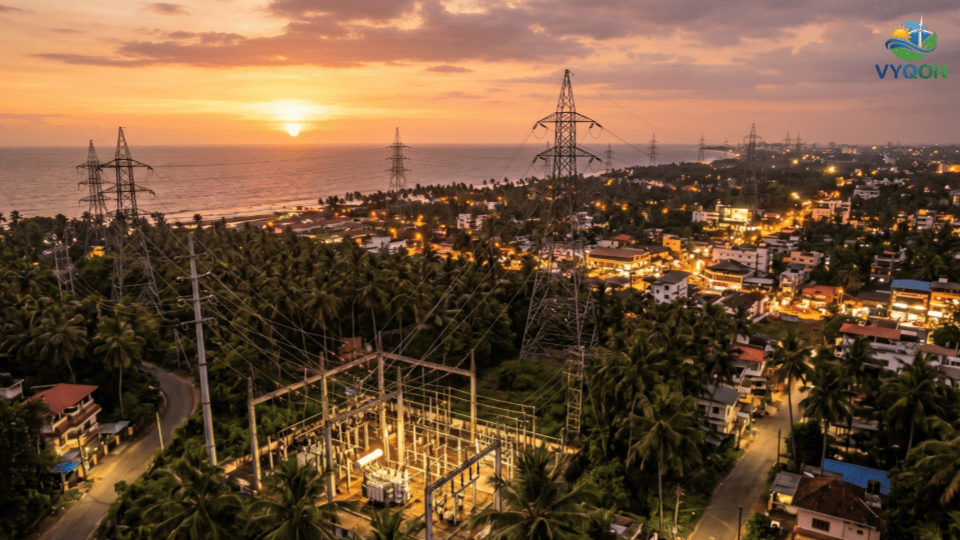
The Kerala State Electricity Regulatory Commission (KSERC) has issued an emergency order authorizing the Kerala State Electricity Board (KSEB) to procure up to 250 MW of additional power to stabilize the state’s grid amid an unprecedented summer supply-demand imbalance. This regulatory intervention, valid from late April through May 15, 2026, aims to mitigate the risk of widespread load shedding and reduce the utility’s exposure to high Deviation Settlement Mechanism (DSM) penalties. The decision follows a period where peak demand record-shattering levels outpaced KSEB’s internal projections and existing contractual arrangements.
Procurement Framework and Pricing Mechanism
The Commission has authorized KSEB to access short-term exchange-based contingency mechanisms. This procurement is specifically intended to secure “firm quantum” for the evening peak, where the Day-Ahead Market (DAM) has frequently seen constrained volumes and negligible cleared quantum in critical time blocks.
Procurement Parameters
| Parameter | Details |
| Maximum Quantum | Up to 250 MW |
| Market Mechanisms | Day-Ahead Contingency Market and Intra-day Market of Power Exchanges |
| Pricing Cap | Ceiling rate of ₹10.00 per unit (plus up to 5-paise margin) |
| Bidding Logic | Discovered DAM price plus a 5-paise bilateral negotiation margin |
The 5-paise bilateral negotiation margin is authorized to facilitate firm availability in a constrained market, provided the total cost remains within the regulatory ceiling. During the hearing, KSEB formally withdrew its proposal to utilize the “SPANDAN” product on the NAME OTC platform. The utility stated it was “not pressing for permission” due to uncertainties regarding the product’s compliance with Central Electricity Regulatory Commission (CERC) Power Market Regulations.
Operational Context: Drivers of the Energy Deficit
The current deficit is driven by a convergence of environmental factors, socio-political disruptions, and technical imbalances that have left the state reliant on external sources for approximately 80% (4,600 MW) of its daily requirement.
- Climatic and Socio-Political Factors: Kerala has recorded a 38% deficiency in summer showers between March 1 and mid-April, with ambient temperatures reaching 41°C. Concurrently, the West Asia crisis caused a domestic LPG shortage, leading to a “considerable shift” toward electric induction cooktops, significantly bloating the domestic load.
- The Solar Imbalance Paradox: A significant technical challenge is the daytime surrender of up to 1,000 MW of power from Central Generating Stations and Round-the-Clock (RTC) contracts to accommodate high rooftop solar penetration. While daytime demand hovers near 3,500 MW, consumption surges to record peaks in the evening.
- Demand Trends and Capacity Loss: Peak demand hit a historic high of 6,195 MW at 10:30 PM on April 23. This surge coincided with the expiration of critical swap deals on April 21, resulting in a 400 MW loss of firm supply (200 MW each from Punjab and Madhya Pradesh).
- Internal Constraints: Internal hydel generation is currently limited to an average of 1,200 MW as reservoir levels have plummeted to approximately 30.91% of total capacity.
Regulatory Observations and Directives
In its order, the Commission expressed “displeasure on the laxity of KSEB,” noting a failure to anticipate the summer surge despite rain deficiencies being evident since early March. The KSERC observed that “evidence of proper application of mind” was not revealed in the utility’s planning, specifically regarding the failure to secure new swap arrangements before the expiration of the Punjab and Madhya Pradesh deals.
The emergency procurement is deemed “economically prudent” because KSEB had recently resorted to overdrawing 300 to 400 MW from the grid to meet demand. This overdrawal exposed the utility to DSM charges significantly higher than the ₹10 ceiling and triggered operational warnings from the Southern Regional Load Despatch Centre (SRLDC).
To ensure future accountability, the Commission has issued the following mandates:
- Daily Monitoring: KSEB must implement an immediate daily monitoring mechanism for the state’s power situation, effective until May 31, 2026.
- Executive Oversight: Demand and procurement parameters must be reported daily to the highest levels of KSEB management, including the Chairman and Managing Director (CMD).
- Comprehensive Reporting: KSEB is required to submit day-wise details of procurement volumes and costs to the Commission within one week of the completion of the procurement process.
Market Definitions
As defined under the CERC (Power Market) Regulations, 2021, the market mechanisms utilized in this order are:
- Day Ahead Contingency Contract: A contract where continuous transactions occur on day (T) after the finalization of day-ahead transactions, for the physical delivery of electricity on the following day (T+1).
- Intra-day Market: A market segment on power exchanges that allows for the trading of electricity for delivery within the same day (T), providing a tool to manage real-time imbalances and sudden demand fluctuations.
Leave a Comment