
Regulatory Approval Overview
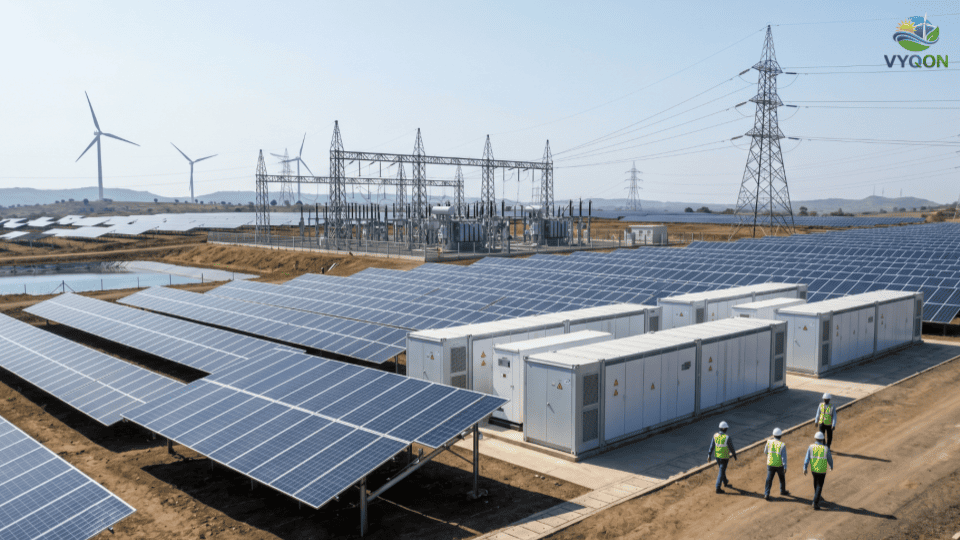
The Gujarat Electricity Regulatory Commission (GERC) has issued a Daily Order dated 15/09/2025, granting approval for specific deviations from the Ministry of Power (MoP) guidelines for procurement of Firm and Dispatchable Renewable Power (FDRE). This regulatory milestone, processed under Petition No. 2098 of 2022 and subsequent Interlocutory Applications (IA No. 02 of 2023 and IA No. 05 of 2024), pertains to a 500 MW renewable power capacity mandate with integrated Energy Storage Systems (ESS), including a 500 MW greenshoe option. The ruling ensures the tender aligns with the MoP guidelines issued on 09/06/2023 and the subsequent amendments dated 12/02/2025.
Timeline and Regulatory Evolution
The procurement process has undergone significant evolution since its inception. The original 2022 filing was initially based on national Solar and Wind guidelines from 2017 and 2020. However, the shift to the current regulatory status was necessitated by the issuance of the MoP’s new “Guidelines for Procurement of Firm and Dispatchable Power from Grid Connected RE Power Projects with Energy Storage Systems” on 09/06/2023. To maintain compliance with recent national directives, the Commission also noted the incorporation of the “Approved Models and Manufacturers of Solar Photovoltaic Modules (ALMM)” amendment dated 09/12/2024. Consequently, GUVNL is directed to issue revised Request for Selection (RfS) and Power Purchase Agreement (PPA) documents and publish public notices to facilitate stakeholder participation in the finalized framework.
Technical Requirements and Performance Metrics
The tender specifies a configuration for “Firm and Dispatchable RE Power” designed to meet demand profiles through assured peak power and Round the Clock (RTC) delivery. The technical requirements include the following mandates and clarifications:
- Storage Mandate: Projects must include 3 MWh of energy storage capacity for every 1 MW of contracted capacity.
- Performance Ratios: Developers are required to meet a Demand Fulfillment Ratio (DFR) of 90% during peak hours and 80% during off-peak hours.
- ESS Charging and RPO: While Energy Storage Systems may be charged using a combination of sources for secondary uses, any ESS charged using a source other than RE power will not qualify as RE power for Renewable Purchase Obligation (RPO) compliance.
- Technology Flexibility: The Renewable Power Developer (RPD) is permitted to change the ESS technology at any time during the PPA term, provided such changes are made at the RPD’s own risk and cost and under intimation to GUVNL.
Approved Deviations from National Guidelines
The Commission has sanctioned specific modifications to the standard national bidding framework to optimize rate discovery and operational certainty for the state grid. The approved deviations include:
- Bid Structure: Deviation from the standard 50% maximum bid capacity rule is allowed, making a single bidder eligible for up to 100% of the RfS capacity to ensure optimal tariff discovery.
- Change in Law: Implementation of a standardized clause across wind, solar, and hybrid sources to provide a uniform regulatory environment for DISCOMs.
- Force Majeure: Adoption of GUVNL-standard definitions and exclusions to provide greater clarity and minimize potential litigation over broad national definitions.
- Power Procurement: GUVNL retains the “First Right of Refusal” for excess power generated beyond the contracted capacity. The RPD must provide notice of such excess generation at least 30 days in advance. If GUVNL elects to purchase this power, it will be at the PPA tariff. However, if discrete project components (wind or solar) are ready while others are not, GUVNL may opt to purchase that power at 50% of the PPA Tariff.
- Delivery Point: The delivery point is defined at the GETCO (Gujarat Energy Transmission Corporation) periphery for intra-state projects, rather than the Central Transmission Utility (CTU) interconnection point.
Project Scope and Operational Constraints
The selected developers are responsible for the entire project lifecycle, including land acquisition, grid connectivity, and the establishment of dedicated transmission infrastructure. The project commissioning must be completed within 24 months of the PPA Effective Date. To ensure rigorous monitoring, the RPD must submit quarterly progress reports in February, May, August, and November. Key milestones and associated financial penalties include:
- Financial Closure: Must be achieved within 12 months from the date of PPA execution.
- Land Acquisition: Notarized documents evidencing land rights must be submitted within 18 months of PPA execution.
- Extension Charges: In the event of delays in achieving Financial Closure or Land Acquisition, the developer is liable for extension charges of Rs. 1000 per day per MW, plus GST.
- Technical Selection: Developers must finalize agreements for Wind Turbine Generators (WTG) or Solar PV modules within the stated monitoring period.
Stakeholder Involvement and Objections
The regulatory proceedings involved several prominent stakeholders, including the Wind Independent Power Producers Association (WIPPA), Apraava Energy Private Limited, Greenko Energies Private Limited, and M/s ReNew Power Pvt. Limited. During the hearing held on 04.09.2025, the Commission noted that despite being served notices, no representatives for the four named objectors were present, and no written communications regarding their absence were provided. GUVNL has confirmed through a compliance affidavit that no comments or suggestions were received from stakeholders following previous notices. Nevertheless, the Commission has mandated a new public hearing to review additional submissions dated 22.04.2025. GUVNL is directed to publish a public notice in one daily Gujarati newspaper and one English newspaper with wide circulation, allowing stakeholders 10 days to file suggestions or objections with the Secretary of the GERC.
Leave a Comment