
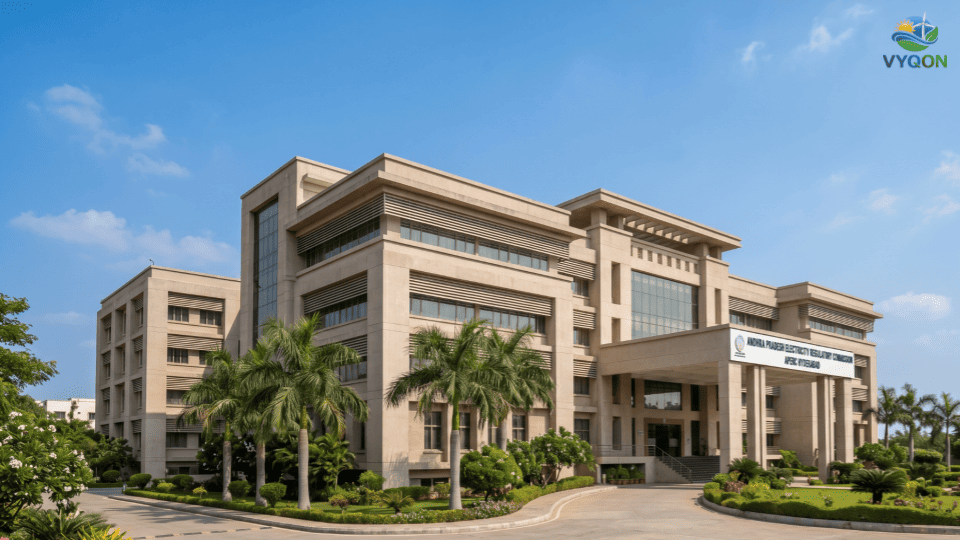
KURNOOL – The Andhra Pradesh Electricity Regulatory Commission (APERC) has issued a formal order making a No-Dues Certificate (NDC) a mandatory requirement for all consumers and power generators applying for short-term open access (STOA). This new regulatory hurdle must be cleared in addition to the standard technical feasibility clearances required for utilizing the state’s transmission and distribution network.
The Catalyst: Unpaid Dues and Discom Representations
The regulatory intervention was triggered by a representation from the Eastern Power Distribution Company of Andhra Pradesh Limited (APEPDCL). The distribution licensee informed the Commission that several entities were continuing to seek open access permissions despite having accumulated significant outstanding payments. APEPDCL reported that these unpaid dues totaled approximately ₹8.5 Billion (₹850 crore).
In reaching its decision, the Commission reviewed existing frameworks, specifically examining provisions under Regulation No. 2 of 2005 and Regulation No. 3 of 2024. The regulator determined that allowing defaulting entities to utilize the grid without financial scrutiny would jeopardize the financial health of distribution companies (Discoms) and ultimately shift the financial burden onto the general body of electricity consumers within the state.
Effective Date and Implementation
The order, signed by the Commission Secretary, was published on June 10, 2026, and has come into effect immediately. The directive applies to all pending and future STOA applications within the state’s jurisdiction.
Procedural Mechanics for APSLDC and Discoms
The Andhra Pradesh State Load Dispatch Centre (APSLDC) has been designated as the nodal agency responsible for coordinating the new verification process. Under the mandated procedure, the APSLDC must obtain the NDC from the relevant Discom before granting any STOA approval.
To ensure administrative efficiency, the Commission has established a “Deemed Approval” clause. Discoms are required to furnish the NDC within specific timelines prescribed by the APSLDC. If a distribution licensee fails to provide the certificate or respond within the stipulated period, it will be legally assumed that no outstanding dues exist against the applicant, allowing the APSLDC to proceed with the application.
Eligibility and Criteria for Rejection
The Commission has defined strict criteria for the rejection of open access applications. An application for STOA must be denied if the applicant falls under any of the following conditions:
- The applicant has been declared insolvent or bankrupt.
- The applicant has undisputed outstanding dues exceeding two months of billing.
- The applicant is involved in undisputed cases of power theft or the unauthorized use of electricity.
Legal Exemptions and Judicial Safeguards
To prevent the misuse of the NDC requirement in cases of contested payments, the Commission has outlined specific judicial safeguards. Open access cannot be denied to an applicant if the outstanding dues in question are currently subject to:
- Stays or interim relief granted by a competent court.
- Specific directions or orders issued by a tribunal or other authorized judicial forum.
Leave a Comment