
The Core News Hook
In a definitive ruling dated January 1, 2026, the Maharashtra Electricity Regulatory Commission (MERC) issued a final order in Case No. 213 of 2025, resolving a significant dispute over renewable energy billing methodologies. The Commission formally reprimanded the Maharashtra State Electricity Distribution Co. Ltd. (MSEDCL) for denying Net Metering benefits to the Petitioner, M/s. Hatsun Agro Product Limited (HAPL). This ruling reaffirms the statutory right of consumers to simultaneously maintain Net Metering arrangements for rooftop solar systems while availing of Open Access (OA) power, a move that provides critical clarity for the state’s commercial and industrial energy users.
Background of the Dispute
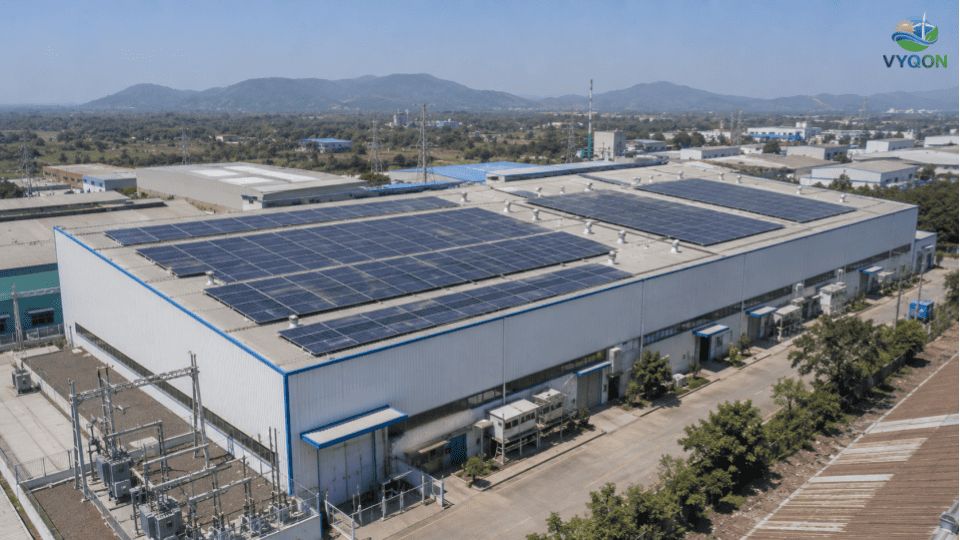
The dispute involved HAPL’s dairy manufacturing facility in Solapur, which operates a 983 kW rooftop solar generating system. HAPL is a significant Open Access consumer, having secured green power through a multi-phase captive offtake strategy:
- Phase 1 PPA: A contracted capacity of 1.993 MWAC/2.902 MWDC.
- Phase 2 PPA: A contracted capacity of 0.605 MWAC/0.870 MWDC.
Despite HAPL having a valid Net Metering Agreement signed as early as August 18, 2022, MSEDCL unilaterally transitioned the consumer to a Gross Metering methodology in November 2023. The Petitioner argued this shift resulted in substantial financial losses, as MSEDCL provided energy credits at Gross Metering rates of Rs 3.05 and Rs 2.90 per unit rather than adjusting the balance under the more favorable Net Metering framework. HAPL contended that this billing practice was an uncalled-for violation of current state regulations.
Analysis of the Regulatory Framework
The Commission’s decision hinged on the evolution of the regulatory landscape between 2019 and 2023:
- The 2019 Regime: Under the MERC (Distribution Open Access) (First Amendment) Regulations, 2019, the framework contained restrictive provisions—specifically the 2nd and 8th provisos to Regulation 3.2—which generally required solar generation to be adjusted on a Gross Metering basis during any period the consumer availed of Open Access.
- The 2023 Regime: The MERC (Distribution Open Access) (Second Amendment) Regulations, 2023, effective from November 10, 2023, introduced a pivotal shift.
The Commission found that the 2023 Regulations explicitly deleted both the 2nd and 8th provisos of the previous regime, effectively removing the barrier to simultaneous operation. Furthermore, the Commission highlighted Regulation 3.4 of the amended framework, which empowers consumers with rooftop systems to avail of Open Access and Net Metering simultaneously, subject to meeting eligibility criteria under Regulation 3.2 or 3.3.
The Commission’s Findings and Reprimand
MSEDCL defended its refusal by citing procedural lapses, arguing that HAPL had not applied through the Nodal Agency (MSLDC) under the newly established Green Energy Open Access (GEOA) framework.
The Commission rejected this defense, identifying systemic administrative failures by the utility:
- Administrative Delay: MSEDCL was found to have delayed the implementation of the mandated GEOA procedures for ten months.
- Source of Confusion: The Commission noted that Commercial Circular No. 346, which finally addressed GEOA implementation on September 9, 2024, was only issued following a Daily Order dated August 20, 2024, in Case No. 231 of 2023.
- Procedural Continuity: During this transition, MSEDCL continued to issue Open Access approvals using outdated formats, thereby creating the very procedural ambiguity it later used to penalize the consumer.
The Commission concluded that MSEDCL cannot deny substantive regulatory rights based on procedural lapses caused by the utility’s own implementation delays.
The Final Order and Specific Remedies
To rectify the billing discrepancies, MERC issued the following mandatory directives to MSEDCL:
- Retrospective Net Metering: MSEDCL must treat the rooftop solar system under the Net Metering arrangement retrospectively, effective from November 10, 2023 (the date the 2023 Regulations came into force).
- Mandatory Reconciliation: Both parties must complete a joint reconciliation of the disputed billing amounts within 30 days of the order.
- Immediate Credit Adjustment: The utility is required to issue a credit adjustment for the reconciled amount in the “immediate next billing cycle” following reconciliation.
- Interest on Dues: MSEDCL must pay interest on the reconciled amount at the prevailing bank rate.
Systemic Impact: Broader Application to OA Consumers
The Commission clarified that this ruling is not limited to HAPL but has systemic implications for all “similarly placed” consumers. Citing the precedent set in Case No. 219 of 2024 (the SSDGCT case), the Commission forbade MSEDCL from practicing “discriminatory treatment” in comparable cases. The order reinforces that Net Metering and Open Access are not mutually exclusive and must be extended to all eligible consumers under the 2023 Regulations.
While the ruling is currently enforceable, its final long-term status remains subject to the outcome of MSEDCL’s pending clarificatory petition in Case No. 232 of 2024. In the interim, however, the Commission has directed that energy settlement for all eligible consumers must proceed on a Net Metering basis.
Leave a Comment