
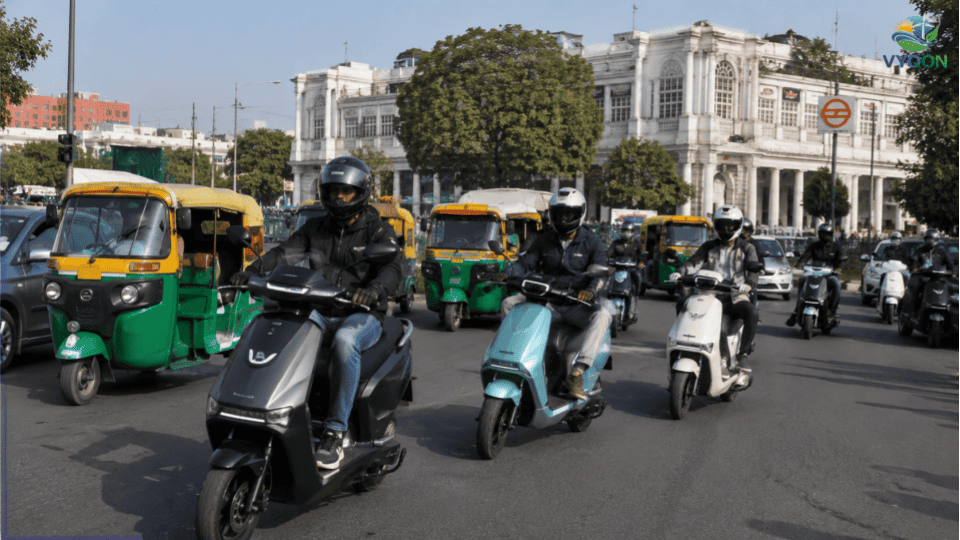
The July 1 Mandate and the Sunset of the ICE Era
In a decisive move to catalyze a ₹15,000 crore green investment and fundamentally alter the capital’s mobility landscape, the Delhi government officially implemented the Delhi Electric Vehicle Policy 2026 on July 1, 2026. Finalized following a year of intensive stakeholder consultations and a landmark June 29 Cabinet decision, the framework carries significant jurisprudential weight. It draws direct inspiration from Article 21 of the Constitution—affirming the right to clean air—and responds to the Supreme Court’s directives in the M.C. Mehta case regarding the urgent revision of urban emission strategies.
Chief Minister Rekha Gupta has positioned the policy as a “visionary initiative” designed to strengthen regional energy security and support a burgeoning green economy. By establishing a firm regulatory sunset for Internal Combustion Engine (ICE) registrations, the policy aims to mitigate the 23% contribution of vehicular emissions to the city’s winter pollution, as identified by the Commission for Air Quality Management (CAQM).
Phased Electrification Roadmap: Regulatory Deadlines
The policy enforces a strict transition timeline for different vehicle segments, mandating a total shift to electric models in the following stages:
- July 1, 2026: Immediate policy implementation and the launch of the centralized digital EV subsidy portal.
- January 1, 2027: Mandatory electrification for new registrations of all electric three-wheelers (L5) and N1 category goods carriers. No fresh ICE registrations will be permitted in these categories.
- April 1, 2028: Absolute restriction on new registrations for two-wheelers; only electric models will be eligible for fresh registration within the National Capital Territory (NCT).
School Bus and Fleet Mandates Educational institutions must meet graduated electric share targets for their total fleets (whether owned, leased, or hired): 10% by the end of Year 2, 20% by the end of Year 3, and 30% by March 31, 2030. For fleet aggregators and delivery providers, the induction of new ICE 4-wheeler LCVs/LGVs and two-wheelers is banned effective January 1, 2026, though a grace period exists for BS-VI two-wheelers until December 31, 2026.
Financial Incentive Framework: Purchase Subsidies and Eligibility
To bridge the affordability gap, the government has introduced a tiered, three-year declining incentive structure. Under Section 4.1.1, these benefits are strictly reserved for residents of the NCT of Delhi for vehicles purchased and registered within the city. Crucially, any vehicle receiving a subsidy is locked into the territory; no No Objection Certificate (NOC) for transfer or re-registration outside Delhi will be issued for three years (Section 4.1.4).
Year-wise Incentive Structure: Two-Wheelers and Three-Wheelers
| Vehicle Category | Year 1 Incentive | Year 2 Incentive | Year 3 Incentive |
| Two-Wheelers (Max Price: ₹2.25L) | ₹10,000/kWh (up to ₹30,000) | ₹6,600/kWh (up to ₹20,000) | ₹3,300/kWh (up to ₹10,000) |
| Electric Autos (L5M) | ₹50,000 | ₹40,000 | ₹30,000 |
Note: Under Section 4.3.1, electric autos with a battery capacity of less than 4kWh are ineligible for any purchase incentives.
N1 Category Goods Carrier Incentives (By GVW)
| Gross Vehicle Weight (GVW) | Year 1 Incentive | Year 2 Incentive | Year 3 Incentive |
| Vehicles > 1.75-ton GVW | ₹1,00,000 | ₹75,000 | ₹50,000 |
| Vehicles ≤ 1.75-ton GVW | ₹50,000 | ₹37,500 | ₹25,000 |
Beneficiaries must apply via the “EV Subsidy Portal” within 30 days of receiving their Registration Certificate. The government aims for a 60-day window for Direct Benefit Transfer (DBT) processing.
Scrapping Incentives and Fiscal Waivers
To accelerate the removal of aging pollutants, the policy offers significant scrapping benefits for owners moving from BS-IV (or below) vehicles to EVs. These benefits are contingent upon the new EV being purchased within six months of the issuance of the Certificate of Deposit (CoD).
- Two-Wheelers: ₹10,000.
- Three-Wheelers (L5M): ₹25,000.
- Electric Cars (Non-transport): ₹1,00,000 (Limited to first 100,000 applicants; price must be < ₹30 lakh).
- N1 Trucks: ₹50,000.
- Gramin Sewa Vehicles: ₹15,000.
Road Tax and Registration Exemptions A 100% waiver on road tax and registration fees is available for EVs registered in Delhi. However, a strict fiscal cap applies to electric cars: only those with an ex-showroom price under or equal to ₹30 lakh qualify for these waivers until March 31, 2030. Vehicles exceeding this price point receive no exemption.
Infrastructure Roadmap and Logistics Accelerators
Delhi Transco Limited (DTL) serves as the nodal agency for the capital’s charging network. To eliminate bureaucratic friction, a “Single-Window Clearance” system has been launched to expedite electricity connections for operators.
Logistics Economic Driver: The N2 Exemption In a major boon for the logistics sector, the first 1,000 private electric N2 trucks registered within three months of the policy rollout receive a 10-year exemption from no-entry timing restrictions. This provision is expected to significantly reduce operational costs for urban delivery firms.
Charging Infrastructure Mandates
- OEM Obligation: Every dealer must host at least one public charging station with a minimum of three points for 2W/3W and two points for 4W.
- Target: Planning is underway for over 3,000 public charging points.
- Grid Stability: DISCOMs are exploring Energy Storage Systems (ESS) at bus depots and implementing Time-of-Day (ToD) tariffs to incentivize off-peak charging.
Sustainability and Digital Transparency
The policy addresses the full lifecycle of the vehicle. The Delhi Pollution Control Committee (DPCC) is tasked with facilitating battery collection centers via Public-Private Partnerships (PPP). Original Equipment Manufacturers (OEMs) must adhere to strict Extended Producer Responsibility (EPR) norms and provide periodic reports on battery traceability.
To enhance citizen engagement, the government has integrated two key digital tools:
- EV WhatsApp Chatbot: An official channel for real-time query management.
- Open Database: A unified platform providing live data on the availability of charging and swapping stations across the NCT.
The 2026 policy represents a total commitment to a post-combustion future, leveraging both aggressive mandates and targeted financial levers to secure Delhi’s position as a global leader in urban electrification.
Leave a Comment