
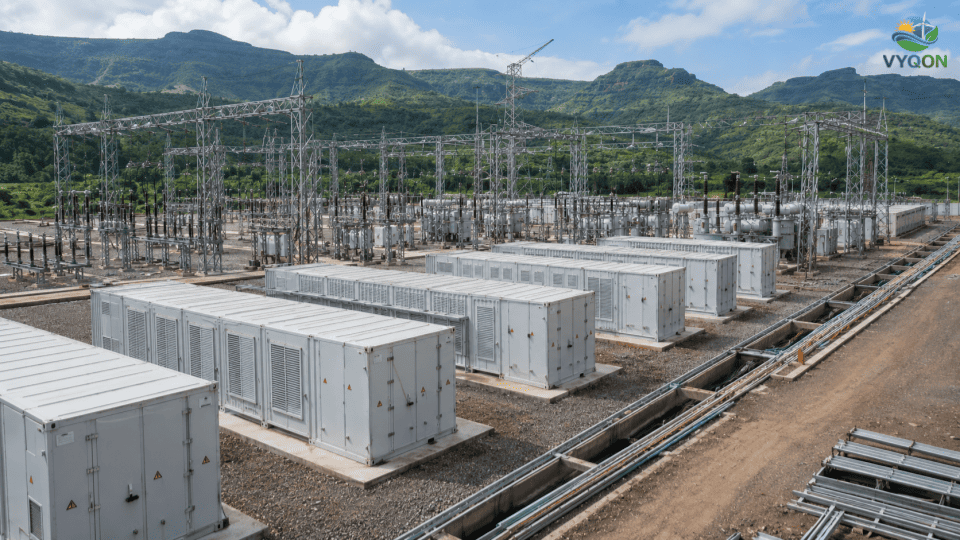
The Maharashtra State Electricity Distribution Company Limited (MSEDCL) has issued a significant Request for Selection (RfS) for the procurement of 2,000 MW / 4,000 MWh of Battery Energy Storage Systems (BESS). This issuance represents a critical regulatory reset following a ruling by the Appellate Tribunal for Electricity (APTEL), which set aside the previous tender process and subsequent approval by the Maharashtra Electricity Regulatory Commission (MERC). The tribunal found that post-bid alterations to commercial terms and cycle rights had compromised the transparency of the original procurement, necessitating this fresh, competitive solicitation to stabilize the state’s grid architecture through firm, on-demand energy.
The primary regulatory and administrative entities governing this process are:
- MSEDCL: The state distribution utility and primary procurer.
- APTEL: The appellate body overseeing the regulatory integrity of the power sector.
- MERC: The state commission responsible for tariff determination and project oversight.
Project Configuration and Technical Parameters
The project parameters underscore MSEDCL’s strategic shift toward high-capacity, 2-hour discharge duration storage to manage peak demand and intermittent renewable integration. Contractual mandates require one operational cycle per day, with MSEDCL retaining the contractual right to a minimum of 6,300 cycles over the contract term without additional cost.
The following table details the core performance and efficiency requirements:
| Performance Metric | Requirement |
| Annual System Availability | 95% (Minimum) |
| Round-Trip Efficiency (RtE) | 85% (Minimum AC to AC) |
| RtE Material Breach | Below 70% for six months in a year |
| Maximum Cooling/Recovery Time | 1 hour (Charge to Discharge or vice versa) |
| Maximum Full Cycle Recovery | 2 hours |
To address long-term project viability, the RfS incorporates a 15-year degradation profile. Developers must ensure the system meets the following Minimum Dispatchable Capacity at the end of each year:
| Year | Min. Dispatchable Capacity (% of Beginning of Life) |
| 1 | 98.00% |
| 5 | 90.00% |
| 10 | 80.00% |
| 15 | 70.00% |
| (Note: Full annual degradation schedule available in RfS Section 9.1(e)5) |
Tender Segmentation (Part-A and Part-B)
MSEDCL has bifurcated the 2,000 MW aggregate capacity into two distinct categories to allow for both utility-driven site utilization and developer autonomy:
- Part-A (1,000 MW / 2,000 MWh): Projects to be installed at designated MSETCL or MSEDCL substations. Site allocation for this segment is solely carried out by MSEDCL.
- Part-B (1,000 MW / 2,000 MWh): Projects connected as co-located (Inter-State/Intra-State) or standalone STU-connected systems. In this segment, developers have the autonomy to opt for and identify their own project locations.
The minimum bid capacity for both segments is 50 MW / 100 MWh, with incremental bids allowed in multiples of the same.
Viability Gap Funding (VGF) and Indigenous Content
Selected developers are eligible for financial support under the Ministry of Power (MoP) VGF scheme, supported through the Power System Development Fund (PSDF). The framework, governed by MoP guidelines dated June 9, 2025, and subsequent amendments in August and September 2025, provides a VGF limit of up to ₹1.8 million (₹18 lakh) per MWh.
The VGF disbursement milestones are as follows:
- Financial Closure: 20% of total VGF (subject to bank guarantee/ISB).
- Commercial Operation Date (COD): 50% of total VGF.
- 1st Anniversary of COD: 30% of total VGF.
Technical mandates require the Energy Management System (EMS) application software to be developed indigenously, contributing to a minimum local content requirement of 20% of the total project cost.
Performance Shortfalls and Regulatory Compliance
The RfS introduces stringent penalties for performance deviations. Shortfalls in annual availability are subject to Liquidated Damages (LD) calculated by the following formula: LD = (A – B) x C x D x n x 2 (Where A is Guaranteed Availability, B is Actual Availability, C is Capacity, D is Capacity Charges, and n is number of months).
Crucially, the penalty for capacity not made available is set at twice the Capacity Charges. Furthermore, developers must adhere to the CEA Measures related to Safety and Electric Supply Regulations 2025 and the Battery Waste Management Rules, 2022, ensuring safe handling and disposal of battery cells.
Financial Obligations and Bidding Timeline
Prospective developers must fulfill the following financial requirements:
- Document Fee: ₹29,500 (Non-refundable).
- Document Processing Fee: ₹15 Lakh + 18% GST (Non-refundable).
- Earnest Money Deposit (EMD): ₹5,60,000 per MW.
- Performance Bank Guarantee (PBG): ₹14,00,000 per MW.
- TENDER PORTAL: https://www.mahadiscom.in/en/notice
Submission Details:
- Bid Submission Deadline: As per the Notice Inviting Tender (NIT) on the ISN-ETS portal.
- Contact Official: Mr. Kavita Gharat, Chief Engineer (Commercial).
- Address: Maharashtra State Electricity Distribution Co. Ltd., Commercial Section, 5th Floor, Prakashgad, Bandra (East), Mumbai – 400 051.
Development and Connectivity Responsibilities
The projects will follow the Build-Own-Operate (BOO) model. The Battery Energy Storage System Developer (BESSD) is responsible for the entire infrastructure scope, including the dedicated transmission network up to the interconnection point, synchronization, and metering. For Part-B projects, the BESSD must manage connectivity applications to the STU/CTU at their own cost.
Key Project Identification
- RfS No: MSEDCL/BESS/Phase-2/26-27/001
- Issue Date: June 30, 2026
- Model: Build-Own-Operate (BOO)
- Discharge Duration: 2-Hour (1 Cycle/Day)
Leave a Comment