
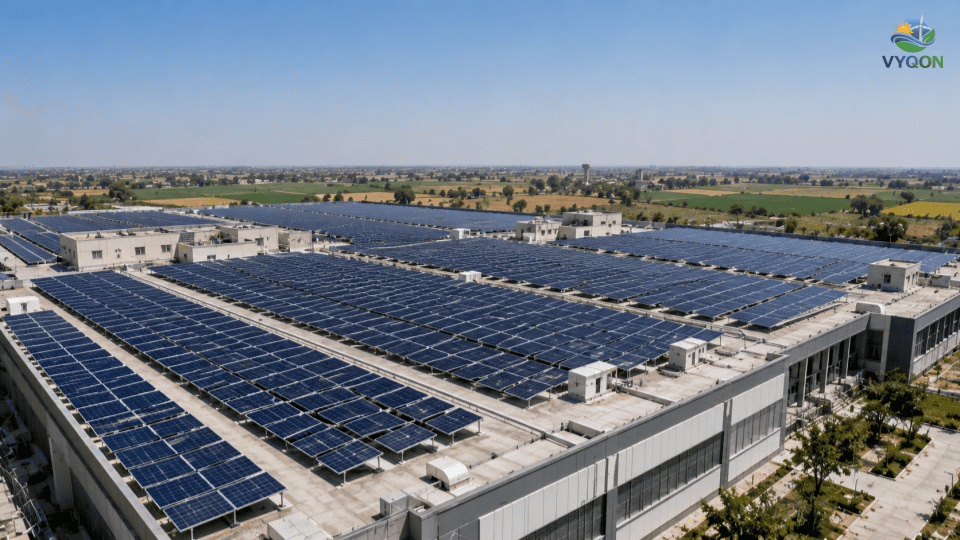
The Appellate Tribunal for Electricity (APTEL) has issued a significant ruling in the appeal filed by Radiance Punjab Renewable Private Limited (formerly Azure Renewable Energy Pvt. Ltd.), remanding the matter to the Punjab State Electricity Regulatory Commission (PSERC) for a fresh tariff determination. The tribunal held that the 10 MW distributed rooftop solar project was entitled to relief based on recognized regulatory and administrative delays, specifically regarding Power Purchase Agreement (PPA) approval and grid feasibility clearances. Consequently, the tribunal directed PSERC to recalculate the project’s commissioning timeline and determine the applicable tariff based on these factual adjustments [Mercom India, 2026; Indian Kanoon – Radiance Punjab Case].
Background of the Dispute
The dispute arose from a 2015 competitive bidding process conducted by the Punjab Energy Development Agency (PEDA) under the State’s New and Renewable Source of Energy Policy.
- Parties Involved: The appellant is Radiance Punjab Renewable Private Limited (the successor in interest to Azure Renewable Energy Pvt. Ltd.). The respondents are PSERC, Punjab State Power Corporation Limited (PSPCL), and PEDA [Indian Kanoon – Radiance Punjab Case].
- Project Scope: The project involves an aggregate 10 MW distributed rooftop solar capacity across nine identified sites.
- Tariff Conflict: PSERC had imposed a reduced tariff after the project failed to meet the initial March 31, 2016, deadline.
- Original Contracted Tariff: ₹7.59/kWh
- Reduced Tariff (as per PSERC): ₹5.09/kWh
- Contractual Dates: The PPA was executed on March 31, 2015, with an original Scheduled Commissioning Date (SCOD) of January 31, 2016, assuming a 10-month construction window from the date of signing [Indian Kanoon – Radiance Punjab Case].
Breakdown of Regulatory and Project Delays
The tribunal systematically analyzed the factors leading to the delay, categorizing them into regulatory credit, administrative bottlenecks, and external disruptions.
The 41-Day Regulatory Approval Delay
The tribunal focused on the period between the PPA signing (March 31, 2015) and its formal approval by PSERC on May 11, 2015.
- Condition Precedent and Effective Date: Under Section 86(1)(b) of the Electricity Act, 2003, PSERC approval is a mandatory regulatory requirement. The tribunal held that the PPA was “only a piece of paper” prior to May 11, 2015, as the parties were in a state of regulatory incapacitation, unable to enforce contractual rights or obligations.
- Shifting of SCOD: Consequently, the tribunal ruled that the “Effective Date” of the PPA must be shifted to May 11, 2015. This shift automatically entitles the developer to a 41-day credit, moving the initial SCOD forward by the same duration.
- Waiver of FM Notice: Regarding the lack of a formal Force Majeure (FM) notice for this period, the tribunal held the requirement was not fatal. Since PSPCL itself initiated the petition for approval, the respondents had contemporaneous knowledge of the delay they helped cause [Indian Kanoon – Radiance Punjab Case].
Site Finalization and Grid Connectivity Delays
The project required coordinating rooftop leases and grid feasibility across nine distinct locations. The tribunal noted that securing a single, contiguous 100,000-square-meter rooftop in Punjab was functionally difficult, making distributed sites necessary.
- PEDA Delays: The tribunal affirmed a 6-day delay against PEDA for the time taken to grant concurrence for the identified sites.
- PSPCL Grid Feasibility Delays: The tribunal identified varying degrees of administrative delay by PSPCL in granting technical concurrence and grid feasibility.
- For five sites, including PSAMB SAS Nagar (Mohali) and PSAMB Grain Market Mansa, a delay of 29 days was recognized.
- The CA Vegefruit Stores (Kharar) and Skyross Enterprises sites were granted 26 days of credit.
- Other sites, such as PSAMB Ludhiana, were credited with only the 6-day PEDA delay [Indian Kanoon – Radiance Punjab Case].
The Jat Agitation Disruption
While the developer claimed a 10-day disruption due to the Jat Agitation—citing curfews and transport blockages—the tribunal arrived at a different conclusion for this specific appellant.
- Relief Denied: Unlike other contemporaneous cases, the tribunal disallowed the Jat Agitation as a Force Majeure event for Radiance Punjab.
- Lack of Mandatory Notice: The tribunal held that because this was an external event beyond the control of the respondents, a formal FM notice was a mandatory condition precedent. As the developer failed to issue such a notice within the stipulated timeframe, the tribunal ruled the appellant was not entitled to benefit from this disruption [Indian Kanoon – Radiance Punjab Case].
Final Directives to PSERC
The tribunal’s ruling effectively resets the tariff determination process by acknowledging the developer was not entirely responsible for the missed deadlines.
- Remand and Recalculation: The case is remanded to PSERC with a directive to perform a fresh, granular computation of delays on a site-by-site basis for all nine locations.
- Incorporation of Credits: PSERC must incorporate the 41-day regulatory approval credit and the specific administrative credits (26 to 29 days) into the revised SCOD for each site.
- Tariff Restoration: If the developer is found to have met the recalculated SCOD after these adjustments, the original contracted tariff of ₹7.59/kWh must be protected.
- Securities: PSERC is further directed to order the release of Performance Bank Guarantees (PBGs) if the revised commissioning requirements are met under the updated timeline [Mercom India, 2026; Indian Kanoon – Radiance Punjab Case].
Leave a Comment