
The Ministry of New and Renewable Energy (MNRE) has approved the continuation of the Renewable Energy Research and Technology Development (RE-RTD) Programme for the duration of the 16th Finance Cycle, covering the period from 2026–27 to 2030–31. The programme operates with a total budgetary allocation of ₹4.37 billion (₹436.93 crore). As stated by the ministry, the objectives of this allocation are to strengthen the national renewable energy research ecosystem, accelerate the development of indigenous technologies, and support the commercialization of advanced clean energy solutions.
Financial Outlay and Resource Allocation
The ₹4.37 billion outlay is partitioned into specific silos to address capital-intensive manufacturing goals, legacy debts, and ongoing research infrastructure:
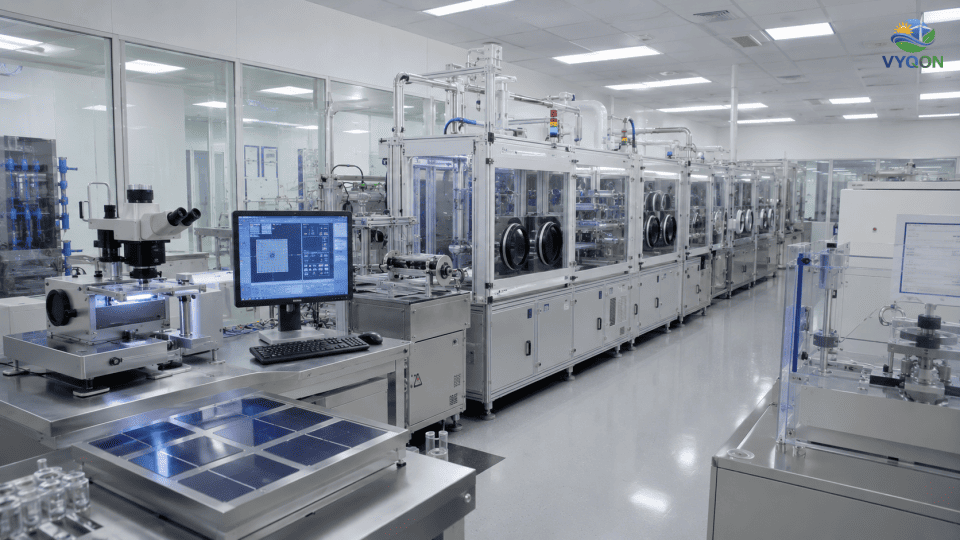
- Perovskite Photovoltaic (PV) Manufacturing Pilot Line: ₹2 billion (₹200 crore) is specifically allocated for the establishment of a perovskite solar manufacturing pilot line and associated research and development projects.
- Committed Liabilities: ₹869.3 million (₹86.93 crore) is earmarked to satisfy financial obligations incurred during previous finance cycles.
- General R&D and Infrastructure: The remaining funds are designated for the following functional uses:
- Standard research and development projects.
- Technology pilot demonstrations.
- Establishment and upgrade of testing facilities.
- Operationalization of incubation centers.
- Policy research initiatives.
Funding Ratios and Eligibility Framework
The programme utilizes a differential financial support structure based on the type of participating entity and the technical nature of the project.
| Entity Type | Maximum Financial Assistance Ratio |
| Government research institutions, academic bodies, and non-profit organizations | Up to 100% |
| Private companies and startups (Base Support) | Up to 50% |
| Advanced technology development and emerging renewable energy projects | Up to 70% |
A notable shift in the funding framework is the introduction of a specific mechanism for startups. Rather than relying solely on traditional grant-based models, the programme utilizes government equity participation via Compulsorily Convertible Preference Shares (CCPS). This mechanism serves as a de-risking strategy for the state while providing capital to early-stage technology ventures.
Technical Scope and Sectoral Targets
The programme focuses on the development of indigenous technologies and the validation of advanced energy solutions through specific physical infrastructure.
Technology Domains:
- Next-Generation Solar: Perovskite PV manufacturing and related research.
- Advanced Clean Energy: Development and commercialization of indigenous technologies.
- Emerging Sectors: Projects involving advanced technology development and emerging renewable energy technologies as defined by the ministry.
Physical Targets: The programme aims to achieve measurable outputs through the sanctioning of R&D projects and the operationalization of new testing laboratories, incubation centers, and specialized research facilities. These assets are intended to provide the infrastructure necessary for rigorous technology validation.
Implementation, Governance, and Collaborative Frameworks
The RE-RTD programme is governed by a structured institutional framework designed to align research output with national energy requirements. A primary component of this framework is the “Mission for Advancement in High-impact Areas in Renewable Energy” (MAHA-RE).
To streamline research efforts and avoid duplication, the MNRE will implement the programme in collaboration with the Anusandhan National Research Foundation (ANRF). All projects and institutional participants will be subject to the specific evaluation criteria and governance protocols defined within the MNRE administrative approval.
Official Sources
- Ministry of New and Renewable Energy (MNRE): Administrative approval for continuation of Renewable Energy Research and Technology Development Programme (RE-RTD) in the 16th Finance Cycle (2026-27 to 2030-31)
- Ministry of New and Renewable Energy (MNRE): National Green Hydrogen Mission Document (January 2023)
- Ministry of New and Renewable Energy (MNRE): R&D Roadmap for Green Hydrogen Ecosystem in India (September 2023)
- Press Information Bureau (PIB): Press Release: NCPRE’s pioneering work in Silicon-Perovskite Tandem Solar Cells is a game-changer for India’s solar energy future
- Ministry of New and Renewable Energy (MNRE): Official Research & Development Programme Overview
Leave a Comment