
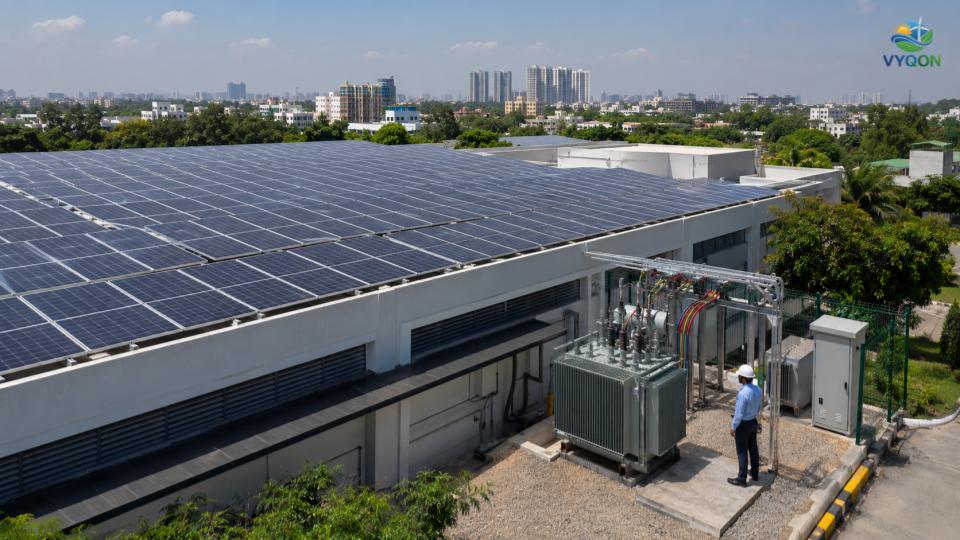
The Karnataka Electricity Regulatory Commission has issued final regulations for distributed solar photovoltaic plants, widening access to net metering and clarifying the state’s options for net billing, gross metering, group net metering and virtual net metering. The final framework allows net-metered projects up to 1 MW, subject to the consumer’s sanctioned load or contract demand.
The 1 MW ceiling is double the 500 kW level proposed in the draft regulations. KERC also removed the draft proposal that would have made energy storage compulsory for distributed solar systems above 10 kW. Storage remains available as a voluntary design choice, but consumers can now select it when economics, resilience or operating needs justify the investment.
A Broader Net-Metering Window
Under the final rules, all consumer categories can use net metering for distributed solar plants from 1 kW to 1,000 kW, or up to sanctioned load or contract demand, whichever is lower. Electricity generated on site first offsets the consumer’s use, while surplus exported to the grid is settled under the tariff treatment specified by the regulations.
Raising the upper limit creates new room for factories, warehouses, hospitals, campuses and large commercial buildings with substantial daytime demand and roof area. These consumers can potentially install systems closer to their load without being pushed into a different commercial structure at 500 kW. Actual feasibility will still depend on roof conditions, local network capacity and the distribution company’s technical approval.
Four Routes for Distributed Solar
The framework retains several metering models because consumers use electricity differently. Net metering offsets on-site consumption before exports are accounted for. Net billing values imports at the retail tariff and exports at the applicable purchase tariff. Gross metering records the entire solar output for sale, while the consumer’s electricity demand is billed separately.
Group net metering can allocate generation across multiple service connections under qualifying conditions, while virtual net metering allows eligible groups such as apartment communities and certain institutions to share the benefit of one installation. These options are important in dense urban areas, where individual households may lack suitable roofs even though a common building or nearby site can host solar capacity.
How Group and Virtual Models Work
The final rules set a minimum 5 kW capacity for group and virtual net-metering arrangements. For group net metering, at least 20% of generation is to be consumed at the source connection before eligible surplus is allocated. Residual surplus is compensated at 75% of the generic distributed-solar tariff, according to summaries of the final regulation.
Virtual net metering is available to specified categories including domestic consumers, residential apartments, housing societies, charitable institutions, government bodies, local authorities and schools. Smart meters and accurate allocation records will be essential because generation from one plant must be credited transparently across several accounts. Metering costs and utility implementation procedures will affect practical uptake.
Why the Storage Mandate Was Removed
KERC’s draft had proposed compulsory storage for distributed solar systems above 10 kW. The final regulation does not retain that mandate. Removing it reduces upfront cost and design complexity for consumers whose main objective is to offset daytime consumption. It also avoids forcing a standard battery configuration onto sites with very different load profiles and resilience needs.
This is not a rejection of storage. A hospital, data-dependent business or facility facing costly interruptions may still find batteries valuable for backup and power quality. Other consumers may use storage to reduce peak demand or retain more solar energy for evening use. Voluntary adoption allows the system to be sized against a documented operational benefit rather than a uniform regulatory threshold.
Implications for Commercial and Industrial Consumers
The higher ceiling can improve project economics where a large consumer has steady daytime load. Using solar behind the meter reduces retail electricity purchases and can lower exposure to future tariff increases. The best-sized system will reflect hourly demand, usable roof area, seasonal output and export compensation; simply installing to the maximum permitted capacity may not produce the strongest return.
Developers can now evaluate larger on-site portfolios under one clearer framework, but they should avoid promising automatic approval. Distribution companies must check transformer loading, feeder conditions, protection and metering. Consumers also need structural assessments, fire access and electrical designs appropriate to large rooftops. A 1 MW system is a significant generating plant even when it sits above an existing building.
The Implementation Work Ahead
Final regulations establish the policy framework, while detailed utility procedures determine the consumer experience. Distribution companies will need standard application forms, technical timelines, meter specifications, interconnection agreements and billing logic. Consistent interpretation across service areas will be important for installers operating in more than one Karnataka distribution territory.
Billing systems face a particular test under group and virtual arrangements. Allocation percentages, carry-forward treatment and surplus purchase must appear clearly on consumer bills. Digital workflows should also preserve commissioning documents and meter data. Early publication of practical guidelines can prevent projects from waiting while utilities translate the new rules into operational processes.
Market Significance
Karnataka has a large base of technology campuses, manufacturing facilities, commercial buildings and apartment communities. The combination of a 1 MW net-metering ceiling and shared-solar mechanisms creates more ways for these consumers to participate. It can also broaden the installer market from small residential systems to sophisticated multi-account and commercial projects.
For the storage industry, the change shifts the sales proposition from compliance to value. Suppliers will need to demonstrate avoided downtime, peak reduction, higher self-consumption or another measurable benefit. That can produce a healthier market over time, because batteries selected for a clear duty cycle are more likely to be operated and maintained effectively.
Conclusion
Karnataka’s final distributed-solar rules widen net metering to 1 MW and provide multiple pathways for consumers with different property and account structures. Removing compulsory storage lowers a potential barrier while leaving batteries available where they add value. The regulation’s success will now depend on fast, consistent utility implementation, transparent billing and safe technical approvals that convert the wider eligibility into operating rooftop capacity.
Original References
1. KERC distributed-solar regulations, 2026
The official commission document is the primary source for Karnataka’s final eligibility, metering options and settlement framework for distributed solar plants.
https://kerc.karnataka.gov.in/uploads/media_to_upload1780634497.pdf
2. KERC regulations index
The commission’s official regulations page provides the authoritative publication route for the final distributed-solar framework and related state rules.
https://kerc.karnataka.gov.in/27/regulations/en
3. MVAPulse regulation report, 27 August 2026
This report highlights the changes between draft and final rules: the 1 MW net-metering ceiling and removal of mandatory storage.
https://www.mvapulse.com/karnataka-expands-net-metering-to-1-mw-for-solar-projects
4. Power Peak Digest regulatory analysis
This analysis summarises consumer eligibility, group and virtual net-metering conditions, and surplus settlement provisions in the final framework.
https://powerpeakdigest.com/karnataka-solar-net-metering-1000-kw-kerc/
Leave a Comment