
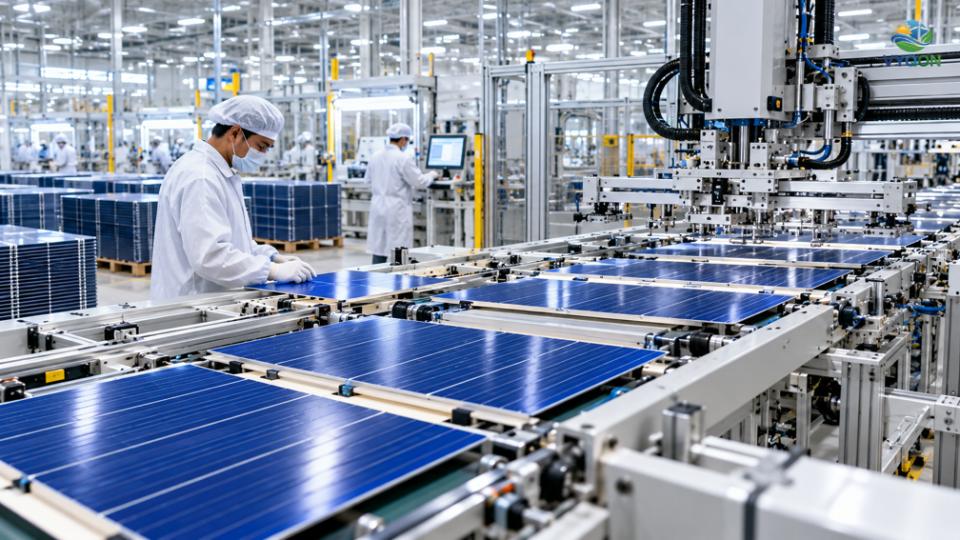
Central Electronics Limited has launched a global Expression of Interest to empanel consultants for solar manufacturing and other advanced technology sectors, with submissions closing on 21 October 2026.
Central Electronics Limited (CEL), a Government of India enterprise under the Department of Scientific and Industrial Research (DSIR), Ministry of Science and Technology, has invited global consultancy firms to participate in an Expression of Interest (EOI) covering several strategic technology and manufacturing sectors, including a proposed 1.25 GW solar cell and module manufacturing programme.
The initiative aims to identify qualified consultants capable of providing technical, engineering and commercial advisory services for potential manufacturing and infrastructure developments.
The EOI, published on 22 September 2026, carries reference number C-2(b)/EoI/0602/0398/2026, with the final submission deadline scheduled for 21 October 2026 at 11:00 AM.
Alongside solar manufacturing, the invitation covers consultancy opportunities associated with 100 MW data centres, semiconductor assembly and testing facilities, rare-earth permanent magnet manufacturing and satellite manufacturing.
The procurement represents an early-stage consultancy empanelment exercise rather than confirmation that CEL has approved construction of a new 1.25 GW photovoltaic manufacturing facility.
The final manufacturing configuration, technology selection, investment requirements and implementation timeline have not been announced through this EOI.
CEL Launches Global Consultancy EOI Across Strategic Manufacturing Sectors
CEL’s latest procurement reflects its interest in engaging specialised technical expertise across several advanced industrial segments.
Headquartered in Sahibabad, Uttar Pradesh, the company operates as a government enterprise with activities spanning electronics, renewable energy technologies and other industrial applications.
The global EOI has been issued through CEL’s Defence Business division and is also listed on the Government of India’s Central Public Procurement Portal under Tender ID 2026_CEL_291731_1.
According to the official procurement schedule, the pre-bid meeting was scheduled for 12 October 2026 at 11:00 AM, while bid submissions will close on 21 October at 11:00 AM. Bid opening is scheduled for 22 October 2026 at 11:00 AM.
The government procurement listing specifies a bid validity period of 180 days and identifies the contract category as empanelment. It also lists an indicative work period of 1,095 days, which should not be interpreted as a confirmed construction or commissioning schedule for the proposed solar manufacturing programme.
The EOI seeks to establish access to qualified consultants for potential future assignments rather than awarding immediate construction or equipment supply contracts.
Selected consultants may be considered for specific technical and commercial assignments according to CEL’s requirements and subsequent engagement arrangements.
The opportunity is significant because manufacturing projects involving solar cells, semiconductor technologies and specialised industrial equipment require detailed planning before major capital investment decisions.
CEL has also issued a separate Request for Information concerning potential public-private partnerships for establishing manufacturing plants and operations. That procurement is distinct from the current consultancy EOI and should not be interpreted as a confirmed investment or construction award.
Technical Planning for 1.25 GW Solar Cell and Module Manufacturing
The solar component of CEL’s EOI identifies a 1.25 GW manufacturing scope covering photovoltaic cells and modules.
However, the published tender description does not establish whether the final development would involve fully integrated cell-to-module manufacturing, independently operated production facilities or another manufacturing arrangement.
This distinction is important because solar cell fabrication and photovoltaic module assembly involve different manufacturing technologies, equipment requirements and capital expenditure.
Solar cell manufacturing typically begins with silicon wafers and involves multiple processing stages intended to create the electrical junction and improve photovoltaic conversion efficiency.
Depending on the selected technology, these stages may include wafer cleaning, surface texturing, doping or junction formation, passivation, thin-film deposition, metallisation and electrical testing.
Modern technologies such as Tunnel Oxide Passivated Contact (TOPCon) and Heterojunction Technology (HJT) require specialised process equipment and strict manufacturing controls.
Photovoltaic module manufacturing, meanwhile, involves assembling solar cells into electrically interconnected modules through processes such as cell stringing, encapsulation, lamination, framing and final electrical inspection.
Module production also requires quality-control systems for evaluating electrical characteristics, insulation integrity, mechanical reliability and manufacturing defects.
A consultancy assignment associated with a potential 1.25 GW manufacturing programme could therefore involve examining suitable technologies, production capacity, factory layout, equipment specifications, utility requirements and manufacturing economics.
Technology selection would influence capital investment, energy consumption, production yield, labour requirements and long-term competitiveness.
Importantly, CEL has not identified a final solar cell technology or approved equipment configuration in the published EOI description. Any reference to TOPCon, HJT or other advanced technologies should therefore be understood as industry context rather than a confirmed project specification.
Consultancy Support Can Strengthen Manufacturing Investment Planning
Large-scale photovoltaic manufacturing investments require careful evaluation of technical feasibility and commercial risks before project implementation.
A proposed production facility must be assessed not only in terms of its rated manufacturing capacity but also its expected operating efficiency, equipment availability, production yield and access to raw materials.
For example, a manufacturing line rated at 1.25 GW annually may produce less saleable output depending on utilisation, equipment downtime, product mix and manufacturing losses.
Consultants can help developers prepare realistic production forecasts and identify potential constraints associated with process technology, infrastructure and supply-chain availability.
Factory planning must also consider electrical demand, water requirements, compressed air, process gases, environmental management and equipment maintenance.
The requirements vary significantly between cell fabrication and module assembly, making early technical assessment essential for reliable project budgeting.
Quality assurance is another important consideration. Solar cell and module manufacturers must establish systems for product traceability, performance testing, defect identification and compliance with applicable standards.
Depending on the final manufacturing configuration, testing may include electroluminescence imaging, current-voltage measurements, insulation testing and other quality-control procedures.
These systems can influence production reliability and the acceptance of finished products by customers.
Independent consultancy expertise may support the evaluation of equipment suppliers, manufacturing processes, factory automation and financial assumptions.
However, the appointment or empanelment of consultants does not guarantee that every proposed manufacturing programme will proceed to construction.
Further investment decisions would require project-specific technical studies, commercial approvals and procurement arrangements.
Implications for India’s Domestic Solar Manufacturing Industry
India’s solar manufacturing sector is expanding as developers and equipment suppliers respond to increasing domestic renewable energy demand and evolving procurement requirements.
The development of domestic cell and module manufacturing capabilities is important for strengthening the photovoltaic supply chain and reducing dependence on imported components in applicable market segments.
Potential manufacturing investments can create opportunities for equipment suppliers, industrial automation companies, engineering contractors and specialist service providers.
For solar manufacturers, competitiveness increasingly depends on production efficiency, technology selection, quality control and the ability to manufacture reliable products at commercially sustainable costs.
Government enterprises exploring manufacturing programmes may benefit from technical partnerships and specialised consultancy support during the early planning stages.
CEL’s global EOI provides an opportunity to identify such expertise across photovoltaic manufacturing and other strategic industries.
However, the proposed 1.25 GW capacity should not be counted as newly installed or operational manufacturing capacity.
The EOI does not disclose a final factory location, sanctioned project budget, equipment purchase agreement or commercial production date.
Future progress will be demonstrated through consultant empanelment, project-specific feasibility assignments, formal investment decisions and subsequent manufacturing equipment or construction contracts.
Only after installation, testing and production commencement can the proposed capacity be assessed as an operational manufacturing asset.
Conclusion
Central Electronics Limited’s global consultancy EOI marks an early development step towards evaluating a potential 1.25 GW solar cell and module manufacturing programme alongside several advanced technology initiatives.
The procurement, with submissions closing on 21 October 2026, aims to identify qualified consultants who may support future engineering, technical evaluation and commercial planning activities.
The initiative highlights the importance of detailed feasibility analysis, manufacturing technology assessment and supply-chain planning before large industrial investments are undertaken.
However, the EOI represents consultant empanelment rather than confirmation of a funded or commissioned solar manufacturing facility.
The next important milestones will be the completion of the empanelment process, disclosure of specific consultancy assignments and any subsequent manufacturing investment approvals.
CEL’s initiative demonstrates the role that structured technical planning can play in supporting India’s long-term development of advanced photovoltaic manufacturing capabilities.
References:
CEL – Original Global EOI Document The original downloadable tender attachment for consultant empanelment covering 1.25 GW solar manufacturing and other technology sectors.
Government of India – Detailed eProcurement Tender Record Confirms tender ID 2026_CEL_291731_1, publication date, bid schedule, consultancy scope and contract category
CEL – Official EOI and RFP Register Lists the original consultancy EOI alongside other CEL procurement announcements
CEL – Separate Public–Private Partnership RFI Published 29 September 2026 for potential manufacturing partnerships. This is a separate process, not confirmation of investment in the proposed solar facility.
CEL – Official Active Tenders Useful for checking current tender listings and possible updates.
Leave a Comment