
India and Singapore are exploring options for a proposed 2,000 MW (2 GW) cross-border power interconnection, Union Minister of State for Power and New & Renewable Energy, Shri Shripad Yesso Naik, announced at the 20th East Asia Summit (EAS) Energy Ministers’ Meeting in Manila, Philippines, on 8 October 2026. The announcement follows a 7 October 2026 assessment by Wood Mackenzie, which found that none of the projects in Singapore’s 9.25 GW pipeline of approved low-carbon electricity imports has reached financial close or commenced construction.
The Proposed Interconnection
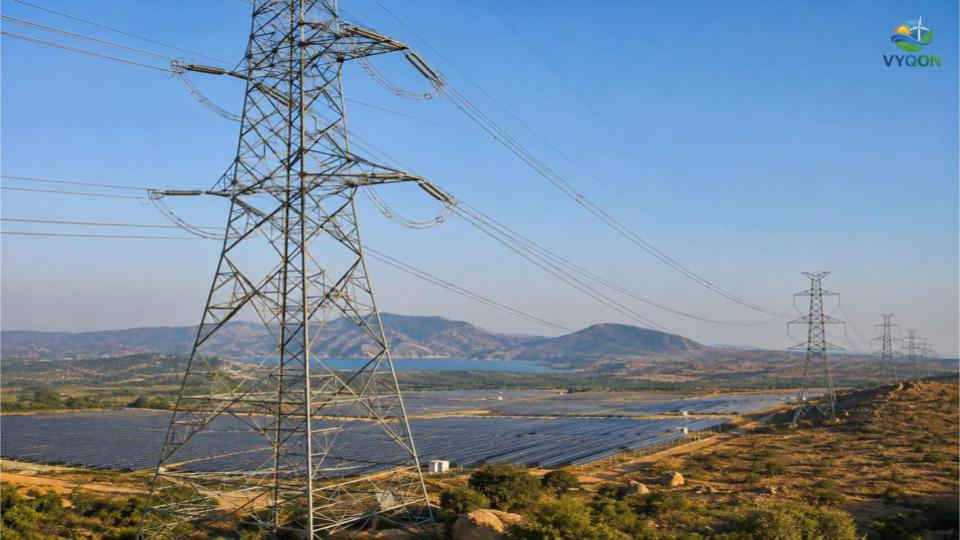
According to the Ministry of Power, one option under consideration is a land-based transmission corridor of approximately 3,000 km connecting Imphal, Manipur, to Singapore through Myanmar, Thailand and Malaysia. The Minister stated that the interconnection has the potential to facilitate reliable cross-border electricity trade, support clean energy integration and strengthen regional energy security. The proposal is at an exploratory stage, and no timeline or cost estimate has been indicated.
Placing the initiative within India’s Act East Policy, the Minister welcomed the ASEAN Plan of Action for Energy Cooperation 2026–2030 and reaffirmed India’s support for operationalising the Enhanced Memorandum of Understanding on the ASEAN Power Grid. He also recalled Prime Minister Shri Narendra Modi’s announcement at the 22nd ASEAN-India Summit in 2025 to support the ASEAN Power Grid by training 400 professionals in grid connectivity.
India’s Capacity Base
The Minister highlighted that India’s installed electricity generation capacity reached 558.8 GW as on 30 September 2026, of which 308 GW, or 55%, is from non-fossil sources. Under PM Surya Ghar, approximately 5.01 million rooftop solar installations had benefited 5.95 million households as on 29 September 2026.
India offered to share its experience in large-scale renewable energy deployment, grid integration, transmission planning, energy storage, green hydrogen and clean energy technologies with EAS participating countries. The Minister also called for stronger institutional linkages between the ASEAN Centre for Energy and Indian institutions, including NTPC, POWERGRID, the Central Electricity Authority, the National Institute of Wind Energy and the National Institute of Solar Energy.
Singapore’s Import Strategy
According to Singapore’s Energy Market Authority (EMA), around 95% of the country’s energy is produced using natural gas, while land constraints and weather-related intermittency limit domestic solar potential. The power sector accounts for 40% of Singapore’s carbon emissions. EMA aims to import around 6 GW of low-carbon electricity by 2035, approximately one-third of projected demand, revised upward from an initial target of 4 GW.
EMA has so far granted Conditional Approvals and Conditional Licences to 13 import projects from Australia, Cambodia, Indonesia, Malaysia and Vietnam. On 7 August 2026, it approved 900 MW from Johor, comprising 300 MW for Sembcorp Utilities and 600 MW for Southern Solar Alliance, a subsidiary of Ditrolic Energy Holdings. Both projects will supply power from solar and battery energy storage systems and are working towards commercial operation around 2029, subject to securing approvals, power purchase agreements and financing. These follow an earlier 1 GW Conditional Approval for imports from Sarawak.
Pipeline Assessment
Wood Mackenzie’s report, Green Electrons Are Waiting to Cross the Border to Singapore: 2026 Update, states that approved import capacity now totals 9.25 GW across six corridors. It projects that imports will account for only about 15% of Singapore’s generation mix by 2035, roughly half of EMA’s target. The report cites four principal challenges: export permit frameworks, project bankability, cross-border transmission financing, and the absence of a complete mechanism for Singapore buyers to claim the carbon value of imported electricity.
Its corridor-level findings are as follows:
- Peninsular Malaysia: The only corridor with a credible path to delivery this decade, supported by the existing HVDC interconnector of up to 1 GW. Sembcorp’s project could begin imports by 2029, while the remaining 600 MW would likely require a second interconnector, which is at the feasibility-study stage.
- Sarawak: A cable supply agreement with Prysmian, signed in October 2025, provides supply certainty; commercial operation is realistically targeted for the mid-2030s.
- Indonesia: Accounts for 37% of the pipeline, but progress has stalled because export permits must be renewed every five years, which undermines 20-year project financing. A 40% local content requirement adds a further hurdle.
- Vietnam, Cambodia and Australia: Together account for 43% of the pipeline, but all remain at the Conditional Approval stage with no visible construction timeline.
The report adds that imports must compete with the Uniform Singapore Energy Price of about S$250/MWh and deliver firm power at an annual load factor of at least 60%. EMA’s September 2026 request for proposals also raised the number of hydrogen-ready combined-cycle gas turbine units planned for 2032 from two to five.
Implications for India
Slow progress on existing corridors suggests Singapore will need additional low-carbon supply. However, the barriers identified for current projects, particularly transmission financing, permitting, firming requirements and price competitiveness, would equally apply to a 3,000 km corridor spanning three transit countries. Meeting Singapore’s firm-power standard would also require substantial energy storage, making storage capacity a central element of any future Indian export proposition.
Outlook
The India–Singapore interconnection represents a long-term opportunity rather than an immediate solution to Singapore’s import shortfall. Its progress will depend on agreements with transit countries, the advancement of the ASEAN Power Grid and the development of a carbon-accounting framework for imported electricity.
References
- India, Singapore plan 3,000-km cross-border power link via ASEAN nations – Business Standard, citing the Ministry of Power statement, 8 October 2026
- India Reaffirms Commitment to Regional Energy Cooperation and Energy Security at 20th East Asia Summit – All India Radio News (Prasar Bharati), 8 October 2026
- EMA Grants Conditional Approvals for 900 MW of Electricity Trade Between Peninsular Malaysia and Singapore – Energy Market Authority, 7 August 2026
- Regional Power Grids – Energy Market Authority
- Singapore’s 9.25 GW Low-Carbon Electricity Import Pipeline Is Stuck – Wood Mackenzie, 7 October 2026
Leave a Comment