
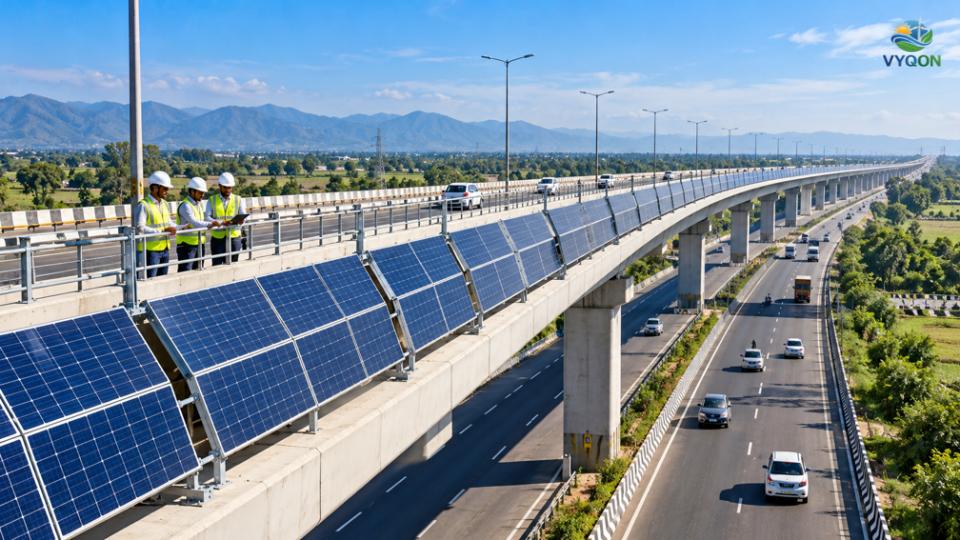
The Solar Energy Corporation of India has initiated a developer-selection process for a highway-integrated solar project in collaboration with NHAI, exploring the potential of renewable electricity generation along existing transport infrastructure.
The Solar Energy Corporation of India Limited (SECI) has issued a Notice Inviting Tender (NIT) for selecting a solar power developer to establish a minimum 4 MW solar photovoltaic project along an elevated section of the Delhi–Dehradun Highway for the National Highways Authority of India (NHAI).
The proposed project will be developed under the Renewable Energy Service Company (RESCO) model, with developer selection through tariff-based competitive bidding.
The notice, dated 9 October 2026 and published on SECI’s official website on 10 October, represents an initiative to explore the integration of renewable electricity generation with India’s existing highway infrastructure.
Unlike conventional ground-mounted solar parks, the proposed pilot will explore how solar installations can be developed alongside an elevated transportation corridor while maintaining structural safety, reliable electricity generation and practical maintenance arrangements.
However, the project remains at the preliminary procurement stage. The final installation capacity, engineering design, electricity evacuation arrangements and implementation schedule have not yet been disclosed.
SECI–NHAI Collaboration Advances Highway Solar Development
The proposed solar pilot builds on an earlier collaboration between SECI and NHAI aimed at expanding renewable energy applications across highway infrastructure.
On 10 November 2025, the two organisations signed a Memorandum of Understanding (MoU) for developing solar power installations along the elevated portion of Package-1 of the Delhi–Saharanpur–Dehradun Highway (NH-709B), covering the Delhi section.
The agreement established the foundation for exploring solar energy generation along the highway corridor. The latest tender notice advances this cooperation towards the selection of a project developer.
SECI has specified a minimum solar generation capacity of 4 MW, indicating that the final capacity may be determined through subsequent engineering assessments and procurement requirements.
The principal details confirmed by the notice include:
- Project: Minimum 4 MW solar PV installation along the elevated Delhi–Dehradun Highway
- Implementing organisations: SECI and NHAI
- Development model: RESCO, with tariff-based competitive bidding
- Project phase: Phase I
Under the RESCO model, a selected developer typically finances, constructs and operates a solar power installation, recovering its investment through electricity supply arrangements over an agreed period. This approach can help public infrastructure organisations adopt renewable energy without directly financing the entire installation cost at the beginning of the project.
However, the final contract duration, power purchase tariff, financing obligations and operating responsibilities will be determined through the detailed Request for Selection (RfS). SECI’s preliminary notice states that the bidding documents will be made available through its official website, the ISN-ETS electronic tendering platform and the Central Public Procurement Portal.
The notice itself does not specify the final bid submission deadline, project investment or commissioning timeline.
Engineering and Safety Considerations for Elevated Highway Solar
Integrating photovoltaic systems with elevated highway infrastructure presents engineering challenges that differ from those encountered in conventional rooftop or ground-mounted solar projects.
A typical solar park is constructed on dedicated land where module structures, foundations, roads and electrical equipment can be arranged primarily according to generation requirements. In contrast, a highway-associated solar project must accommodate the structural limitations, operating conditions and safety requirements of existing transport infrastructure.
One of the primary considerations will be the structural capacity of the proposed installation area. Engineers must evaluate whether the solar mounting arrangement can safely withstand additional loads, wind forces, vibration and environmental stresses without compromising the highway structure or its normal operation.
The engineering design must also consider wind uplift, corrosion protection, drainage, access for maintenance and the prevention of falling objects near active traffic areas.
Electrical safety will be equally important. Solar installations require appropriate earthing, insulation, surge protection, isolation systems and safe cable routing. Construction and maintenance activities must also be planned to minimise interference with highway traffic and maintenance operations.
Solar generation performance will depend on module orientation, sunlight availability, surrounding shading, temperature and dust accumulation. Traffic-related pollution and dust may influence module cleaning requirements and long-term system performance.
However, the official SECI notice does not yet specify the final photovoltaic mounting configuration or confirm whether panels will be installed directly on the elevated highway structure or through another arrangement within the corridor. These decisions will require detailed technical studies, structural assessments and relevant authority approvals.
The proposed pilot will therefore need to demonstrate that solar electricity can be generated economically while maintaining the structural integrity, accessibility and safety of the transportation infrastructure.
RESCO Financing and Electricity Integration
The RESCO model provides a framework for private-sector participation in the development of solar infrastructure.
Under a typical arrangement, the developer is responsible for the initial investment, equipment installation and long-term system operation, while the participating organisation purchases electricity according to the agreed commercial terms.
For the Delhi–Dehradun Highway project, financial feasibility will depend on the final installation design, equipment requirements, construction costs, expected solar generation and electricity sale tariff. Highway-integrated solar systems may involve additional expenses related to specialised mounting structures, construction access, safety equipment and maintenance procedures.
These factors will need to be considered when developers prepare their financial proposals.
Electricity evacuation and grid connectivity will also be essential for successful implementation.
A solar photovoltaic installation of this scale generally requires inverters, transformers, electrical protection systems, metering equipment and communication infrastructure to deliver electricity to the designated connection point.
The final connection arrangement must comply with applicable electrical safety standards and grid regulations. SECI’s preliminary notice does not specify whether the generated electricity will be used directly for highway-related consumption, exported to the electricity grid or supplied through another arrangement.
Therefore, assumptions about electricity generation, financial savings or emissions reductions would be premature without the detailed project design and contractual arrangements.
Potential for Renewable Energy Integration in Transport Infrastructure
The proposed pilot highlights the possibility of using suitable transport infrastructure for renewable electricity generation.
India’s highway network includes elevated corridors, service areas, administrative facilities and other infrastructure that may offer opportunities for solar energy applications.
Integrating photovoltaic systems with existing infrastructure could reduce the need for separate project land in suitable cases, although this benefit must be evaluated against structural, engineering and operational requirements.
The Delhi–Dehradun Highway project could provide valuable experience in designing, constructing and maintaining solar installations associated with active transportation corridors. For NHAI, the initiative offers an opportunity to evaluate the technical feasibility and operational implications of integrating solar energy with highway assets.
For solar developers, it presents a potential new application for photovoltaic technology beyond conventional installation locations. However, the wider adoption of highway-integrated solar will depend on demonstrated performance, reliable electricity delivery, economic feasibility and compliance with road safety standards.
The next important milestones will include the release of detailed bidding documents, confirmation of the engineering configuration, developer selection and finalisation of commercial and grid-connectivity arrangements.
Conclusion
SECI’s proposal for a minimum 4 MW solar photovoltaic pilot along the elevated Delhi–Dehradun Highway represents an initiative to explore renewable energy generation within existing transportation infrastructure. Building on the November 2025 SECI–NHAI agreement, the latest notice moves the concept towards competitive developer selection under the RESCO model.
The project could provide practical experience in structural engineering, electrical safety, grid connectivity and long-term maintenance of highway-associated solar installations. However, it remains at the preliminary tender stage, and its final technical configuration, commercial terms and implementation schedule are yet to be confirmed.
If successfully implemented, the pilot could offer a valuable reference for future solar energy applications across suitable transport infrastructure in India, supporting the country’s broader renewable energy transition.
Reference:
SECI – Official Notice Inviting Tender (PDF)-https://www.seci.co.in/uploads/news/1791630987_NIT_NHAI.pdf
Government of India – SECI–NHAI MoU Announcement-https://www.pib.gov.in/PressReleasePage.aspx?PRID=2188496
Leave a Comment