
NEW DELHI, April 1, 2026
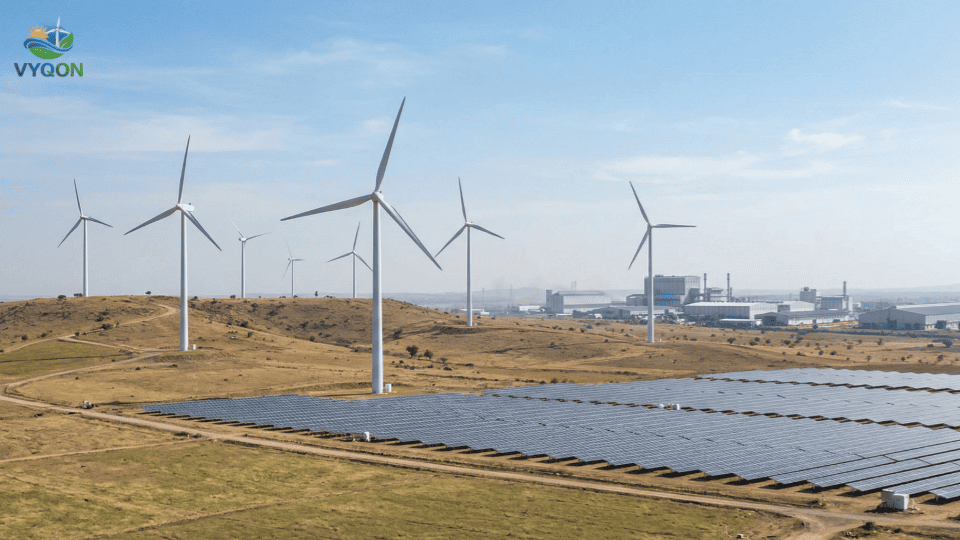
Serentica Renewables has formalized a long-term Power Purchase Agreement (PPA) with Sanathan Polycot Private Limited (SPPL), a wholly owned subsidiary of Sanathan Textiles Limited. Under the terms of the agreement, Serentica will deliver hybrid, round-the-clock (RTC) renewable energy to power Sanathan Polycot’s manufacturing operations in Punjab. The deal represents a significant step in decarbonizing the industrial load for the textile sector, providing firm dispatchable power to mitigate tariff volatility in energy-intensive manufacturing.
Deal Structure and Equity Arrangement
The agreement is structured under a “Group Captive” model, adhering to the Electricity Rules, 2005, and the recent Electricity (Amendment) Rules, 2026, which allow industrial consumers to secure cost-effective green power by holding an equity stake in the generating plant.
- Business Model: Group Captive renewable energy project.
- Special Purpose Vehicle (SPV): The project is being executed through a dedicated entity, Serentica Renewables India 33.
- Equity Stake: To qualify as a captive consumer and exempt the power supply from certain surcharges, Sanathan Polycot will acquire a 26% ownership stake in the SPV.
- Investment Amount: Sanathan Polycot has committed an investment of ₹480 million (~$5.1 million) to acquire the mandated 26% stake.
- Majority Holder: Serentica Renewables retains the remaining 74% stake and serves as the project developer.
Project Technical Overview
The project utilizes a hybrid generation profile to address the inherent intermittency of standalone renewable sources, ensuring a stable energy supply for continuous industrial processes.
| Parameter | Details |
| Project Type | Wind-Solar Hybrid |
| Supply Nature | Round-the-Clock (RTC) / Firm Dispatchable |
| Contracted Capacity | 32 MW – 38 MW |
| Operational Goal | Decarbonization of hard-to-abate industrial textile manufacturing |
Understanding Round-the-Clock (RTC) Supply The RTC nature of this project relies on the complementary generation profiles of wind and solar energy. By hybridizing these technologies, the project achieves a significantly higher Capacity Utilization Factor (CUF)—typically ranging from 35% to 50%—compared to standalone solar (16–20%) or standalone wind (20–26%). This synergy ensures grid stability and continuous power, providing the reliable megawatt-hours required for 24/7 manufacturing while reducing reliance on fossil-fuel-based grid power.
Manufacturing Facility and Corporate Context
The renewable energy supplied under this PPA powers Sanathan Polycot’s newly operational manufacturing facility in Punjab.
- Location: The facility is situated at Industrial Park Wazirabad, Tehsil Sirhind, District Fatehgarh Sahib, Punjab.
- Strategic Advantages: The site was specifically selected for its proximity to raw material hubs in the Panipat region and key textile consumption centers like Ludhiana, providing the company with competitive freight costs and logistics efficiencies.
- Product Focus: The unit produces Polyester Partially Oriented Yarn (POY), Fully Drawn Yarn (FDY), Polyester Texturised Yarn, and various cotton yarns.
- Scale and Capacity: Following a total investment of ₹1,600 crore, the facility reached its planned production capacity of 340,000 MT/Year for POY and FDY.
This commissioning marks the completion of a broader growth strategy for the parent company, Sanathan Textiles Limited, which successfully doubled its group capacity following the milestone reached at the end of March 2025.
Sector Impact and Leadership Perspective
The Indian textile industry is increasingly transitioning toward renewable energy to manage energy-intensive operations and meet evolving sustainability mandates. According to findings from ICRA ESG Ratings Limited, the sector’s adoption of clean energy has seen steady growth, with the average renewable energy share in total energy consumption rising from approximately 14% in FY2023 to nearly 18% by the end of FY2025.
Akshay Hiranandani, CEO of Serentica Renewables, noted that the partnership signifies the extension of tailored decarbonization solutions to the textile sector, which serves as a critical pillar of India’s manufacturing economy. He stated that by providing round-the-clock renewable energy, the company is enabling industrial players to transition to clean power seamlessly while meeting their specific energy needs and long-term sustainability priorities.
Leave a Comment