
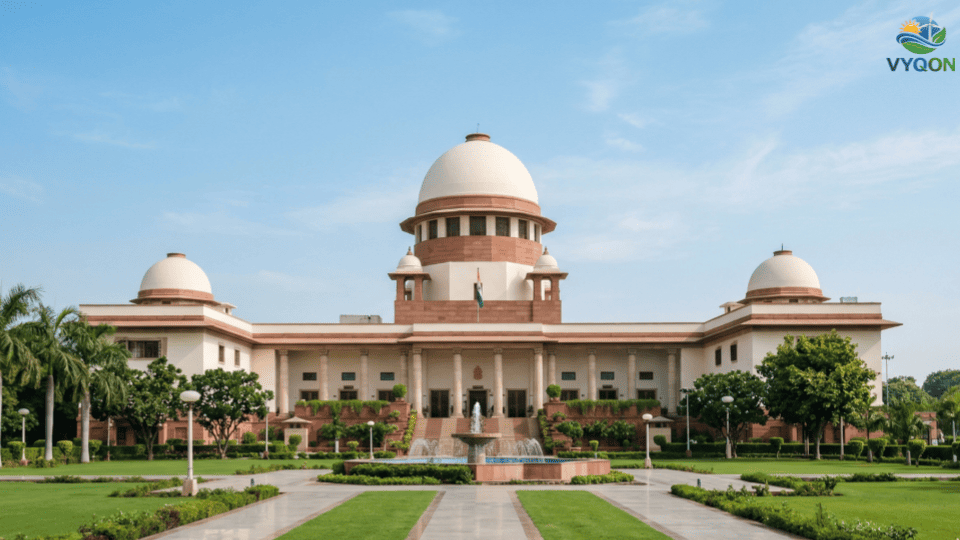
The Supreme Court of India has affirmed the State of Maharashtra’s statutory authority to withdraw or modify electricity duty exemptions previously granted to captive power plants. In the matter of State of Maharashtra & Others vs. Reliance Industries Ltd. & Others, the Bench, comprising Justices Pamidighantam Sri Narasimha and Alok Aradhe, set aside the 2009 Bombay High Court judgments that had quashed the State’s withdrawal of these fiscal concessions. In the judgment delivered on March 25, 2026, the Court held that while the State possesses the power to rescind such exemptions in the public interest, the exercise of this power must include a reasonable transitional period to satisfy the requirements of administrative fairness.
Statutory Framework and Initial Exemption Policy
The regulatory dispute centers on the Bombay Electricity Duty Act, 1958, specifically Section 5A, which empowers the State Government to grant exemptions from electricity duty in the public interest. The evolution of the State’s incentive policy for captive power generation is documented as follows:
- 1993 Industrial Policy: The State proposed a waiver of electricity duty to encourage industries to establish captive power generation units. This policy was specifically intended to reduce pressure on the public electricity supply system by promoting industrial self-sufficiency.
- 1994 and 1996 Notifications: Pursuant to the 1993 policy, the government issued formal notifications (dated September 1, 1994, and October 30, 1996) granting blanket exemptions for energy generated in a captive station and consumed by the industry itself.
Timeline of Withdrawal and Legal Challenges (2000–2009)
The State subsequently moved to rescind these exemptions to address budgetary constraints and augment public revenue. This withdrawal was implemented through a series of notifications:
- April 1, 2000: The State issued a notification enabling the levy of electricity duty, effectively withdrawing the blanket exemption. This notification imposed a duty of 30 paise per unit, retaining a narrow exemption only for non-conventional energy sources in the cooperative sector.
- April 4, 2001: A subsequent notification reduced the duty to 15 paise per unit for those generating sets installed under the previous incentive policies (prior to April 25, 2000).
- Litigation and Restoration: In 2009, the Bombay High Court quashed these notifications, characterizing the State’s actions as arbitrary, discriminatory, and lacking proper application of mind. Although the State eventually restored the full exemption via a notification on June 16, 2005 (effective from May 1, 2005), it continued to demand arrears for the intervening period from April 1, 2000, to April 30, 2005.
Judicial Reasoning: Statutory Concessions vs. Vested Rights
The Supreme Court’s analysis focused on the distinction between policy-driven concessions and enforceable legal rights, evaluated under the touchstone of Article 14 of the Constitution.
Statutory Concessions The Court ruled that tax exemptions granted under Section 5A are “defeasible rights” rather than permanent entitlements. Because these are policy concessions, the State retains the statutory power to modify or withdraw them using the same authority that granted them, provided the decision is grounded in public interest.
Vested Rights The Bench clarified that industrial recipients of such concessions have no legally enforceable right to their indefinite continuation. The Court rejected arguments based on “promissory estoppel” and “legitimate expectation,” determining that the State’s requirement for fiscal stability and revenue augmentation constitutes a “supervening public interest” that overrides prior policy assurances.
The One-Year Reasonable Notice Mandate
While upholding the State’s authority to withdraw statutory exemptions, the Court introduced a “fairness buffer” to mitigate the impact of abrupt policy reversals. Invoking its plenary powers under Article 142 of the Constitution to do complete justice, the Court held that the State must provide reasonable notice to allow industries to reorganize their financial and operational structures.
The Court reasoned that because industries had structured their long-term affairs based on the 1994 and 1996 exemptions, an immediate withdrawal was inconsistent with the principles of fairness required by Article 14. The Court stated:
“a period of one year would constitute a reasonable notice, enabling the captive power generators to adjust their operations and financial planning.”
Current Status of Duty Arrears
The Supreme Court’s ruling restores the State’s power to collect electricity duty arrears for the 2000–2005 period, effectively setting aside the 2009 Bombay High Court judgments. However, the implementation of the “One-Year Rule” serves to nullify any duty collection for the first 12 months following each notification.
The revised effective status of the duty arrears is as follows:
- The April 1, 2000 notification (30 paise per unit) is now effective from April 1, 2001.
- The April 4, 2001 notification (15 paise per unit) is now effective from April 4, 2002.
By adjusting these effective dates, the Court has balanced the State’s fiscal prerogative to collect revenue with the constitutional mandate for reasonable transitional notice in the withdrawal of long-standing fiscal concessions.
Leave a Comment