
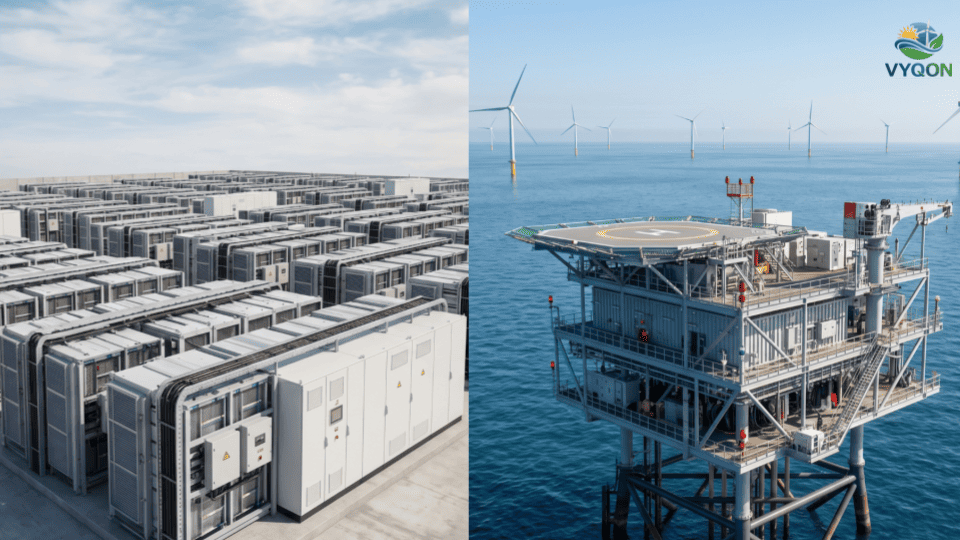
The Central Electricity Authority (CEA) has notified the “Technical Standards for Construction of Electrical Plants and Electric Lines Amendment Regulations, 2026,” set to take effect on April 1, 2027. This regulatory update is part of a broader mandate to modernize India’s power infrastructure, facilitating the transition toward a fast-growing green energy sector and the national target of 500 GW of non-fossil fuel capacity. The amendments establish technical benchmarks for the construction and operation of renewable energy projects and Battery Energy Storage Systems (BESS) to ensure grid safety, reliability, and stability.
Mandatory Technical Standards for Battery Energy Storage Systems (BESS)
The regulations define BESS as stationary electrochemical systems comprised of batteries, power conversion systems, and management units. Beyond passive energy storage, these systems are required to take an active role in grid balancing. All BESS projects, regardless of capacity, must be equipped with active and reactive power control, voltage regulation, and frequency response capabilities to maintain grid equilibrium.
Requirements for Systems of 50 MW or Greater
BESS projects with a capacity of 50 MW or more must adhere to higher technical specifications to support grid resilience:
- Black Start Capability: The system must possess the capability to restart the grid in case of a complete shutdown.
- Grid-Forming Inverter Technology: Mandatory use of grid-forming inverters is required to maintain stable operations within weak grid environments.
- Automatic Generation Control (AGC): Systems must support AGC for automated balance and frequency management.
BESS Performance Output Benchmarks
| Operational Duration | Minimum Output Percentage |
| 5 Years | At least 90% |
| 10 Years | At least 80% |
| 15 Years | At least 70% |
Wind Power Construction and Buffer Mandates
The updated regulations differentiate between onshore and offshore wind environments, emphasizing integrated planning to optimize national resources and minimize unused transmission infrastructure.
Onshore Wind Wind turbines must be installed at a minimum distance of 500 meters from residential areas. This mandatory buffer is established to mitigate the impact of operational noise on local populations.
Offshore Wind Offshore wind (OSW) projects are recognized as more capital-intensive than onshore counterparts due to the demanding marine environment. To optimize resource use, the regulations mandate an integrated approach to infrastructure, including the use of standardized submarine cable corridors. Construction must meet the following marine-specific standards:
- Scour Protection: Mandatory measures for foundations to prevent seabed erosion.
- Cable Entry Systems: Mandatory use of J-tube or I-tube systems for secure cable entry.
- Offshore Substations: Requirements include the installation of helipads and aircraft warning lights to ensure safety and accessibility.
Solar Power Design and Component Standards
Solar energy mandates focus on long-term durability and the standardization of components to support the modernization of power infrastructure.
Onshore Solar Onshore solar power plants must be designed for a minimum operational life of 25 years. Mandatory module components include bypass diodes to prevent damage from cell failure and radio-frequency identification (RFID) tags for lifecycle quality control and tracking.
Floating Solar Floating solar installations must utilize materials resistant to salt water and ultraviolet (UV) radiation, specifically for floatation and anchoring systems. These systems are required to undergo wind tunnel and buoyancy testing to verify structural integrity on water bodies.
Data Monitoring, Safety, and Compliance Details
The amendment introduces rigorous data and safety requirements designed to facilitate detailed post-event analysis and quick response to grid issues.
Monitoring and Data Storage
- Automatic Weather Stations: Mandatory for all renewable energy plants with a capacity of 10 MW or more.
- Data Retention: High-resolution recording equipment must store 90 days of operational and fault data to support technical analysis.
- Control Systems: Advanced control systems must be capable of receiving and executing remote instructions from load dispatch centers.
Safety and Environmental Protection All facilities must implement multiple-layer protection systems and fire safety measures in compliance with the National Building Code. These standards serve to standardize components for the local market, supporting the development of an indigenous supply chain.
Leave a Comment