
CERC Regulatory Order
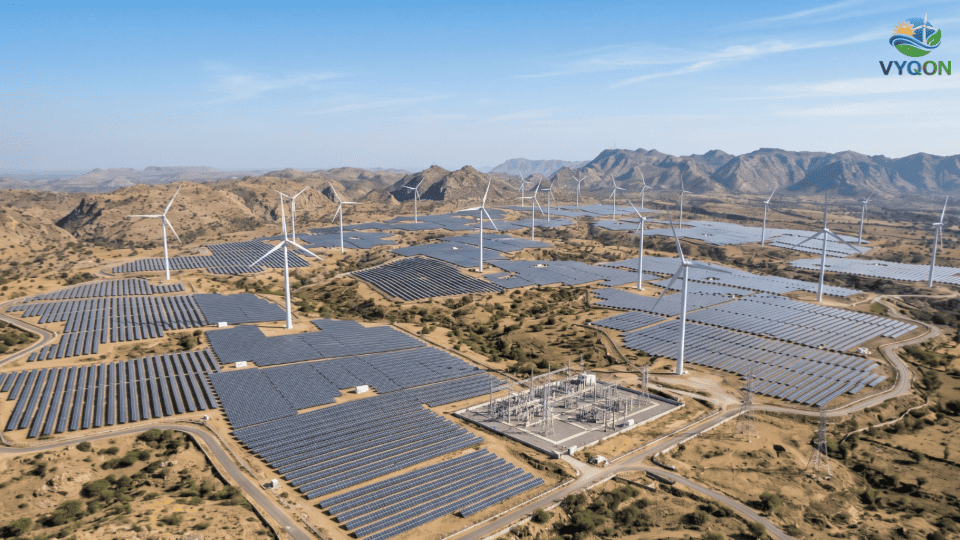
In an order dated March 26, 2026, the Central Electricity Regulatory Commission (CERC) adopted the tariff for 1,200 MW of wind-solar hybrid power projects. These projects are connected to the interstate transmission system (ISTS). The Commission approved a uniform tariff of ₹3.19/kWh (~$0.0339/kWh) for the entire capacity awarded through the competitive bidding process. This regulatory action designates SJVN as the intermediary procurer responsible for facilitating power arrangements between developers and distribution companies.
Trading Margin and Financial Provisions
The Commission approved a trading margin for SJVN in its capacity as an intermediary procurer. The following financial parameters apply:
- Primary Trading Margin: SJVN is permitted to charge ₹0.07/kWh (~$0.0007/kWh). This rate is contingent upon the successful compliance and provision of payment security mechanisms to the power developers.
- Restricted Trading Margin: If SJVN fails to provide the required payment security mechanisms, the trading margin is restricted to a maximum of ₹0.02/kWh (~$0.0002/kWh). This restriction aligns with the Commission’s existing trading license regulations.
Bidding Process and Technical Participation
The procurement process followed a timeline that began with the issuance of a tender by SJVN in June 2024. The Commission’s analysis of the bidding results highlighted the following:
- Technical Qualification: A total of 15 bidders participated in the process. The Tender Committee found all 15 bidders to be technically responsive, which the Commission cited as evidence of a competitive environment.
- Capacity Oversubscription: The bidders collectively quoted a capacity of 3,700 MW, which was substantially higher than the 1,200 MW offered in the tender.
- Reverse Auction and Award: Following the e-reverse auction, five bidders were declared successful. SJVN subsequently issued Letters of Award (LoA) to these developers in December 2024.
SJVN submitted that the bidding was conducted with transparency and in accordance with established guidelines. Crucially, SJVN requested the adoption of the tariff on a standalone basis following the withdrawal of the Uniform Renewable Energy Tariff (URET) mechanism. The Commission noted that the bids and issued LoAs remain valid and enforceable on a standalone basis despite the policy change regarding pooled tariffs.
Commission Analysis and Directives for Agreement Execution
The CERC concluded that SJVN adhered to the competitive bidding guidelines issued by the Central Government. The Commission noted that the process included public notice of the Request for Selection (RfS) and a thorough evaluation of bids by a dedicated committee. SJVN also submitted a conformity certificate to the Commission, verifying that the process was transparent and compliant with regulatory requirements.
The Commission issued several directives to SJVN to ensure project implementation:
- SJVN must complete the execution of Power Purchase Agreements (PPAs) with the successful developers.
- Power Sale Agreements (PSAs) must be finalized with distribution companies (DISCOMs).
- Final copies of all executed PPAs and PSAs must be submitted to the Commission’s official record.
- SJVN is obligated to notify the Commission if any of the awarded capacity does not result in signed agreements.
Comparative Context and Tariff Reasonability
To determine the reasonability of the ₹3.19/kWh tariff, the Commission utilized benchmarking against contemporaneous national tenders. By comparing the discovered rate with other large-scale auctions for similar interstate transmission system-connected projects, the Commission verified that the price was consistent with prevailing market trends. The evaluation committee certified that the discovered tariff was reasonable and aligned with the requirements of the competitive bidding framework, ensuring the rate reflects current market conditions for wind-solar hybrid technology.
Leave a Comment