
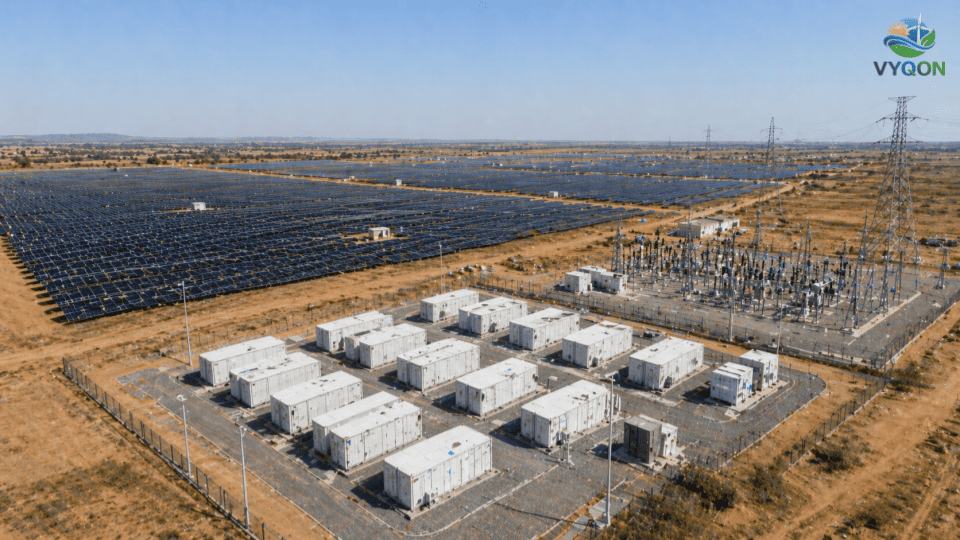
NEW DELHI, India – Welspun New Energy Limited (WNEL) has executed its maiden energy storage-linked Power Purchase Agreement (PPA) with the Solar Energy Corporation of India (SECI), marking a strategic pivot toward firm and dispatchable renewable power. The agreement covers 200 MW of solar capacity integrated with a 400 MWh Battery Energy Storage System (BESS) at a discovered tariff of ₹2.86 per kWh. This rate represents a significant downward pressure on the market floor, coming in well below the ₹5.06 per kWh benchmark often projected for solar-plus-storage parity in India.
PPA Framework and Regulatory Specifics
The project was secured under the SECI Inter-State Transmission System (ISTS) Tranche-XX Scheme. Beyond the competitive base tariff of ₹2.86/kWh, a standard SECI trading margin of ₹0.07/kWh will be applicable. A critical performance metric integrated into this agreement is a Capacity Utilization Factor (CUF) of 28%, ensuring a high level of energy throughput from the solar component.
The Scheduled Commissioning Date (SCD) is mandated within 24 months from the effective date of the PPA. Furthermore, the agreement includes a rigorous “Peak Hour” supply mandate: WNEL must supply half of the contracted capacity for four hours during the evening peak window, specifically between 18:00 and 24:00 hours.
Technical Precision and Grid Integration
This co-located Solar-plus-BESS configuration utilizes a Front-of-the-meter (FTM) storage framework designed to enhance grid stability. The project adheres to a strict technical ratio of 1 MW of solar capacity supported by a minimum of 500 kW / 2 MWh of storage. While the ISTS framework allows for development at any location in India, infrastructure analysts highlight the strategic importance of hubs like the 400kV Fatehgarh (ATL) substation in Rajasthan as primary delivery points for such high-capacity integrations.
To meet the high-performance requirements of the SECI mandate, the BESS must support two full charge-discharge cycles per day. Technical specifications further limit the BESS recovery time to a maximum of one hour between duty cycles, ensuring rapid availability. To optimize grid management, discharging from the BESS is strictly prohibited during the peak solar generation window of 10:00 AM to 2:00 PM.
Corporate Strategy and ESG Leadership
The 200 MW award bolsters Welspun New Energy’s total contracted portfolio to approximately 1.6 GWp. WNEL’s aggressive expansion is supported by the strong Environmental, Social, and Governance (ESG) credentials of the broader Welspun World group. Notably, Welspun Corp ranks in the Top 4 percentile of the global steel sector in S&P Global’s DJSI Corporate Sustainability Assessment, providing a credible foundation for its green energy ambitions.
This PPA follows other significant milestones, including a ₹13,500 crore memorandum of understanding (MoU) signed with the Odisha government at the Make in Odisha Conclave 2025. Formalized in the presence of Chief Minister Mohan Charan Majhi, that agreement focuses on large-scale renewable and green hydrogen development.
Project Technical and Regulatory Specifications
| Project Component | Details |
| Solar Capacity | 200 MW |
| BESS Capacity | 400 MWh (500 kW/2 MWh per 1 MW Solar) |
| Tariff Details | Discovered Rate: ₹2.86/kWh; Trading Margin: ₹0.07/kWh |
| Capacity Utilization Factor (CUF) | 28% |
| Connectivity | Inter-State Transmission System (ISTS) |
| Operational Parameters | Min. Annual Average Availability: 95%; AC-to-AC Round-Trip Efficiency: 85% |
| Duty Cycle | 2 Cycles per day; Max 1-hour recovery time between cycles |
| Commissioning Timeline | 24 months from PPA effective date |
| Peak Supply Mandate | 50% capacity for 4 hours (18:00–24:00) |
Market and Regulatory Synthesis
The shift toward storage-integrated tenders comes as India’s annual electricity consumption exceeds the 2,000 TWh milestone as of 2024. To manage this rising demand alongside intermittent renewable generation, national projections indicate a required battery storage capacity of 2,560 GWh.
With solar-plus-storage now viewed as a viable solution for meeting up to 90% of India’s electricity requirements, the aggressive pricing seen in the Tranche-XX auction suggests that the “green firm power” sector is maturing faster than anticipated. By securing a tariff significantly lower than the projected ₹5.06/kWh competitive average, WNEL is positioning itself at the forefront of India’s structural transition to a stabilized, renewable-heavy grid.
Leave a Comment