
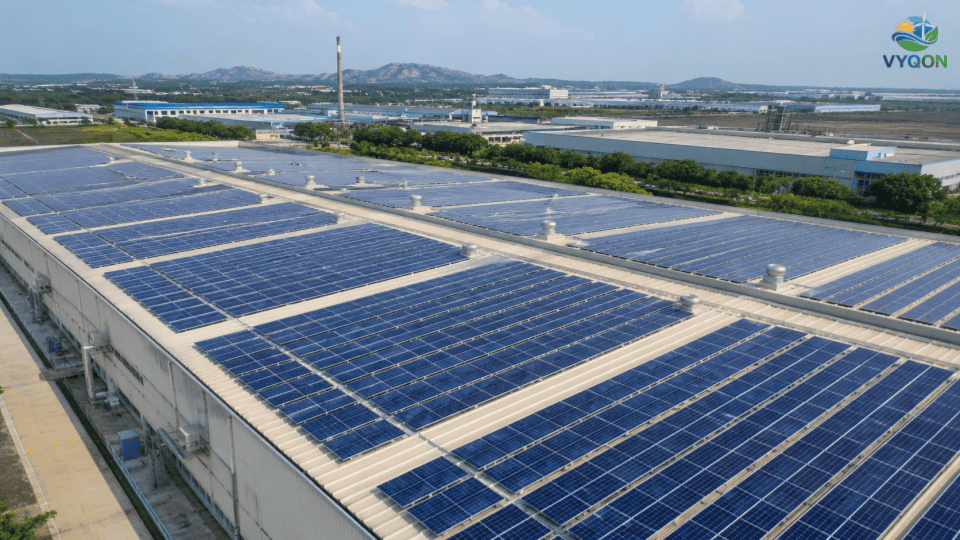
The Andhra Pradesh Electricity Regulatory Commission (APERC) has issued a definitive clarification regarding the eligibility of solar rooftop photovoltaic (SRTPV) projects for net metering, significantly shoring up the viability of large-scale commercial and industrial (C&I) assets. The Commission has ruled that existing SRTPV projects with capacities between 500 kWp and 1000 kWp are exempt from the 500 kWp net metering cap introduced in recent regulations. This ruling ensures these installations remain under their original net or gross metering agreements for their entire contractual tenure, protecting the Internal Rate of Return (IRR) and projected payback periods for prosumers who invested under earlier policy frameworks.
Context of the Regulatory Shift
The regulatory environment became clouded following the notification of APERC Regulation No. 4 of 2023, which established a new net metering eligibility ceiling of 500 kWp. This shift created significant uncertainty for prosumers with larger installations, leading the Eastern Power Distribution Company of Andhra Pradesh Limited (APEPDCL) to seek formal guidance on whether these limits would be applied retrospectively.
In this context, “Net Metering” is defined as a system utilizing a bi-directional meter to record the two-way flow of energy, allowing for the accounting of both exported and imported electricity to and from the grid. The original regulation defining these boundaries took effect on February 23, 2024, which now serves as the demarcation point for grandfathered rights.
The Grandfathering Clause Explained: Protecting Capital Investments
Central to this clarification is Clause 22 of Regulation No. 4 of 2023. By invoking this clause, the Commission has prioritized the protection of existing capital investments from subsequent regulatory changes, a move seen as essential for maintaining developer confidence in the state’s energy sector.
The following projects are formally protected under the grandfathering provision:
- Commissioned Assets: Any SRTPV system installed and commissioned prior to the effective date of February 23, 2024.
- Pipeline Projects: Systems that were under construction and possessed an approved technical feasibility report before the February 2024 deadline.
These installations will continue to operate under their original arrangements—specifically those ranging between 500 kWp and 1000 kWp—without alterations to their billing structures or metering types until the expiration of their current contracts.
Prospectivity: Framework for Post-2023 Projects
For all solar rooftop projects seeking technical feasibility approval after February 23, 2024, the capacity limits of the current regulatory framework apply strictly. While the minimum capacity for any grid-interactive SRTPV system is maintained at 1 kWp, the maximum capacities are now capped as follows:
| Metering Type | Maximum Capacity |
| Net Metering | 500 kWp |
| Gross Metering | 5000 kWp (5 MWp) |
Implementation: Mandatory Billing and Settlement Directives
While the Commission is protecting capacity rights through grandfathering, it is simultaneously addressing operational failures within the state’s Distribution Companies (DISCOMs). Following a Press Note issued on February 6, 2026, the APERC addressed systemic grievances aired by prosumers during the FY 2026-27 Retail Supply Tariff (RST) hearings.
The Commission has ordered APEPDCL, APCPDCL, and APSPDCL to strictly enforce Clauses 16.1 and 16.5 of the 2023 Regulation, mandating the following:
- Immediate Monthly Settlement: DISCOMs must implement monthly energy settlement and billing “forthwith.”
- Electronic Remittance: All payments for excess energy exported to the grid must be transferred to prosumers via electronic means.
- Regulatory Adherence: DISCOMs must ensure total compliance with the 2023 Regulation and the First Amendment of 2025.
Aggrieved consumers are instructed to approach their respective DISCOMs for formal grievance redressal regarding billing delays or payment failures.
Wider Regulatory Landscape: Operationalizing the ICE Policy 2024
This clarification is a tactical component of the state’s broader strategy under the Integrated Clean Energy (ICE) Policy 2024, which targets a 50% non-fossil fuel power capacity by 2030. To reach these goals, the APERC is currently moving through a draft amendment phase to introduce advanced regulatory mechanisms designed to democratize energy generation.
Proposed reforms currently under review include:
- Virtual Net Metering: Facilitating energy credit sharing for housing societies and groups.
- Group Net Metering: Allowing prosumers to offset generation across multiple service connections.
- Distributed Energy Resource Aggregators (DERAs): Commercial entities authorized to manage installations, empanel vendors, and handle subsidies.
Furthermore, a revised application fee structure has been proposed to facilitate this expansion. There will be no fee for systems up to 5 kWp, while larger projects will face scaled charges, reaching INR 25,000 per MW for projects above 1 MW. Prosumers and developers can continue to utilize the DISCOM websites, Mee Seva centres, or the national rooftop solar portal for streamlined application processing.
Leave a Comment