
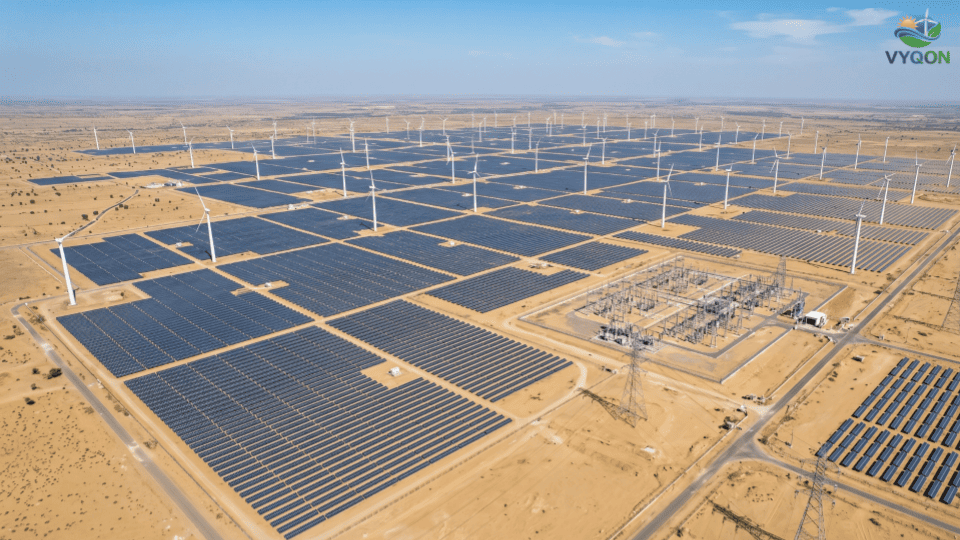
Clean Max Enviro Energy Solutions (CleanMax), India’s leading renewable energy provider for the Commercial & Industrial (C&I) sector, has finalized a $575 million multi-lender financing package to accelerate its post-IPO growth. This capital infusion is earmarked for the development of approximately 1 GW of solar and wind energy projects connected to the Central Transmission Utility (CTU) network. Following its successful listing on March 2, 2026, the company is leveraging this facility to de-risk its 2.6 GW under-construction pipeline, primarily focusing on high-demand hubs in Rajasthan and Karnataka to support the net-zero mandates of blue-chip corporate and technology clients.
Financial Structure and SPV-Lender Mapping
The transaction utilizes a sophisticated multi-currency structure designed to optimize capital efficiency by matching borrowing currencies with underlying Power Purchase Agreement (PPA) revenues. This strategy has allowed CleanMax to secure interest rates below 6% for its non-INR-denominated portfolio.
The breakdown of the financing facilities and the specific consortium lenders involved is detailed below:
| Entity | Facility Type | Amount | Consortium Lenders |
| Clean Max Celestial (SPV) | FCNR(B) | $141.94 Million | Leading Indian Public Sector Bank |
| Clean Max Tasman (SPV) | ECB | $124.63 Million | Société Générale, BNP Paribas, SMBC |
| VEH Green Energy (SPV) | ECB | $174.00 Million | Crédit Agricole, HSBC, DBS Bank |
| CMEESL (Parent) | INR Term Loan | ₹650 Crore | HSBC |
| Clean Max Atlas (SPV) | INR Term Loan | ₹630 Crore | BNP Paribas, HSBC |
Institutional confidence in this structure was further bolstered by a recent credit rating upgrade from CARE Ratings. The company’s long-term bank facilities and non-convertible debentures (NCDs) were moved to ‘CARE AA-/Stable,’ reflecting a robust balance sheet and the transition to a listed entity.
Project Scope and Operational Milestones
The nearly 1 GW of new capacity across Rajasthan and Karnataka represents a strategic pivot toward direct corporate supply, eschewing the lower-margin, tariff-based competitive bidding typical of DISCOM contracts. A landmark milestone in this expansion was achieved on May 26, 2026, with the commissioning of a 351.4 MWp solar project by Clean Max Celestial at the Bikaner Solar Park in Rajasthan.
To drive a structural reduction in the Levelized Cost of Energy (LCOE), CleanMax is deploying advanced turbine technology, including Envision 3.3 MW and 5 MW units. This technological shift is estimated to deliver an 8–10% LCOE reduction, improving project IRRs and enhancing the company’s competitive moat in a tightening market.
Portfolio Metrics and the AI Strategic Pivot
CleanMax has reported significant margin expansion, with renewable energy power sales EBITDA margins rising from 82% to 83.5% in FY26. This performance is underpinned by a weighted average tariff of ₹3.66–₹3.76, a significant premium over the utility-scale industry average of ₹2.44–₹2.46. This “C&I premium” reflects the company’s ability to provide customized, high-reliability solutions to sticky corporate clients.
Key Portfolio Data Points (as of April 2026):
- Total Contracted Portfolio: 5.7 GW (FY2025-26 period).
- Operational Capacity: 3.1 GW, up from 1.7 GW just one year prior.
- Customer Retention: 74% of new volumes are driven by repeat corporate customers.
The most notable driver of this growth is the “AI Multiplier.” Data centers, AI infrastructure, and cloud computing clients now account for 42% of the total 5.7 GW portfolio—a massive jump from just 14% in 2024. In absolute terms, Data and AI contracted capacity skyrocketed from 260 MW in April 2024 to 2,400 MW by April 2026, representing a nearly ten-fold increase in two years.
Management Commentary
The leadership team emphasizes that this financing demonstrates the bankability of integrated C&I platforms in a maturing energy market.
Kuldeep Jain, Founder and Managing Director: Jain highlighted that the transaction underscores a permanent alignment between global capital flows and corporate decarbonization. He noted that the company’s ability to deliver 1,400 MW of new capacity in a single fiscal year—matching its first decade of growth—proves the scalability of the CleanMax model in the post-IPO era.
Nikunj Ghodawat, CFO: Ghodawat focused on the technical execution of the debt strategy, noting that the multi-currency approach was instrumental in reducing the company’s weighted average cost of debt from 9.2% to 8.5%. This reduction, combined with disciplined capital allocation and operating leverage, contributed to the jump in consolidated profit after tax (PAT) from ₹19 crore to ₹86 crore in the last fiscal year.
Leave a Comment