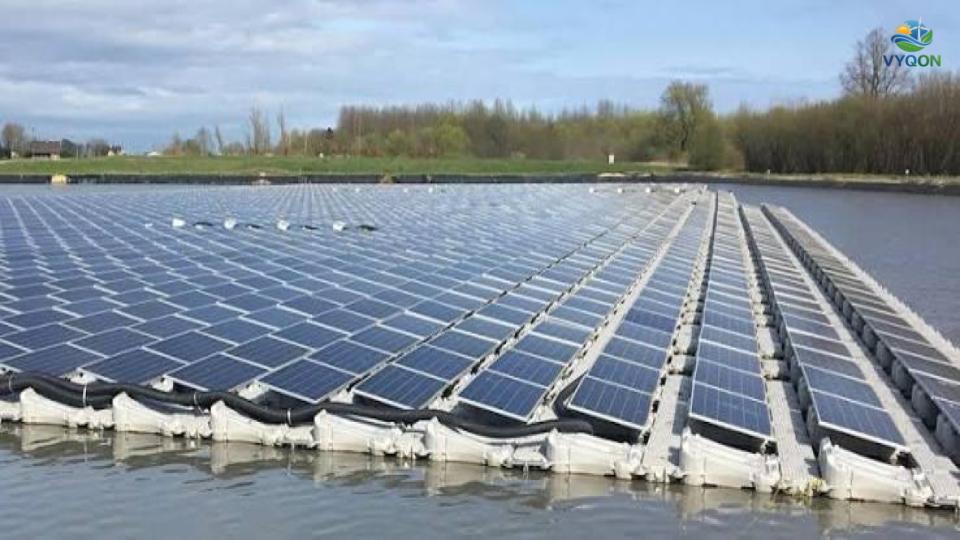
In a decisive move to accelerate the integration of firm, dispatchable renewable energy into the state grid, the Godavari Marathwada Irrigation Development Corporation (GMIDC) has invited Expressions of Interest (EoI) for a landmark hybrid infrastructure project. The tender seeks to establish a massive 150 MW Floating Solar Photovoltaic (FSPV) power project tightly integrated with a 150 MWh Battery Energy Storage System (BESS).
Set to be developed on the reservoir surface of the Mula Major Dam in the Ahilyanagar district (Taluka Rahuri) of Maharashtra, the project will be executed entirely on a Public-Private Partnership (PPP) basis. This initiative represents a sophisticated evolution in India’s renewable sector, shifting away from intermittent standalone solar generation toward highly reliable, storage-backed power plants that optimize existing state water infrastructure without requiring contentious land acquisition.
Key Project Highlights
- Solar Generation Capacity: 150 MW of Floating Solar Photovoltaic (FSPV) arrays.
- Energy Storage Component: A co-located Battery Energy Storage System (BESS) boasting a minimum capacity of 75 MW / 150 MWh (capable of discharging 75 MW of power for two hours).
- Site Location: The water surface of the Mula Major Dam in Taluka Rahuri, District Ahilyanagar, Maharashtra.
- Execution Framework: Public-Private Partnership (PPP) model, encompassing design, engineering, financing, construction, and long-term operations and maintenance (O&M).
- Bid Submission Deadline: Interested developers must submit their comprehensive proposals by September 10, 2026.
The Strategic Imperative: Why the Mula Major Dam?
As Maharashtra heavily scales its renewable energy targets, state utilities are increasingly encountering the severe bottleneck of land scarcity. Ground-mounted utility-scale solar projects of a 150 MW magnitude require hundreds of acres of contiguous, non-agricultural land, often leading to protracted acquisition battles, right-of-way disputes, and escalating project costs.
By strategically utilizing the expansive, unshadowed water surface of the Mula Major Dam, GMIDC effectively bypasses the land acquisition hurdle. The dam, managed by the state’s Water Resources Department, offers a secure, government-owned expanse that allows developers to expedite the construction timeline. Locating the project in Ahilyanagar also places the power generation asset close to critical agricultural and industrial load centers in central Maharashtra, minimizing transmission losses.
Technical Synergy: Integrating Floating Solar with BESS
The defining feature of this tender is not just the floating solar component, but its mandatory coupling with a robust 75 MW / 150 MWh BESS. This hybrid technical architecture solves the inherent intermittency of solar power.
During peak daylight hours, the 150 MW floating solar arrays will generate maximum power. However, localized grid infrastructure often struggles to absorb massive spikes in generation. The co-located BESS will act as a high-capacity buffer, absorbing excess energy during the day. As the sun sets and solar generation drops to zero—precisely when evening peak demand surges—the battery system will discharge its stored 150 MWh of energy into the grid. This transforms the Mula Dam facility from a variable energy source into a “firm” power asset capable of providing grid stability, frequency regulation, and reliable peak-hour supply.
Environmental and Dual-Use Infrastructure Benefits
Floating solar—often referred to as “floatovoltaics”—offers unique environmental synergies that ground-mounted systems cannot replicate. The deployment of this technology at the Mula Dam will yield several cascading benefits:
- Water Conservation: Maharashtra’s interior districts are highly susceptible to harsh summers and rapid water evaporation. Blanketing a significant portion of the reservoir with floating pontoons and solar panels creates a physical shield against direct sunlight and wind, drastically reducing the evaporation rate of the reservoir. This ensures that more water is preserved for its primary uses: municipal drinking supply and agricultural irrigation.
- Enhanced Panel Efficiency (The Albedo Effect): Solar PV panels suffer from thermal degradation; as ambient temperatures rise, their efficiency drops. The underlying water body of the Mula Dam acts as a natural heat sink. The evaporative cooling effect keeps the operating temperature of the silicon modules significantly lower than ground-mounted equivalents, leading to a higher overall energy yield (kWh per kW installed).
- Algal Bloom Reduction: By limiting the penetration of sunlight into the water column, the solar arrays help suppress the excessive growth of algae, which can otherwise degrade water quality and clog irrigation infrastructure.
Execution Model: Public-Private Partnership (PPP) Dynamics
To ensure the long-term viability and cutting-edge engineering of the project, GMIDC has opted for a PPP framework. Under this model, the state provides the essential resource (the reservoir surface and grid interconnection access), while the financial, technical, and operational risks are transferred to the private sector.
The successful concessionaire will be responsible for the end-to-end turnkey development of the project. This includes conducting complex bathymetric surveys of the reservoir floor, designing highly durable anchoring and mooring systems capable of withstanding water level fluctuations and monsoon winds, and procuring the specialized floating structures and battery hardware. Furthermore, the developer will be contractually bound to manage the Operations and Maintenance (O&M) for the duration of the long-term lease, ensuring that the aquatic environment does not compromise the structural integrity of the plant over time.
Bidding Terms and Project Timeline
The tender reflects a strong sense of urgency from the state government to quickly mobilize capital and initiate construction.
- Notice Issuance: The Expression of Interest (EoI) was officially published in late August 2026.
- Closing Date: Developers and engineering consortiums have until September 10, 2026, to finalize and submit their technical proposals and EoI documents.
Given the scale and technical complexity of integrating hydro-anchored solar arrays with utility-scale battery storage, the bidding is expected to attract tier-1 domestic and international renewable energy developers who have proven balance sheets and specialized engineering capabilities.
Broader Market Context: Maharashtra’s Clean Energy Vision
The Mula Dam project is not an isolated event but part of a highly aggressive, coordinated floating solar campaign by GMIDC. In the weeks leading up to this announcement, GMIDC released a flurry of similar tenders, including a 115 MW floating solar project and a 170 MW floating solar project (both requiring integrated battery storage) across other state-managed reservoirs.
This concentrated pipeline indicates that Maharashtra is positioning itself as the epicenter of India’s floating solar revolution. By mandating battery storage alongside these massive water-surface installations, the state is future-proofing its grid, ensuring that the transition away from fossil fuels does not come at the cost of energy security or grid stability.
Official Sources and Reference Portals
- Godavari Marathwada Irrigation Development Corporation (GMIDC) – Water Resources Department (WRD) The primary state executing authority responsible for dam reservoir management, water allocations, and tendering reservoir surfaces for renewable energy projects in Maharashtra.
- Official Website: https://wrd.maharashtra.gov.in/
- Departmental Overview: Water Resources Department guidelines for secondary and allied water-surface use across state dams.
- Government of Maharashtra e-Procurement System (Mahatenders) The centralized state government e-tendering gateway used for viewing, downloading tender schedules, and submitting bids for GMIDC Expression of Interest (EoI) notices.
- Tender Portal: https://mahatenders.gov.in/
- Search Keyword: Search under Water Resources Department using keywords Mula Dam or Floating Solar.
- Maharashtra Energy Development Agency (MEDA) The state nodal agency for promoting renewable energy deployment, supporting grid-scale battery storage policy formulation, and coordinating clean energy targets in Maharashtra.
- Official Website: https://www.mahaurja.com/
- Ministry of New & Renewable Energy (MNRE) The central governing ministry establishing national standards, bidding guidelines, and policy frameworks for floating solar (FSPV) and co-located Battery Energy Storage Systems (BESS).
- Official Website: https://mnre.gov.in/
- Key Guidelines: Standard bidding frameworks and technical specifications for grid-connected floating solar power projects.
- Central Water Commission (CWC) The national apex body providing technical guidance on dam safety, reservoir sedimentation, bathymetric parameters, and the structural compliance of floating arrays under the Dam Safety Act, 2021.
- Official Website: https://cwc.gov.in/
Leave a Comment